
Last updated October 16, 2026
 AC repair
 Furnace & heating
 Heat pumps
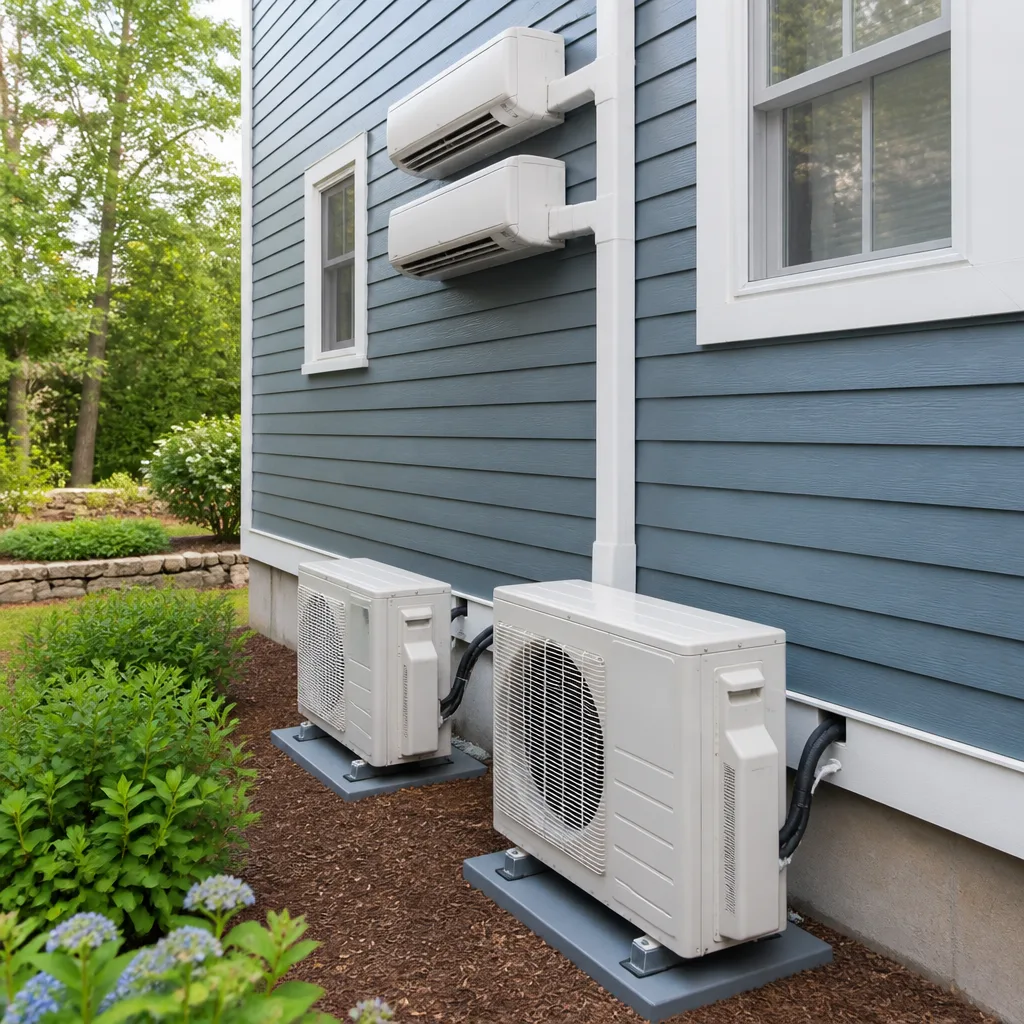 Ductless mini splits
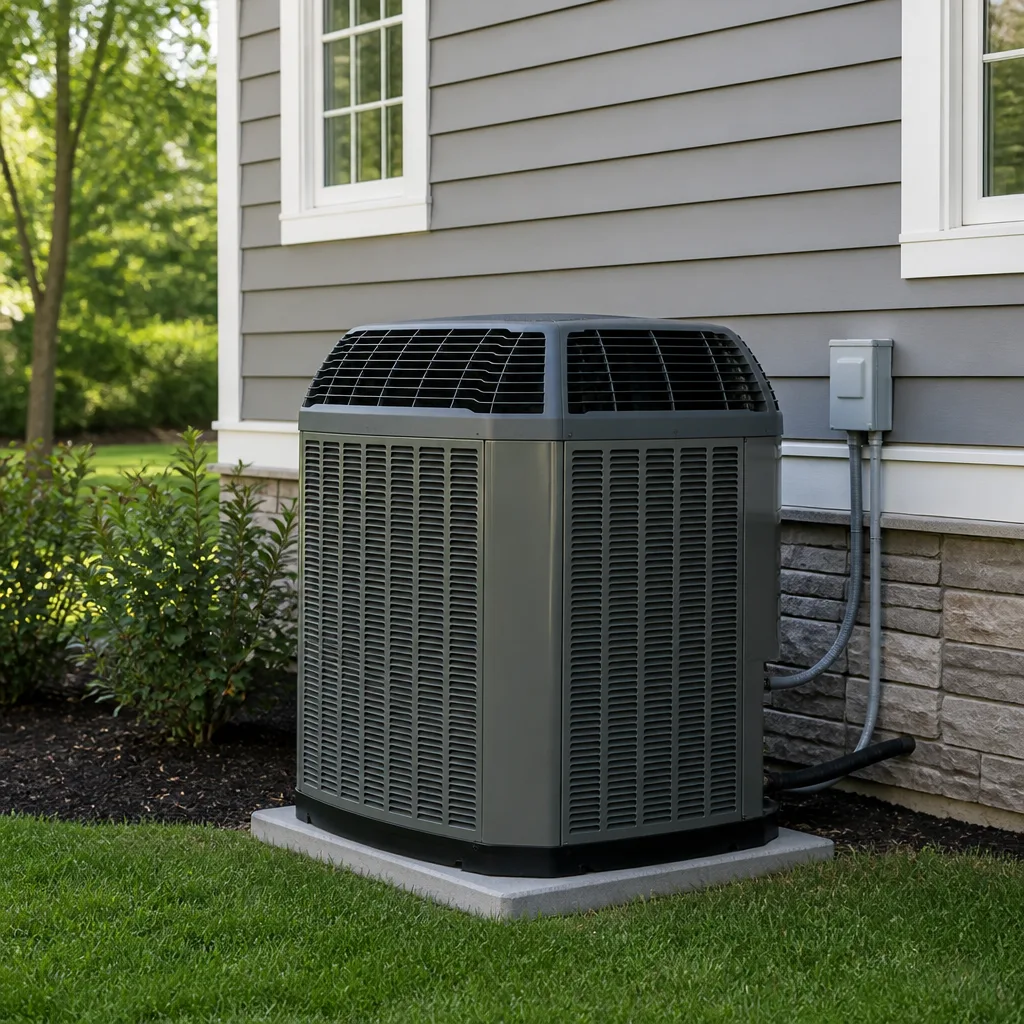 Trane
Trane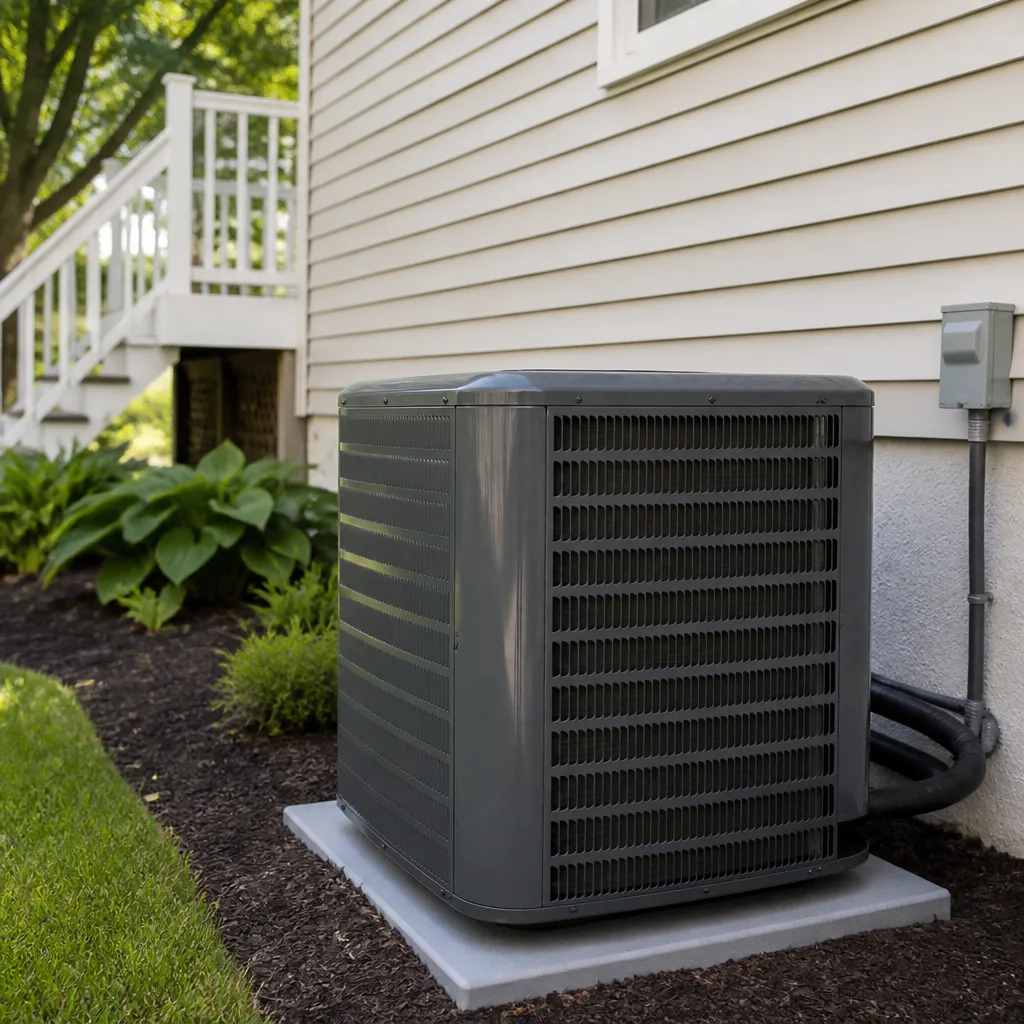 Goodman
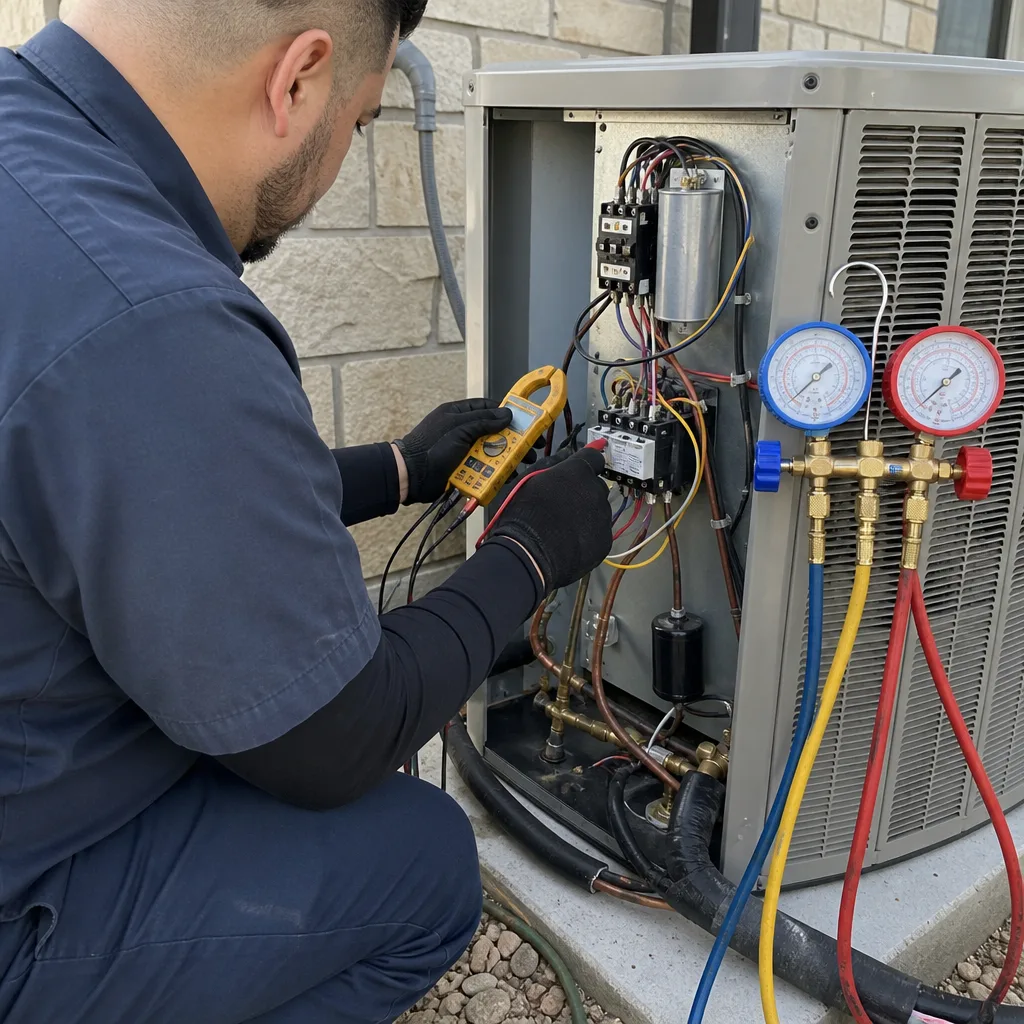
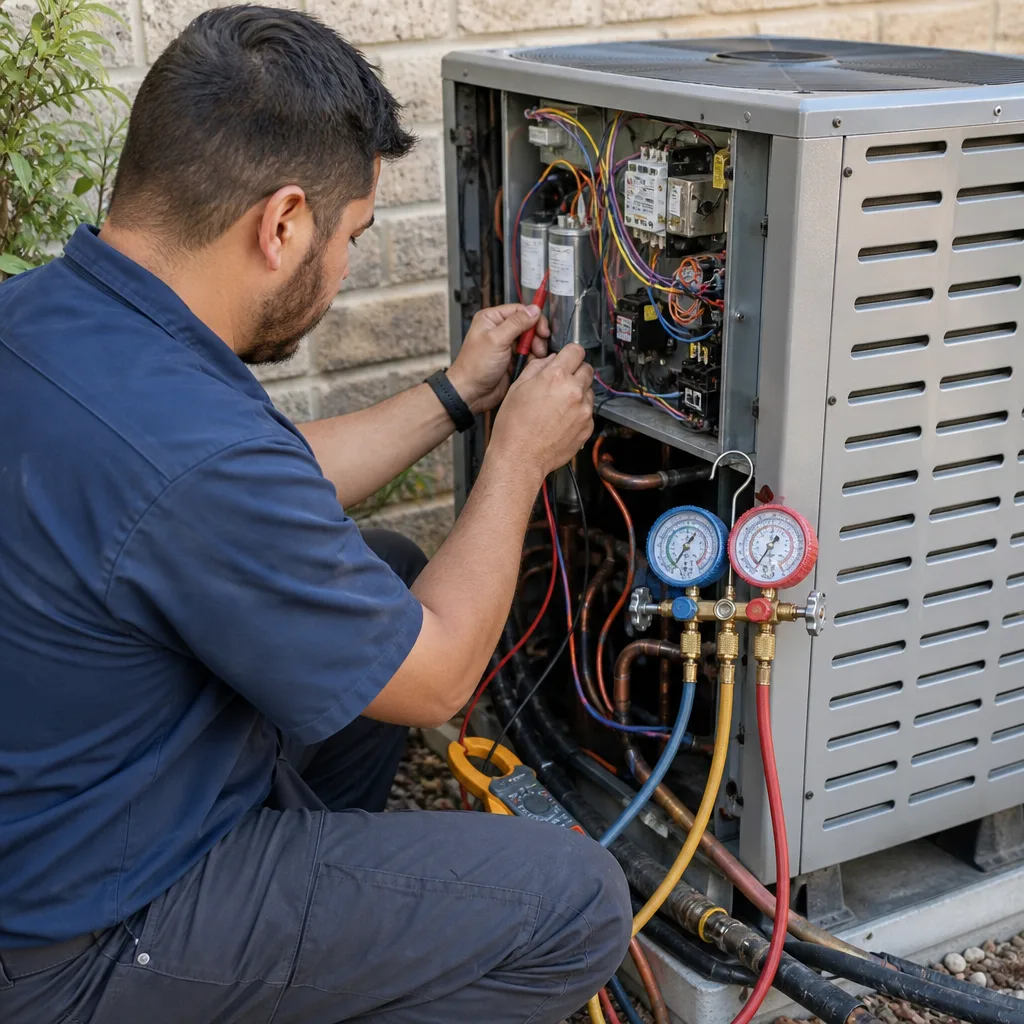
Seasonal tune-up and full diagnostic on your Carrier, Trane, or Goodman system - readings shown to you before any repair is proposed
Diagnosis first, numbers second - you approve the repair price before a single part goes in.
Get your free estimateSeasonal HVAC Care for San Antonio: Year-Round Homeowner’s Guide
In the two years after Winter Storm Uri, San Antonio HVAC companies reported a spike in heating-system failures. Not because the freeze wrecked furnaces, but because homeowners discovered their units hadn’t run since 2018 and nobody had checked them. That’s the quiet truth about seasonal HVAC care in this city: the work you skip in October shows up as a no-heat call on the first 38-degree night. This guide maps out a San Antonio-specific maintenance rhythm built around what our climate actually does to equipment, so you can stop guessing and start scheduling with intent. For a deeper dive, see our Complete Guide to HVAC in San Antonio.
Quick Answer
Seasonal HVAC care in San Antonio works best as a three-phase plan: a Pre-Summer prep in March and April to handle oak pollen and prepare the AC for 100-degree days, a light-touch monitoring period from May through September to catch drainage and refrigerant issues early, and an October-through-November Winter-Ready check that puts the furnace through a real test before the first cold front. Most homeowners in San Antonio spend between $150 and $450 per year on professional maintenance, and the highest-value appointment is the October furnace check, when demand is low and issues can be fixed before you actually need heat.
Styles & brands we work with
Table of Contents
- San Antonio’s Three-Phase Care Framework
- Phase 1: Pre-Summer Prep (March – April)
- Phase 2: Peak-Season Monitoring (May – September)
- Phase 3: Winter-Ready Check (October – November)
- Why October and November Are the Highest-Value Months
- Using Thermostat Runtime Data as an Early Warning System
- Two-Minute Checklists: Vacation Departure and First Cold Front
- Common Mistakes to Avoid
San Antonio’s Three-Phase Care Framework
San Antonio doesn’t have four equal seasons. We have a long, aggressive cooling season that runs from late April through mid-October, a compressed winter that arrives suddenly and leaves just as fast, and two brief shoulder periods in between. A maintenance calendar built on “spring, summer, fall, winter” assumes your heater and AC carry equal weight. They don’t here. Your air conditioner logs somewhere around 2,600 to 3,200 hours of runtime annually in Bexar County, while your furnace might see 200 hours in a cold year and close to zero in a mild one. That imbalance shapes everything about how you should maintain your equipment.
The three-phase approach is simple: prepare the AC in spring before the real heat arrives, monitor it through the summer when failures are most disruptive, and switch focus to the furnace in late fall before you actually need heat. Each phase has a specific goal. Spring is about cleaning and verifying capacity. Summer is about watching performance and catching small problems before they become 10 p.m. emergencies. Fall is about proving the furnace works, because unlike the AC, you won’t get a gradual warning sign. A furnace that fails gives you nothing until the thermostat calls for heat and the house stays cold.
What does this look like in practice? If you do two professional tune-ups per year, the right split for San Antonio is one in late March or early April for the AC, and one in late October or early November for the furnace. If you only budget for one visit, make it October. The AC is far more likely to limp through a summer with minor issues than a furnace is to survive 24 months of inactivity and perform on demand. We’ve seen furnaces in the Alamo Heights area that sat untouched for three years, then tripped a limit switch on the first cold night because a layer of dust from a summer renovation had caked the blower. That’s a $200 repair that could have been a $89 maintenance visit.
Phase 1: Pre-Summer Prep (March – April)
The window between late February and mid-April does something specific to HVAC equipment in San Antonio: oak pollen. Live oaks release pollen in massive quantities through March and early April, and outdoor condenser coils act like a filter designed by accident. A coil coated in pollen restricts airflow, which raises refrigerant pressure, which forces the compressor to work harder, which shortens its life and burns more electricity. This happens every spring in neighborhoods like Stone Oak, Terrell Hills, and Helotes, and it’s invisible to most homeowners until the July electric bill arrives.
Your Pre-Summer checklist should include the following steps, and they’re best handled in this order:
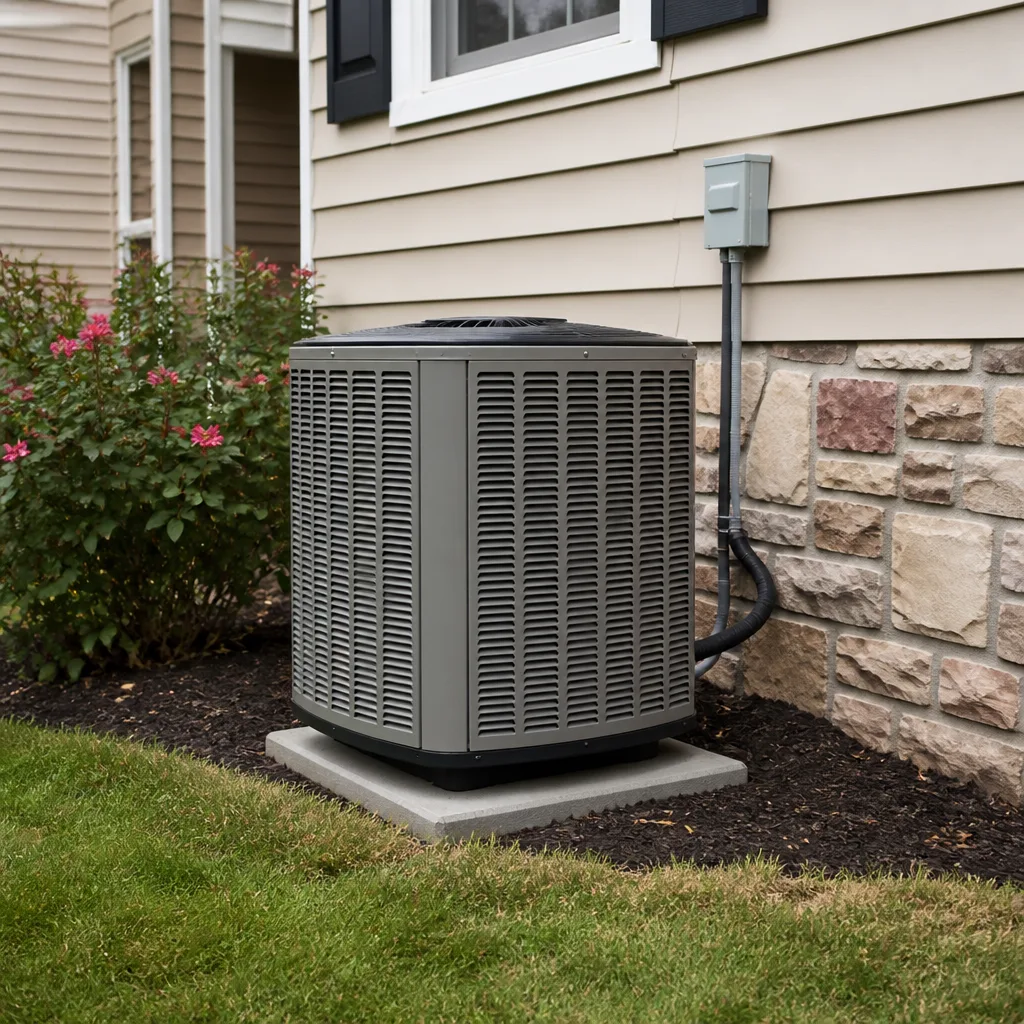
- Rinse the outdoor condenser coil. Kill power to the unit at the disconnect box first. Then use a garden hose with a spray nozzle on a gentle setting to wash pollen, dust, and grass clippings off the coil fins. Spray from the inside outward if you can, or top-down if you can’t. Do not use a pressure washer. The fins are thin aluminum and a pressure washer folds them flat, which reduces airflow.
- Replace the filter. If you use cheap 1-inch fiberglass filters, swap them every 30 days through the summer. If you use 4-inch media filters, swap every 90 days. A fresh filter in April means one less thing to remember in July.
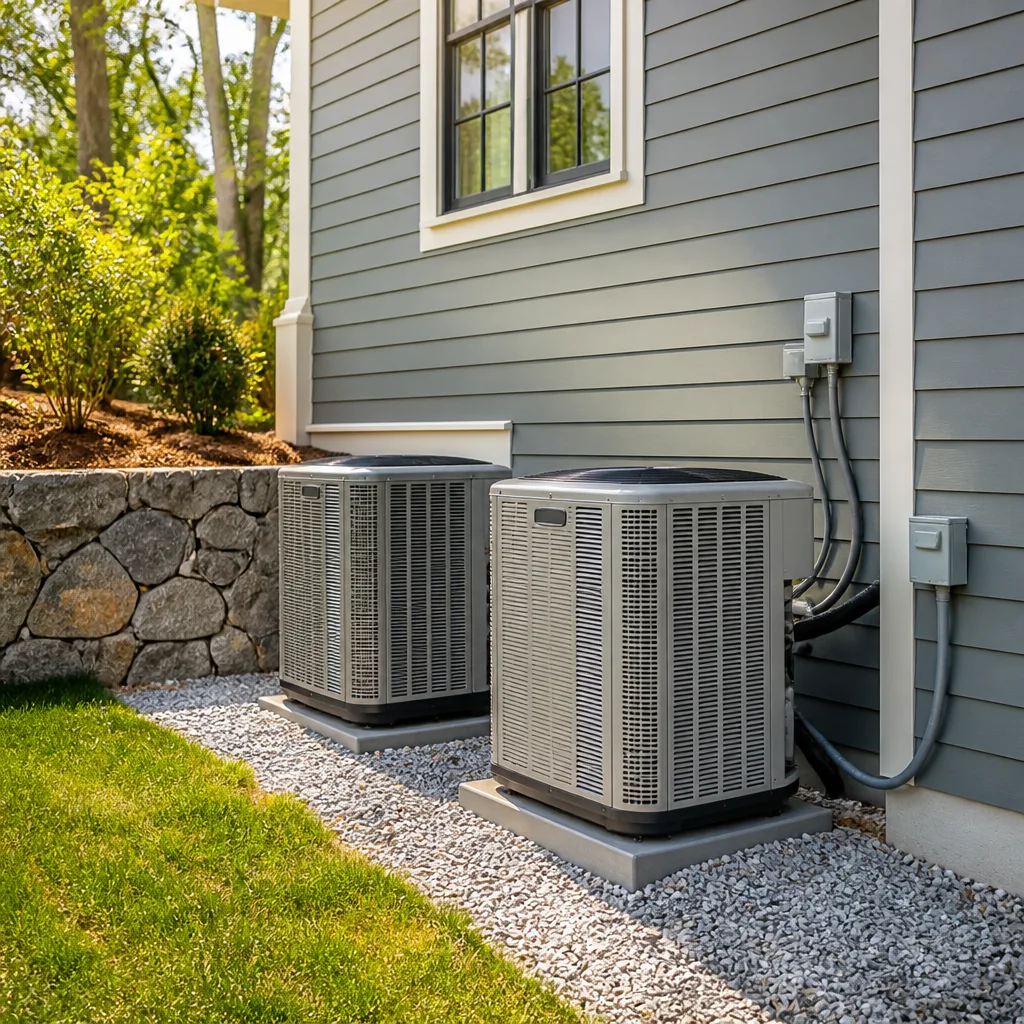
- Clear the area around the outdoor unit. Two feet of clearance on every side. Trim back shrubs, move stored items, and check that no sprinkler head is angled to spray directly into the unit.
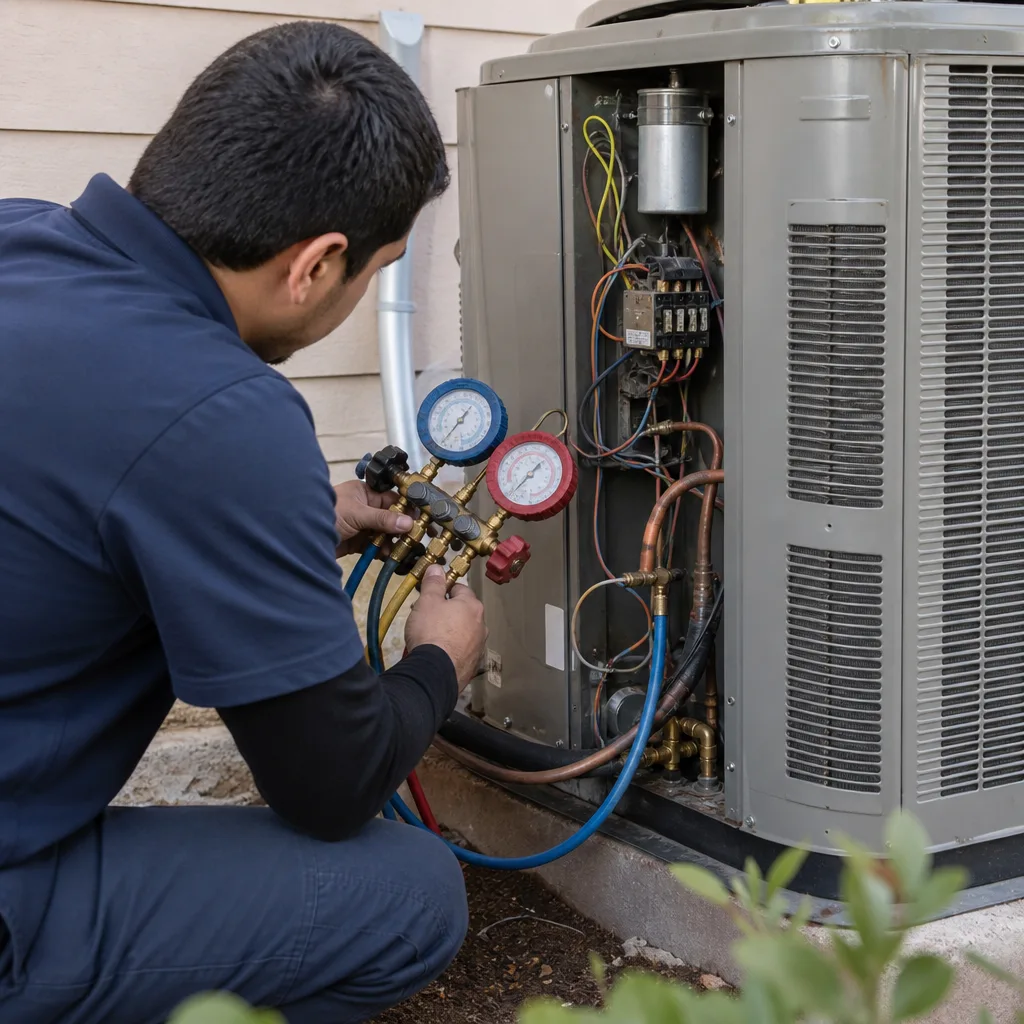
- Run the AC for 20 minutes. Set the thermostat five degrees below room temperature and listen. A healthy system makes steady airflow noise. A failing one makes grinding, screeching, hissing, or clicking. If the air coming from the register is only 10 to 14 degrees cooler than the room, that’s within range. If it’s less than 10, the system likely has a refrigerant or airflow issue.
- Book your professional tune-up. This is the one visit per year that pays for itself. A technician checks refrigerant charge, tests capacitors and contactors, cleans the evaporator coil, and measures the temperature split.
Most AC tune-ups in San Antonio run between $89 and $189 depending on the equipment, the age of the system, and whether anything gets flagged during the visit. If a capacitor tests weak in April, you pay $150 to replace it on your schedule. If that same capacitor fails in August, you’re paying $150 for the part, plus more for after-hours labor, plus a night of 84-degree indoor temperatures. The math favors the spring visit.
Phase 2: Peak-Season Monitoring (May – September)
Once summer settles in, the goal shifts from preparation to observation. You’re not doing heavy maintenance in July. You’re watching for signs that the system is degrading so you can intervene before a full failure. This is where most San Antonio homeowners get caught off guard: they assume their AC either works or doesn’t, so they ignore the gradual decline in performance that happens in the weeks before a compressor locks up.
Here are the signals that deserve your attention:
- A 20% or larger jump in monthly cooling runtime compared to the same period last year. Your smart thermostat tracks this. A spike usually means the system is losing capacity or efficiency.
- Humidity in the house above 55% during the day. San Antonio’s August humidity is brutal, and an AC that cools but doesn’t dehumidify is either oversized for its ductwork, low on refrigerant, or running with a dirty evaporator coil.
- Water around the indoor unit or rust in the secondary drain pan. This signals a clogged condensate drain or a failing drain pan, both common in August when the system pulls more water from the air.
- Ice on the suction line (the larger copper line coming from the outdoor unit). This is a refrigerant or airflow problem, and it’s the most common self-diagnosed HVAC failure we see in neighborhoods like Castle Hills and Braun Oaks. Ice means the coil is below freezing, which means something is restricting the heat exchange.
- A register temperature that’s less than 14 degrees cooler than the room on a 95-degree day. This suggests lost capacity, and the cause could be refrigerant, airflow, or a failing compressor.
What do you actually do with this information? If you see one signal, watch it for 48 hours. If it persists or worsens, call for service. The repairs we see most often during San Antonio summers fall into predictable price bands: $150 to $350 for a capacitor or contactor, $250 to $600 for a refrigerant leak repair and recharge (topping off the coolant your system needs to produce cold air), and $400 to $900 for a blower motor or condenser fan motor. These are the failures that happen because heat and runtime stress components to their breaking point.
If you need help mid-summer, AC Repair in San Antonio is available through Halden Heating and Air San Antonio with a written price before any work starts, a live arrival time you can track, and a written guarantee on every repair. Most AC repairs run between $150 and $500 depending on the part, and we quote the full cost upfront.
Phase 3: Winter-Ready Check (October – November)
The Winter-Ready check is the highest-stakes maintenance task in San Antonio, and the one most people skip. Here’s why: your furnace sits dormant for eight or nine months. Dust settles on the burners, the heat exchanger, and the blower. Small issues that existed when you switched to cooling in April are still there in November, plus nine months of accumulated dust. When the first cold front hits, the system either works or it doesn’t, and if it doesn’t, you and several thousand other households are calling for help on the same night.
Your Winter-Ready check should be specific and methodical. The following steps matter more than anything else:
- Test the furnace in mid-October. Set the thermostat to heat mode, raise the set point three degrees above room temperature, and let the system run for 15 minutes. A healthy furnace blows warm air within 60 to 90 seconds and runs quietly. A failing one makes a metallic rattling (loose heat exchanger), a rumble (delayed ignition), or a high-pitched squeal (blower motor bearing). All three are fixable in October and emergencies in January.
- Check the flame color through the small viewing window on the furnace cabinet. A clean blue flame is correct. A yellow or orange flame signals incomplete combustion, which in a gas furnace means carbon monoxide risk. Call a professional the same day if you see it.
- Replace the filter again. If you’ve been running the AC all summer, the filter is doing double duty. Start winter with a clean one.
- Vacuum around the furnace cabinet and the return grilles. Dust, pet hair, and general household debris accumulate over summer and restrict airflow.
- Run a full heating cycle and check every room. Open all supply registers, make sure return vents aren’t blocked by furniture, and walk the house. Uneven heat between rooms often signals duct problems that are cheaper to fix in fall than winter.
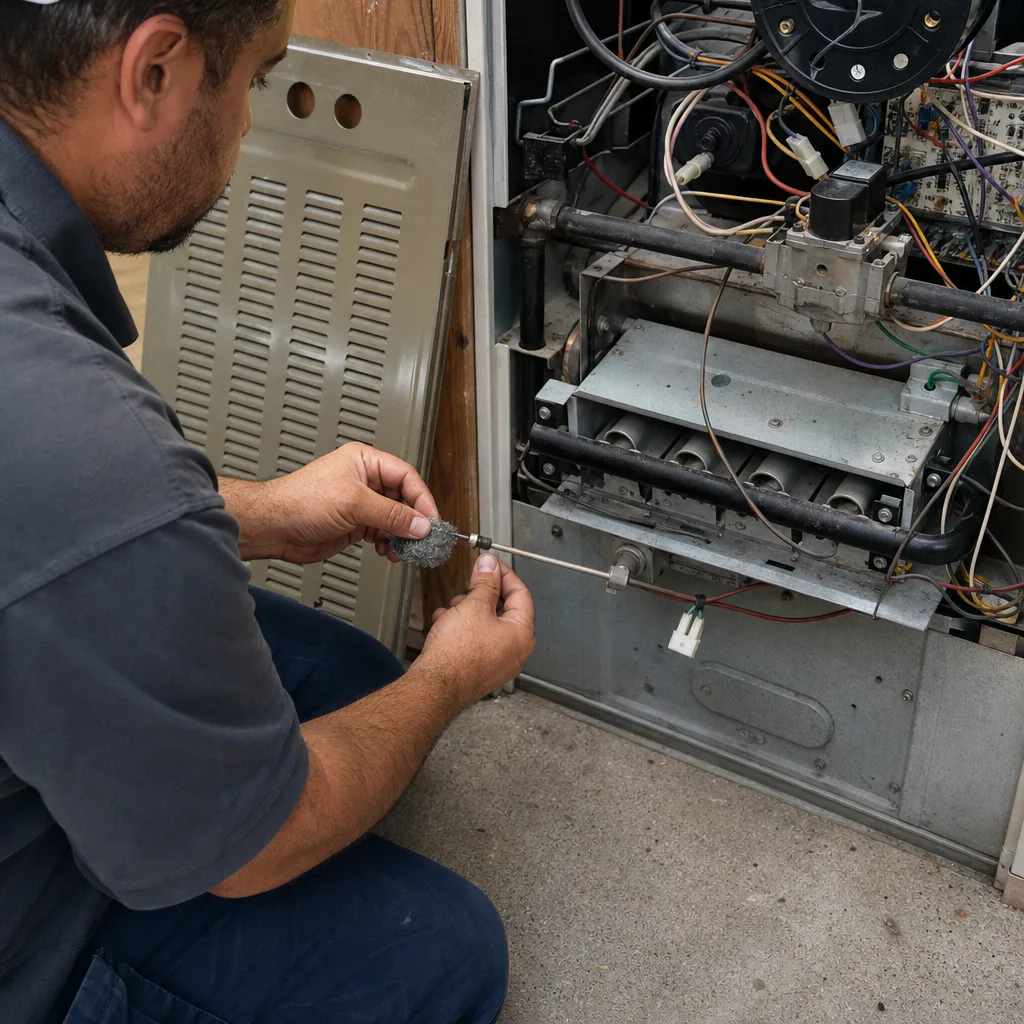
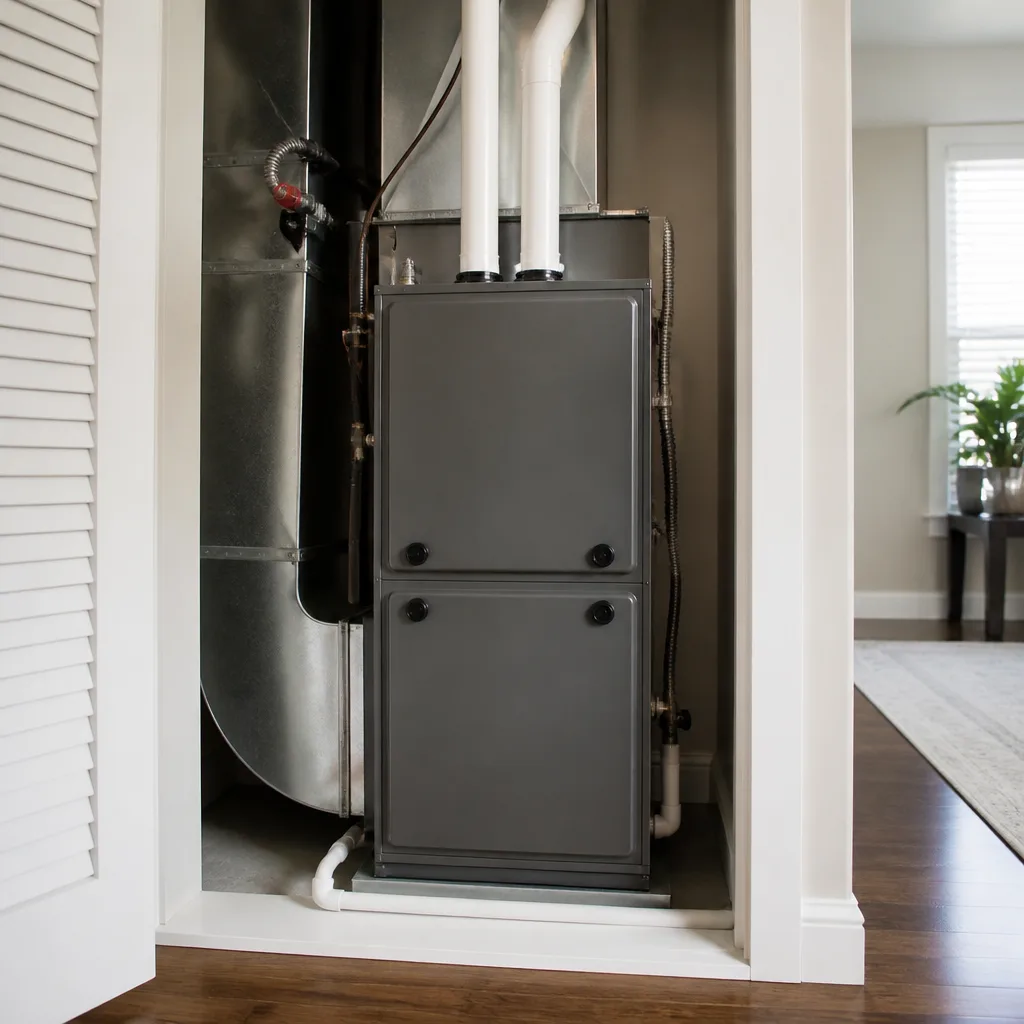
Furnace tune-ups in San Antonio range from about $89 to $179 for a standard gas furnace inspection, which includes checking the heat exchanger for cracks, testing the flame sensor, verifying the gas pressure, and measuring the carbon monoxide output at the vent pipe. If you have a heat pump rather than a fossil-fuel furnace, the winter check is essentially the same, but the technician also verifies the reversing valve and defrost cycle. If you’re not sure which system you have, Furnace Repair in San Antonio can identify it and tell you what to check.
Why October and November Are the Highest-Value Months
There’s a predictable seasonal curve to HVAC demand in San Antonio. Calls spike in June when temperatures first cross 100, stay elevated through August, and crash once October brings the first few nights in the 60s. That lull between cooling season and heating season is the best possible time to schedule maintenance. Demand is low, appointment availability is high, and in most years you can get a next-day slot instead of waiting five days.
The financial case for shoulder-month maintenance is even more compelling than the convenience argument. During peak season, a technician’s time is booked solid with no-cooling emergencies, and those calls are prioritized because someone’s house is 92 degrees. During shoulder months, the same technician can spend 45 minutes doing a detailed inspection instead of racing from one urgent call to the next. Several San Antonio providers, including our team at Halden Heating and Air, offer lower promotional pricing on tune-ups in October and November specifically because demand is down.
Beyond cost, there’s a repair-avoidance angle. When you schedule furnace maintenance in October and the technician finds a cracked heat exchanger or a failing ignitor, you have time to decide how to handle it. You can get a second opinion, compare repair versus replacement economics, and possibly wait for a manufacturer rebate. When that same problem surfaces in January during a cold snap, your only option is an emergency repair on whatever timeline is available. The difference in what you spend can be substantial, and the difference in stress is even bigger.
If you’re thinking about replacement rather than repair, AC Installation in San Antonio walks through what a new system costs in this market, including rebates and financing, with no pressure to decide on the spot.
Using Thermostat Runtime Data as an Early Warning System
Most smart thermostats, including Ecobee, Nest, and Honeywell Home models, track daily and monthly runtime, meaning the total number of hours and minutes your HVAC system runs per day. That data is the single most useful diagnostic tool most San Antonio homeowners already own but never look at. Here’s how to use it.
Your system’s runtime follows a predictable pattern. On a 95-degree day, a properly sized AC in a reasonably insulated San Antonio home might run 8 to 12 hours total, cycling on and off throughout the day. The same system on an 85-degree day might run 5 to 8 hours. The exact numbers depend on your home’s insulation, window orientation, ceiling height, and thermostat setpoint. What matters is the comparison against your own baseline.
The signal to watch for is a sustained increase in runtime of 20% or more compared to the same month last year, or compared to the same 14-day stretch from the prior season, under similar outdoor temperatures. Here’s what that increase is telling you across the most common failure patterns:
- Low refrigerant charge: The system runs longer because it’s producing less cooling per hour. This is the most common cause of gradual runtime creep in San Antonio, especially on systems older than eight years that may have very slow leaks.
- Dirty outdoor coil: Pollen, cottonwood fluff, or grass clippings have restricted airflow, causing capacity drop and longer cycles. This is the cheapest fix on the list.
- Dirty indoor coil or blower wheel: Same effect, different location. This one builds up over years, not months, and often coincides with loose filter discipline.
- Failing capacitor: The outdoor unit may struggle to start, producing shorter but more frequent cycles that add up to higher total runtime.
- Duct leakage: Conditioned air is escaping into the attic, forcing the system to run longer to hit the same indoor temperature. Duct leakage is common in San Antonio homes built before roughly 2005.
The action plan is straightforward. Check your thermostat app once a week in July and August. Look at the runtime for the past seven days. If it’s trending 20% above what you’d expect for the temperatures, book a diagnostic visit. An early call is a $89 to $149 diagnostic. A late call is a compressor replacement. The math works every time.
Two-Minute Checklists: Vacation Departure and First Cold Front
San Antonio homeowners leave town for summer vacations to places with milder climates, like the Hill Country or the coast, and they often do it in July and August when the AC is under the most strain. Before you leave for a multi-day summer trip, run through this checklist:
- Set the thermostat to 80 – 82°F, not off. Letting the house climb to 95+ while you’re gone stresses the structure, makes the AC work much harder to recover when you return, and can damage stored items. Setting it at 80 keeps the system cycling while dramatically reducing runtime.
- Verify the condensate drain is clear. A slow, partial clog that usually drains fine can become a full clog within four days when the AC runs continuously in your absence. Locate your primary drain line, pour a cup of white vinegar down it to help clear minor buildup, and check for standing water in the emergency pan.
- Know where your emergency shutoff is, and tell someone who can reach the house. The disconnect box is on the wall near the outdoor unit. If a neighbor texts you that the AC is making a terrible noise, you can talk them through killing power. If you don’t have that neighbor, consider a smart thermostat with remote monitoring.
- Replace or at least check the filter. A clogged filter in an unoccupied house is a frozen coil and a flooded drain pan waiting to happen.
Then, before the first anticipated cold front of the season, run a parallel checklist:
- Run the furnace for one full heating cycle in late October. Fifteen minutes. Confirm warm air at every register and no unusual smells beyond a brief dusty odor as the heat exchanger burns off summer dust. If a dusty smell lingers beyond one cycle, change the filter.
- Locate your emergency shutoff for the furnace too (the switch is often on the wall near the furnace or on the unit itself), and make sure the gas shutoff valve at the furnace is accessible.
- Check outdoor vents and flue pipes for debris. Birds, leaves, and wasps can block furnace exhaust pipes. In San Antonio, mud dauber wasps are notorious for building nests in unused exhaust flues during summer.
- Set your thermostat to 68°F for heating, which balances comfort with energy use, and confirm the system switches modes without issue.
Common Mistakes to Avoid
- Skipping the October furnace test. This is the single most expensive mistake homeowners in San Antonio make. A furnace that hasn’t been run since April is a gamble, and the odds worsen every year. Test it in October, not on the first 35-degree night.
- Running the AC with a clogged filter for months. In San Antonio’s pollen-heavy spring, a filter can load up in as little as four weeks. A clogged filter restricts airflow, causing the system to work harder, run longer, and eventually freeze the evaporator coil.
- Neglecting the condensate drain during peak humidity. San Antonio’s August humidity means your AC pulls gallons of water from indoor air every day. When that water has nowhere to go, it ends up in your ceiling or floor. Pouring vinegar down the drain monthly in summer costs about 50 cents.
- Closing supply registers in unused rooms. This seems like a way to save energy, but it raises static pressure in the ductwork, which reduces overall system efficiency and can freeze the coil. Keep at least 80% of your registers open.
- Setting the thermostat dramatically lower on a hot day to “cool down faster.” Your AC cools at the same rate whether you set it to 72 or 65. Setting it lower just makes it run longer. Set the target temperature and leave it alone.
- Assuming a newer home doesn’t need maintenance. New construction in San Antonio often has undersized or poorly sealed ductwork. A 2019 home with a Goodman or Carrier system still needs a spring tune-up and a fall furnace test.
- Ignoring the thermostat’s runtime report because “the house feels fine.” The whole point of runtime data is that it shows degradation before you feel it. By the time the house feels warm, you’re already in a higher repair tier.
See the difference
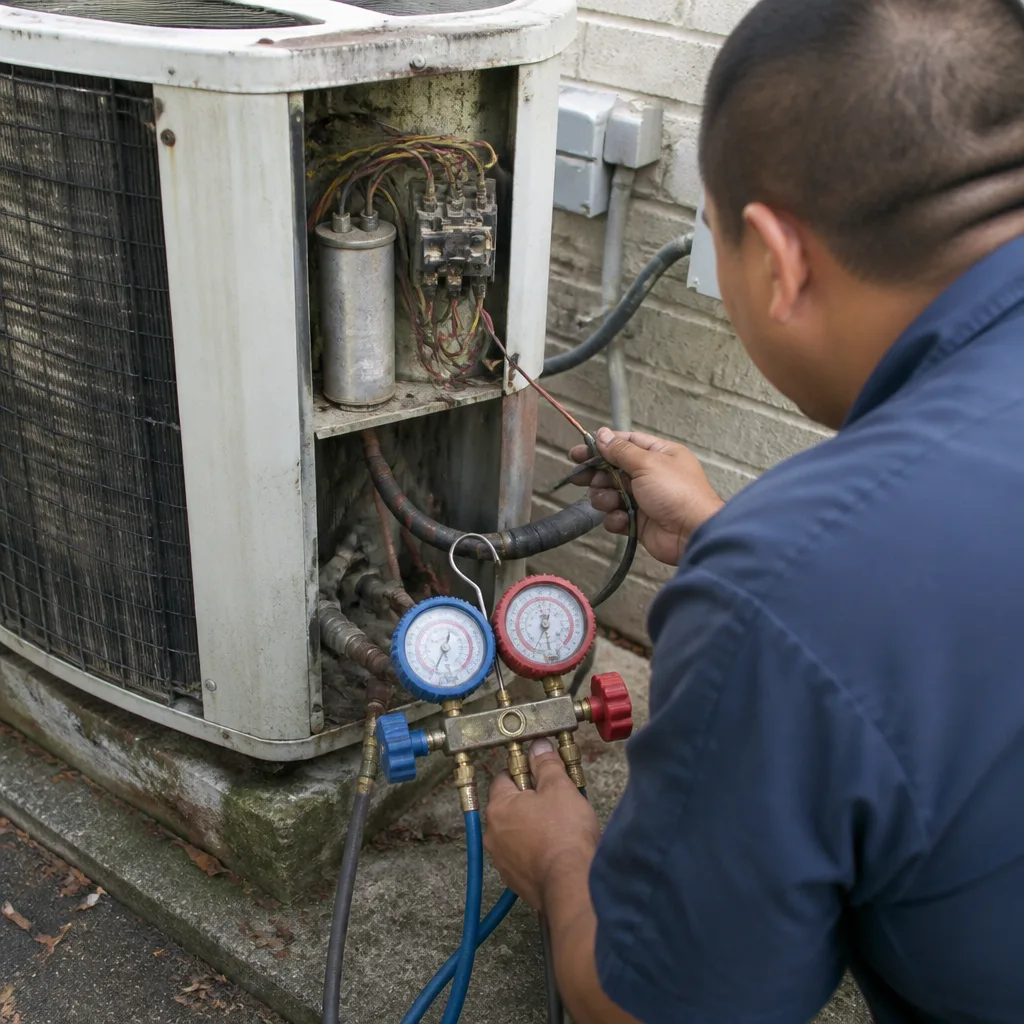 Before
 After
After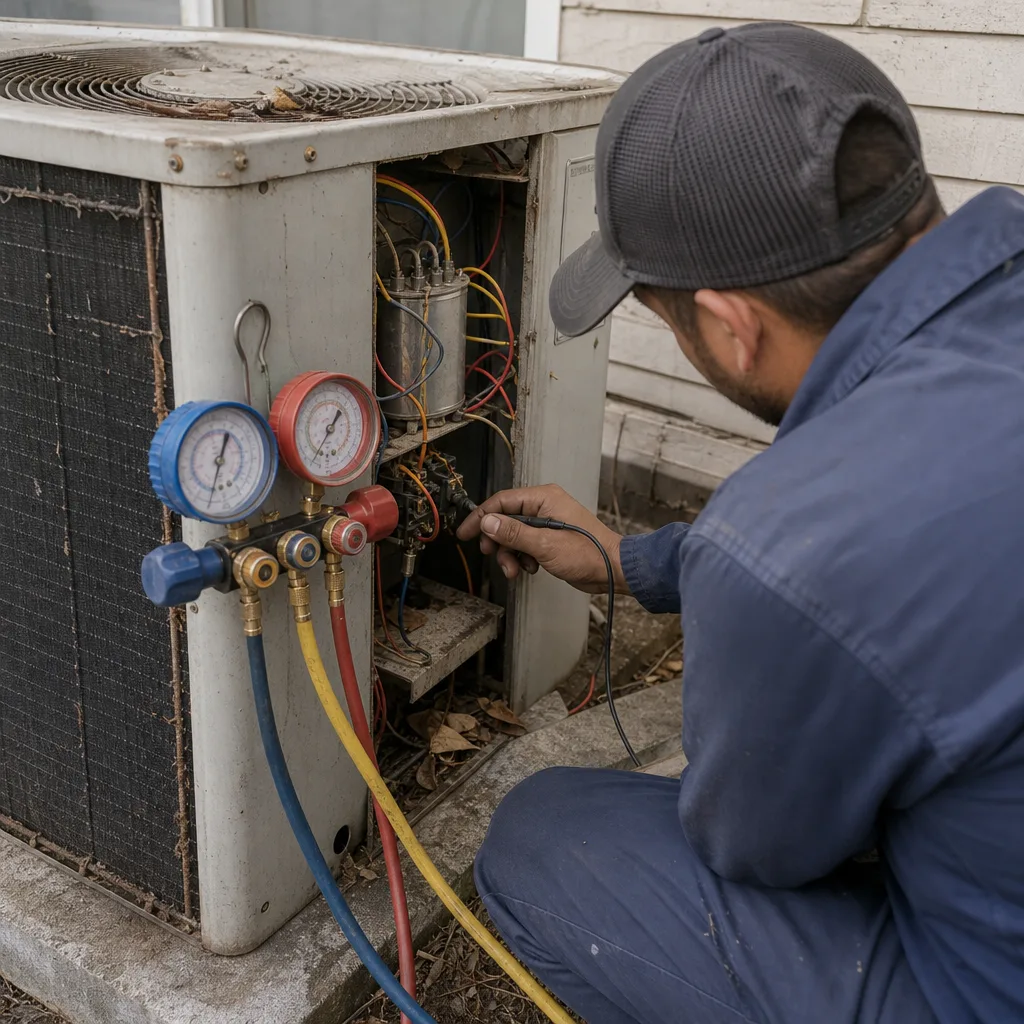 Before
 After
After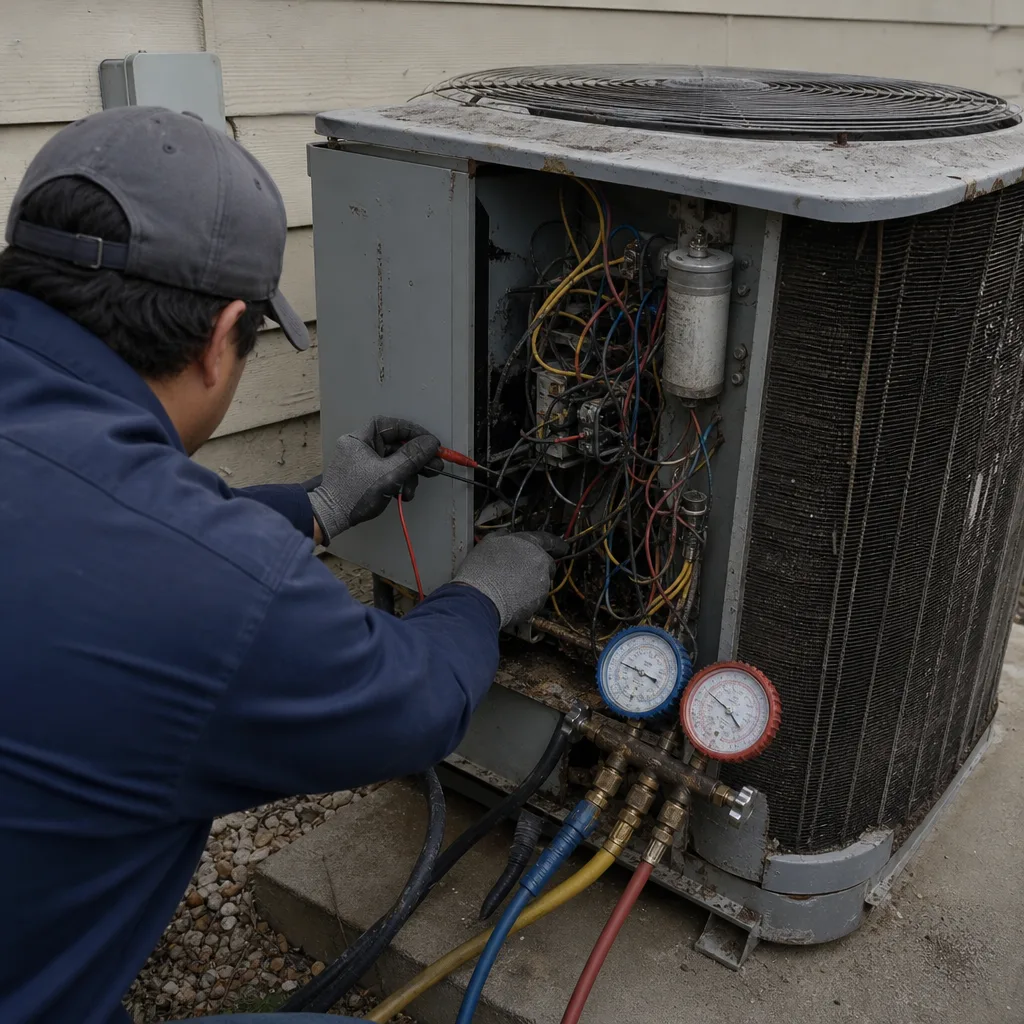 Before
 After
AfterWhen to Call a Professional
Some tasks belong to a trained technician, full stop. If you see a yellow or orange furnace flame, call the same day: that’s a carbon monoxide signal and it’s not a DIY situation. If your AC is blowing warm air on a 100-degree day, the cause is likely refrigerant, a compressor, or an electrical component, and all of those require a pro. If you hear grinding, screeching, or banging from either unit, shut the system off and call. If water is running from the indoor unit, mold is growing on the ceiling near a vent, or you smell burning plastic when the heat runs, get professional help before the next wave of heat or cold. Halden Heating and Air San Antonio offers free estimates in San Antonio: call (903) 623-6784 and a real person answers, 24/7.
Frequently Asked Questions
A standard seasonal tune-up in San Antonio includes cleaning or inspecting the condenser and evaporator coils, testing capacitors and contactors, checking refrigerant charge, measuring the temperature split across the system, clearing the condensate drain, testing the thermostat, and inspecting electrical connections. For furnaces, it adds a heat exchanger inspection, flame sensor cleaning, gas pressure check, and carbon monoxide test at the vent. Most companies charge $89 to $189 for a single-system tune-up.
Most San Antonio HVAC companies charge between $89 and $189 for a single-system seasonal tune-up, though some larger companies with overhead-heavy structures charge $200 to $300 for the same service. Two tune-ups per year (one in spring for AC, one in fall for furnace) typically run $180 to $350 total. Halden Heating and Air provides written pricing before any work starts, so you’ll know your exact cost before scheduling.
Twice per year: once in March or April for the AC before peak cooling season, and once in October or November for the furnace before peak heating season. San Antonio’s climate puts disproportionate load on the cooling side, so if you can only afford one visit annually, make it the fall furnace check, because a failed AC gives you warning signs while a failed furnace gives you a cold night.
Schedule it between March 1 and April 15, ideally before oak pollen season peaks. The tune-up will clear pollen from the outdoor coil that would otherwise choke airflow through the entire summer. If you miss that window, the tune-up is still valuable in May or early June, before temperatures climb above 95 degrees and emergency demand spikes.
A heat pump needs the same twice-yearly framework, but the fall visit is simpler because there’s no combustion system to inspect. The technician verifies the reversing valve, checks the defrost cycle, and confirms the system produces heat at the expected output. San Antonio’s heat pump population is growing as all-electric new construction increases, but many older homes still run gas furnaces from brands like Carrier, Bryant, and Daikin, and all of them benefit from the same fall test.
You can skip maintenance on a new system for the first year or two, but the risk is never zero. New furnaces get installed with field-assembled venting that can shift, gas pressures that can drift, and drain lines that can clog. If your system is under manufacturer warranty, some brands require proof of annual maintenance to keep the warranty valid, so skipping the visit can endanger parts coverage. The Halden Heating and Air San Antonio home page covers our maintenance and repair standards if you want a baseline for comparison.
The Bottom Line
Seasonal HVAC care in San Antonio comes down to three phases: prepare the AC in spring before pollen and heat arrive, monitor performance through the summer using your thermostat’s runtime data, and test the furnace in October before the first cold front. The highest-value appointment is the fall furnace check, because it catches problems while they’re still cheap to fix and before demand spikes. Budget $180 to $350 per year for two professional tune-ups, or prioritize the fall visit if you can only do one. Every repair we complete at Halden Heating and Air San Antonio comes with a written guarantee and a free return visit if it fails, so you’re never guessing what’s covered. Call (903) 623-6784 for a free estimate, or book online and track your technician to the door. You can also browse more guides & resources on our blog.
Written by Andre Fuller, Owner at Halden Heating and Air San Antonio, serving San Antonio since 2004.