
Last updated October 16, 2026
 AC repair
 Furnace & heating
 Heat pumps
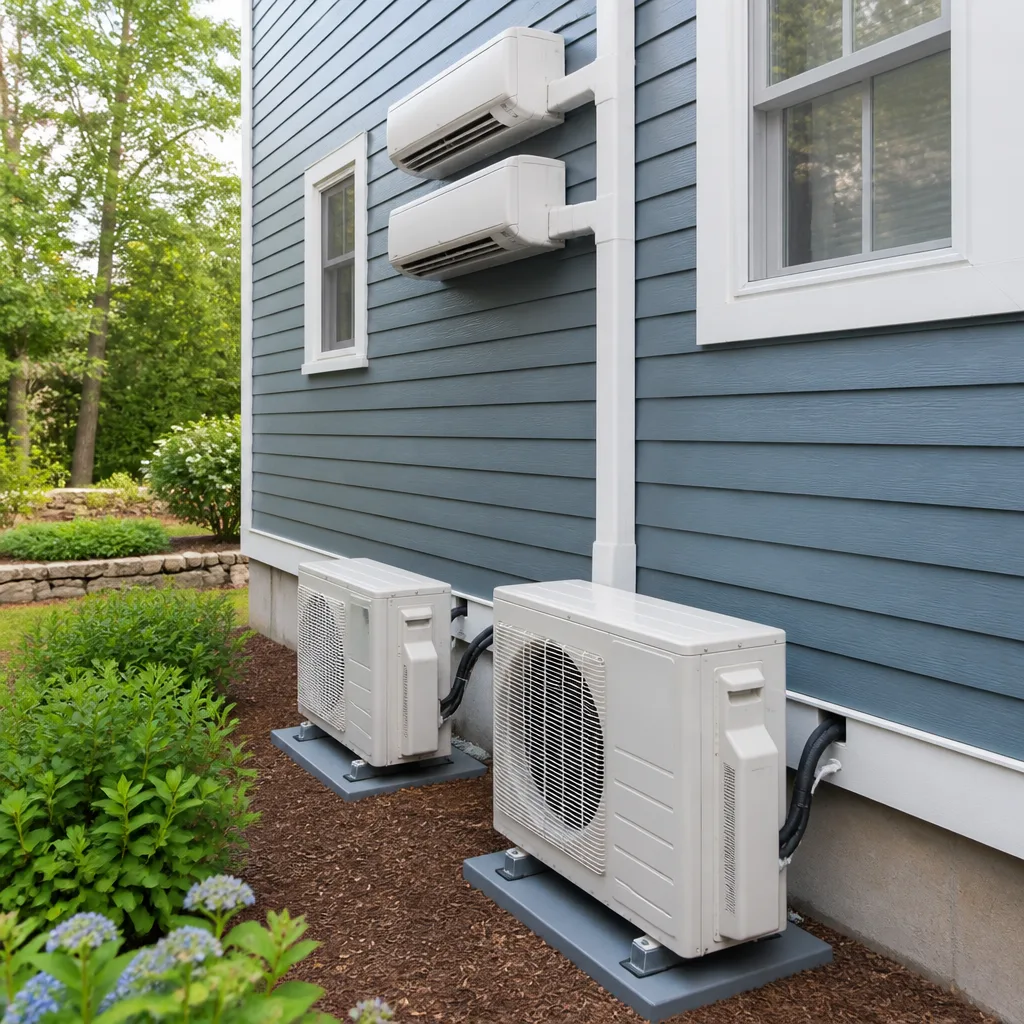 Ductless mini splits
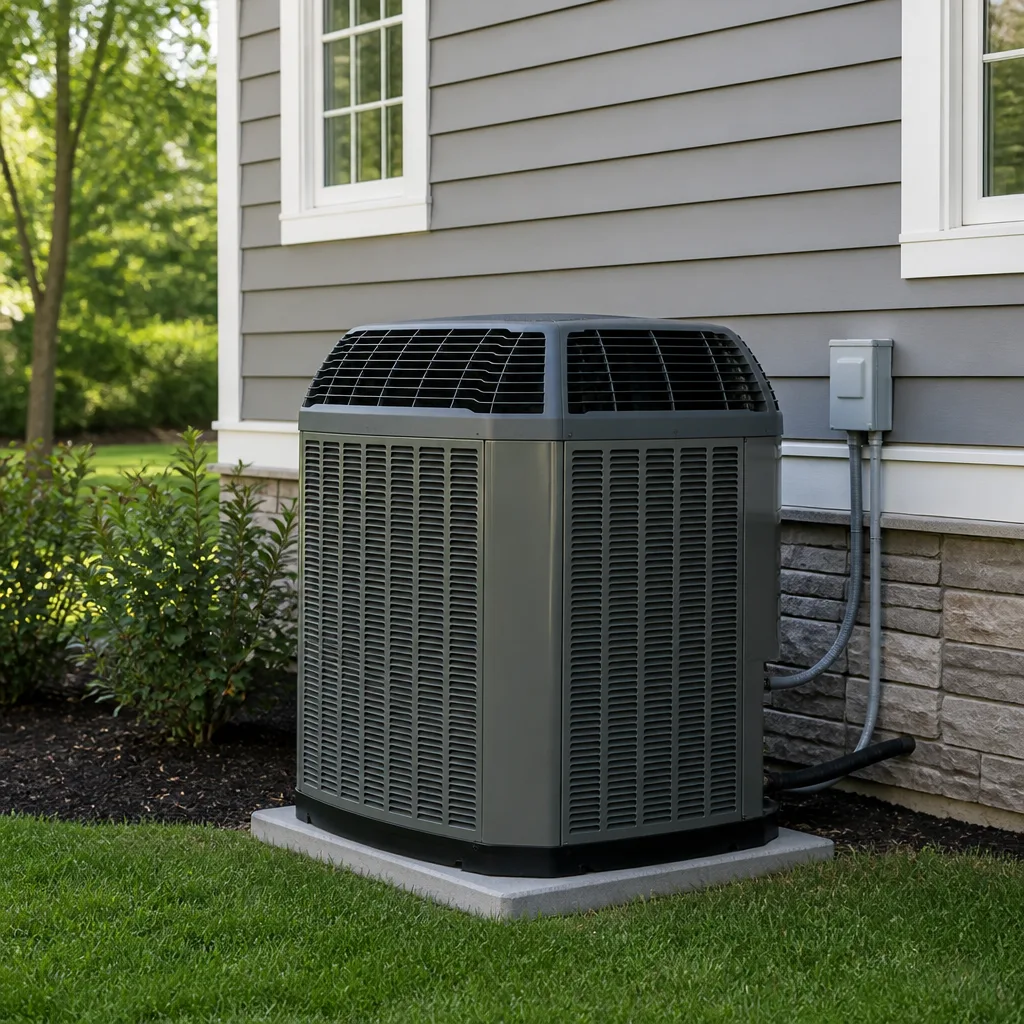 Trane
Trane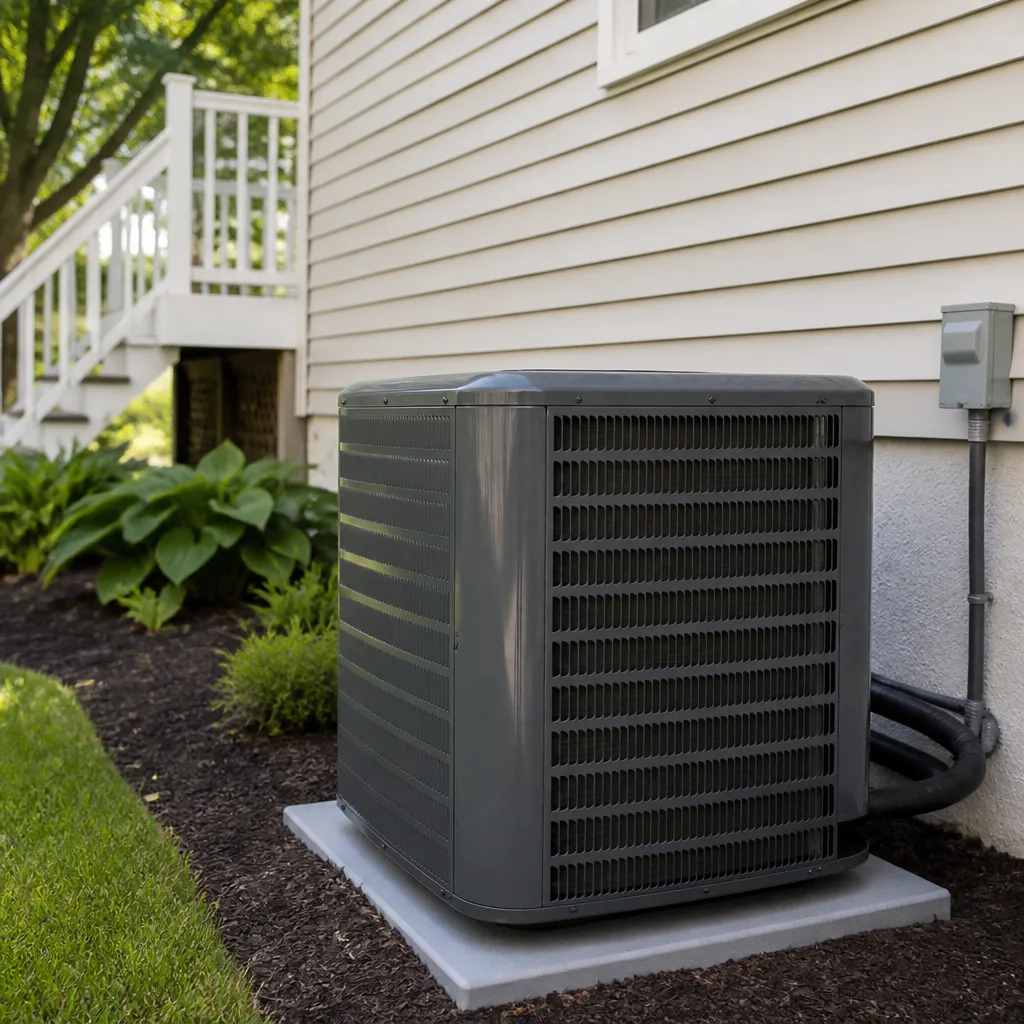 Goodman
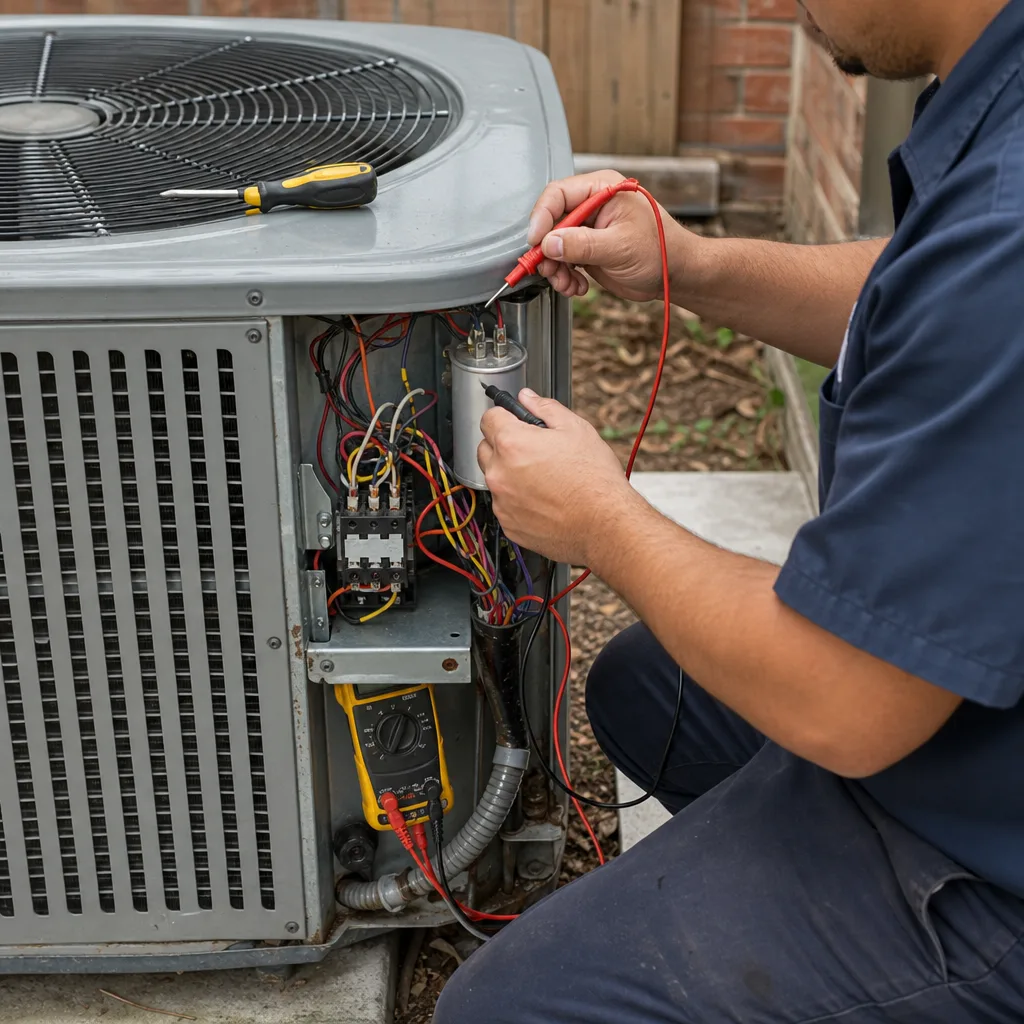
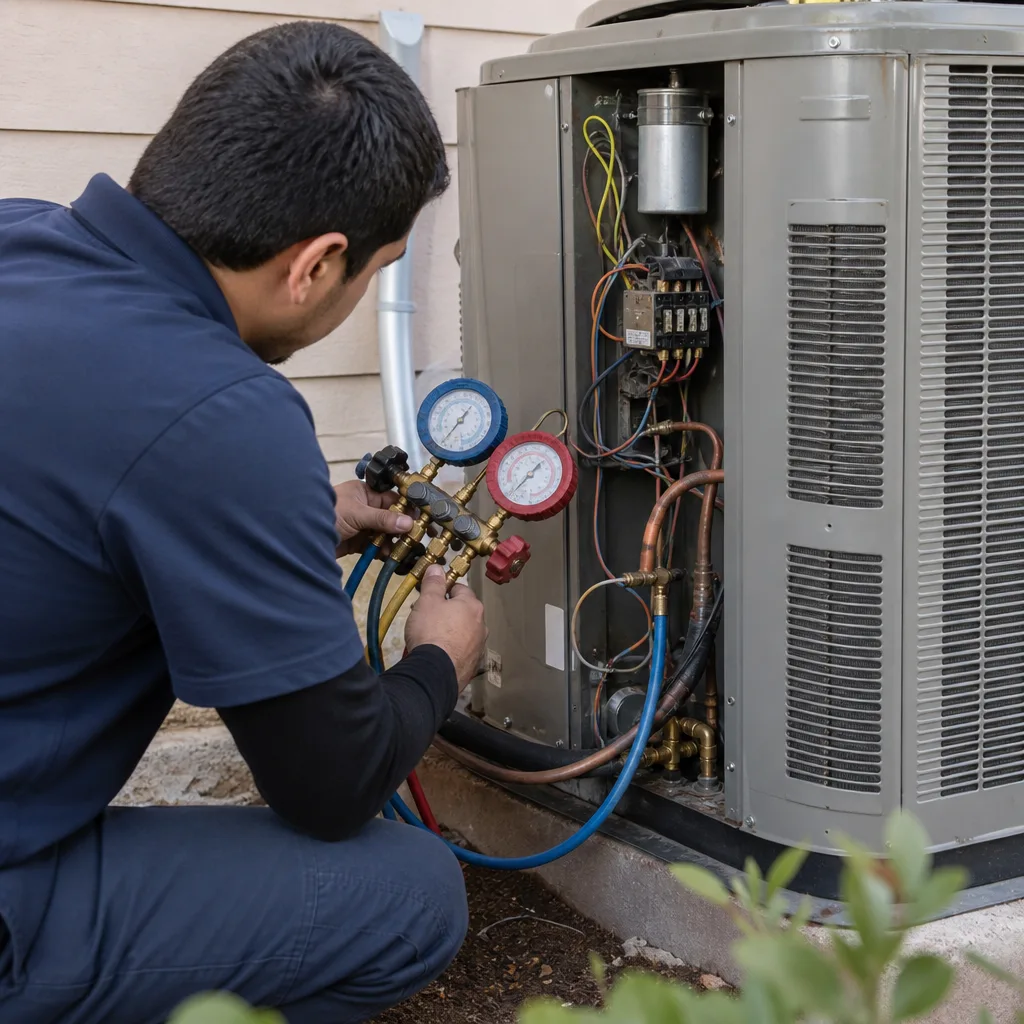
Seasonal tune-up and full diagnostic on your Carrier, Trane, or Goodman system - readings shown to you before any repair is proposed
Diagnosis first, numbers second - you approve the repair price before a single part goes in.
Get your free estimateThe Complete Guide to HVAC in San Antonio
San Antonio averages more than 110 days above 90°F per year, yet most HVAC buying guides are written for a “typical” American city that experiences about 30. That mismatch is why so many local homeowners end up with undersized systems, wrong refrigerants, or maintenance schedules that leave them stranded in August. This guide doesn’t do that. We’ve built and repaired HVAC systems across San Antonio for over twenty years, and we’re going to walk you through the decisions that actually matter here: sizing for 105°F heat, the soil your house sits on, the rebates CPS Energy will actually pay, and how to choose a contractor you don’t have to babysit.
Quick Answer
HVAC in San Antonio means designing for roughly eight months of cooling, four months of mild shoulder weather, and the occasional hard freeze like Uri in 2021, when systems built for Dallas or Houston specs failed by the thousands. A properly sized, correctly installed system for a San Antonio home typically costs between $7,500 and $14,000 for a full replacement, with annual maintenance running $100 to $250 per visit. The single most important decision you’ll make is contractor quality: written pricing before work starts, verified credentials, and a guarantee in writing.
Styles & brands we work with
Table of Contents
- San Antonio’s Climate: Why This Guide Is Different
- System Types That Work in San Antonio (and What to Skip)
- Sizing: The Number One Mistake We See
- SEER2 Ratings in San Antonio: Where the Real Payback Lives
- Caliche Soil, Pier-and-Beam, and Why Your Ductwork Cares
- CPS Energy Rebates and Federal Tax Credits: Real Numbers
- Choosing a Contractor: What Actually Protects You
- Maintenance: A Schedule Built for San Antonio Weather
San Antonio’s Climate: Why This Guide Is Different
San Antonio sits in a climate that doesn’t line up neatly with the rest of Texas. Houston gets humidity. Dallas gets actual winters. El Paso gets dry heat. San Antonio gets all of it in rotation: 100°F-plus stretches from June through September, humidity that makes a 92°F day feel like 105, and then, once or twice a decade, a freeze deep enough to burst pipes and kill heat pumps that weren’t set up for it.
That asymmetry matters for your HVAC budget. A furnace in Minneapolis runs five months a year. A furnace in San Antonio might run twenty days a winter. An air conditioner in Minneapolis runs two months. An air conditioner here runs from March to November. If you’re reading advice written for a four-season city, you’ll end up spending too much on heating capacity you don’t need and too little on cooling capacity you desperately do.
We tell San Antonio homeowners to think about the split this way: roughly 80 percent of your annual HVAC energy spend goes to cooling, 15 percent to shoulder-season shoulder work (dehumidification, light heating), and 5 percent to actual winter heating. That number is not a guess; it’s what we’ve observed across thousands of utility bills from Alamo Heights to Stone Oak to Helotes. It changes how you should buy.
System Types That Work in San Antonio (and What to Skip)
The San Antonio market has settled on a few configurations that genuinely make sense, and a few that are sold here more often than they should be.
What works well here
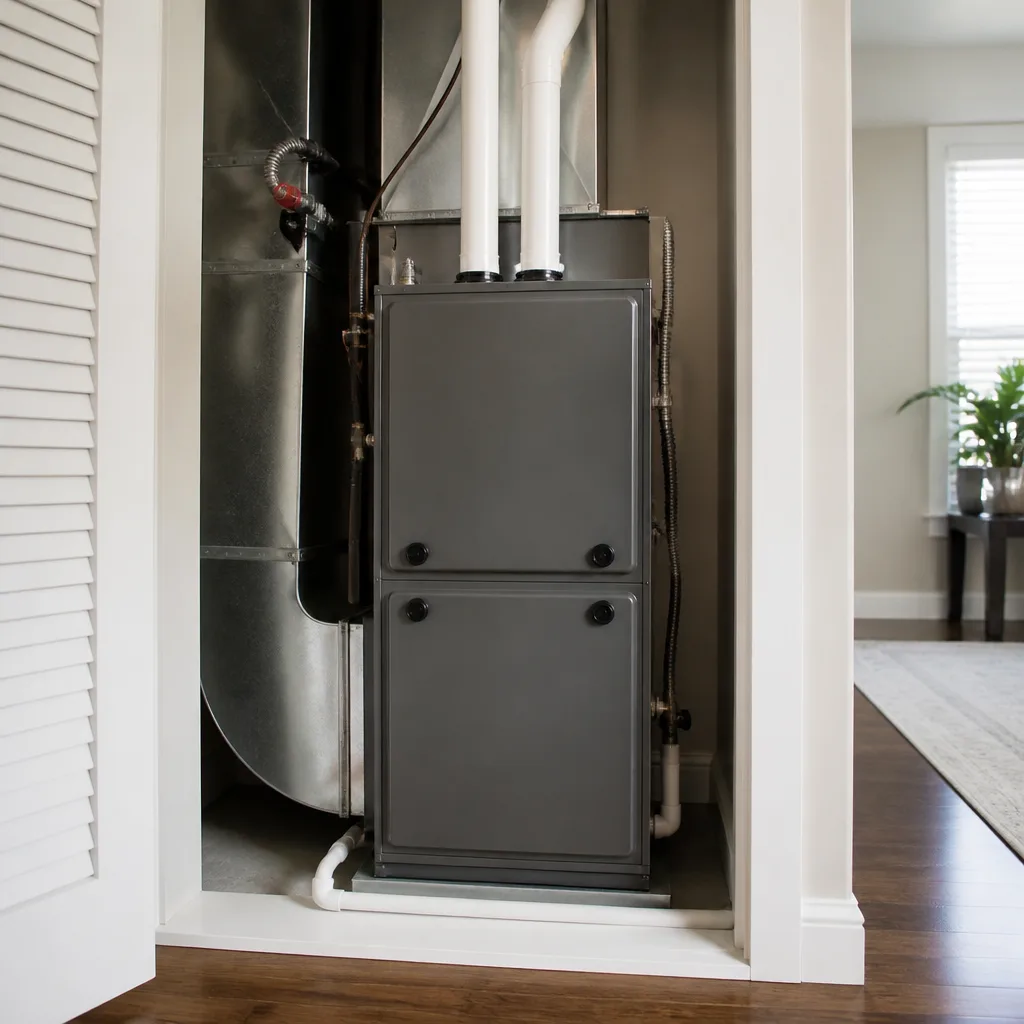
- Standard split-system air conditioner with a gas furnace. This is the classic San Antonio setup. The AC does the heavy lifting from March to November. The furnace handles the twenty cold nights a year. Gas furnaces respond fast on cold mornings and don’t strain the electrical panel. For most homes in the 1,500 to 2,800 square foot range, this is our default recommendation.
- Heat pump (electric) paired with either electric strips or a small gas furnace. Heat pumps have improved dramatically. A modern heat pump with a variable-speed compressor can cool efficiently all summer and heat adequately for all but the coldest San Antonio nights. The trade-off: when a hard freeze hits, a heat pump alone may struggle, which is why we recommend a dual-fuel setup (heat pump plus gas furnace) if you go this route.
- Variable-speed anything. San Antonio humidity means you don’t just want cold air; you want long, slow cooling cycles that pull moisture out. Single-stage systems blast cold air for short bursts, then shut off, leaving the house clammy. Variable-speed systems run longer at lower capacity, stripping humidity and holding temperature steady. They cost more upfront but are worth it here.
What doesn’t make sense for most San Antonio homes
- Boilers and radiator systems. Not common in San Antonio construction, and retrofitting one here is a poor use of money when a furnace does the job for a fraction of the cost.
- Oversized whole-home dehumidifiers as a first resort. A variable-speed AC with a proper fan setting handles most of San Antonio’s humidity. Separate dehumidifiers are a niche solution for specific homes, not a standard buy.
- Geothermal. The math rarely works in San Antonio because the ground loop drilling costs are high and the payoff window stretches past twenty years for most homes. We’ve quoted geothermal twice in the last five years. Neither homeowner moved forward once the numbers were on paper.
For a full breakdown of replacement costs and what to expect, see our guide to AC Installation in San Antonio.
Sizing: The Number One Mistake We See
Most San Antonio AC problems trace back to one error: the system is too big.
It seems backward. Bigger should mean cooler, right? But an oversized AC cools the air so fast it never has time to remove humidity. You get a house that hits 72°F but feels sticky and damp. The system short-cycles, turning on and off constantly. That wears out compressors, spikes your electric bill, and leaves cold spots in some rooms while others stay warm.
How sizing actually works
- Manual J load calculation. This is the correct method. A technician measures your home’s square footage, window area, insulation levels, orientation, and ceiling height, then calculates the exact BTU load. It takes 60 to 90 minutes and produces a number. Anything less is a guess.
- The old rule of thumb (400 square feet per ton) is wrong for San Antonio. That shortcut came from a different climate. Here, we see homes that need 450 to 500 square feet per ton based on sun exposure and window quality. A proper Manual J often recommends a smaller system than the rule of thumb would suggest.
- Undersizing is also a problem. If a system is too small, it runs constantly on August afternoons and never hits the setpoint. You end up at 78°F indoors when it’s 105°F outside, paying utility bills as if you were comfortable.
We’ve walked into Alamo Heights homes where a previous contractor installed a 5-ton unit in a 1,600-square-foot house. The homeowners thought they were buying extra capacity. They were buying humidity problems and a compressor that died in seven years instead of fifteen.
SEER2 Ratings in San Antonio: Where the Real Payback Lives
SEER2 is the new efficiency test standard that replaced SEER in 2023. It measures cooling output per watt of electricity under more realistic conditions than the old test. In San Antonio, the minimum legal SEER2 for new AC installations in the South region is 14.3 for split systems and 13.4 for single-package units.
Here’s the practical version: a 14.3 SEER2 system is the baseline. A 16 to 17 SEER2 system is the sweet spot for most San Antonio homes. A 20-plus SEER2 system is where you’re paying for engineering you won’t recover.
Why the sweet spot matters
- Baseline 14.3 to 15 SEER2: Cheapest upfront. Fine if you’re selling the house soon. Higher operating cost every summer month.
- 16 to 17 SEER2: Usually 15 to 25 percent more efficient than baseline. In San Antonio, with our six-month cooling season, the payback period on the price difference typically runs 4 to 7 years. After that, you’re saving real money every month. Most brands jump here from single-stage to two-stage or variable-speed, which also improves humidity control.
- 18 to 20-plus SEER2: Diminishing returns. The incremental efficiency gain over a 17 SEER2 system is small, but the price jump is large. In a four-season climate with a shorter cooling season, the payback stretches past a decade. Unless you’re in a 4,000-plus-square-foot home with a massive cooling load, skip it.
The brands we service and install most in San Antonio are Lennox, Goodman, and Rheem. Every one of them builds units across the SEER2 spectrum, so this decision is about the number, not the badge on the unit.
Caliche Soil, Pier-and-Beam, and Why Your Ductwork Cares
This is the section generic guides never include, and it’s the one that costs San Antonio homeowners real money.
San Antonio sits on a mix of soil types, but caliche, a hard, calcium-carbonate-rich layer, runs under much of the city. Caliche expands and contracts less than the clay soils up in Dallas, but it’s not uniform. Some neighborhoods, especially older ones inside Loop 410, sit on clay-heavy soil that shifts with drought and rain. That shifting is why pier-and-beam foundations are common in older San Antonio homes like those in Monte Vista, Jefferson, and parts of Alamo Heights.
Why your foundation dictates your HVAC
- Pier-and-beam homes have crawl spaces. Ductwork often runs through the crawl space. When the ground shifts, ducts separate at the joints. You lose conditioned air into the crawl space, and you pull in dust, humidity, and critters. A system that seems to be running fine can be losing 20 to 30 percent of its output through disconnected ducts.
- Slab homes route ducts through the attic. San Antonio attics hit 140°F in August. Ducts in a 140°F attic need to be properly insulated and sealed or the air inside them warms up before it reaches your vents. We see homes where the air leaving the vents is 15 degrees warmer than the air leaving the coil. That’s all attic heat gain.
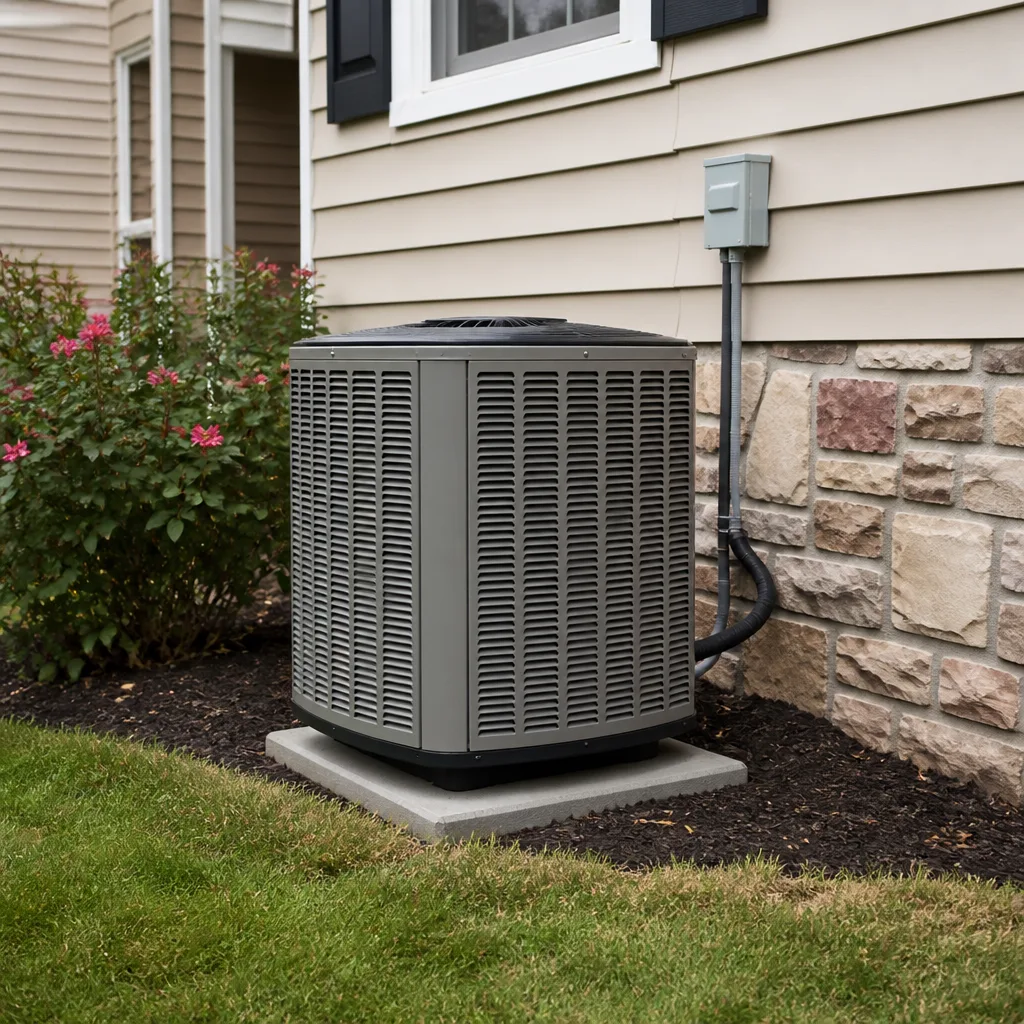
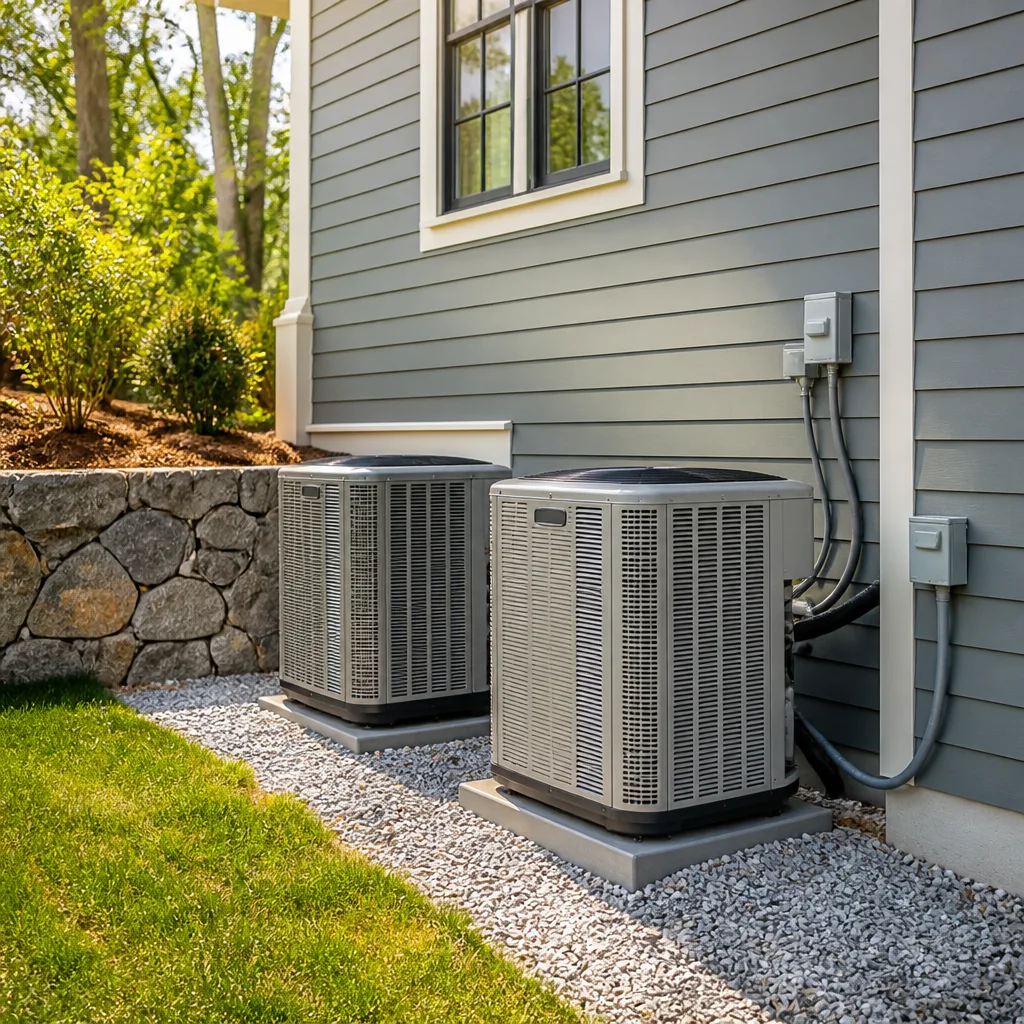
- Caliche affects condenser placement. Caliche is dense and drains poorly in places. An AC condenser pad that sinks or tilts on shifting soil puts stress on the refrigerant lines. We check for level and proper drainage on every install site.
In our experience, about one in three older San Antonio homes has significant duct leakage that every previous technician missed. A duct blaster test, which we run when the symptoms point that way, costs a couple hundred dollars and often explains why a “working” AC can’t hold temperature in August.
CPS Energy Rebates and Federal Tax Credits: Real Numbers
CPS Energy, San Antonio’s municipally owned utility, runs rebate programs that change periodically but have included real money for energy-efficient HVAC upgrades for years. As a homeowner, you should check the current CPS Energy rebate schedule before you buy, because the amounts shift and the program details matter.
What CPS Energy has offered in recent cycles
- AC replacement rebates: Depending on the SEER2 rating and whether you’re replacing an older unit, CPS has paid rebates in the $300 to $800 range for qualifying systems. Higher-efficiency units earn higher rebates.
- Heat pump rebates: Converting from a gas furnace to an electric heat pump has carried higher rebates, sometimes over $1,000, because CPS wants to shift the city toward electric heating.
- Duct sealing and insulation rebates: Smaller amounts, typically $100 to $400, for air-sealing work that reduces cooling load.
- Smart thermostat rebates: CPS has offered rebates or discount programs on qualifying smart thermostats that integrate with their demand-response programs.
Federal credits you can stack
The federal Energy Efficient Home Improvement Credit, updated under the Inflation Reduction Act, allows a 30 percent tax credit, up to $2,000 per year, for qualifying heat pump installations and certain high-efficiency AC units. It’s a tax credit, not a deduction, so it directly reduces what you owe.
How to stack them
- Verify the equipment qualifies. The unit needs a specific AHRI reference number that matches the CPS listing and the federal credit database.
- Apply to CPS before or immediately after install. Program funds are limited each year. Waiting until August to apply means the money may be gone.
- Keep the invoice and AHRI certificate. You’ll need both for federal credit paperwork at tax time.
- Ask your contractor to handle the CPS paperwork. A contractor who does this regularly will fill out the rebate application as part of the install. The actual dollar amounts change, so your installer should give you a written quote that shows the rebate applied, not promised later.
We’ve watched homeowners leave money on the table because a contractor never mentioned the rebate existed. Ask directly: “Does this system qualify for a CPS rebate, and will you handle the application?”
Choosing a Contractor: What Actually Protects You
San Antonio has no shortage of HVAC companies. The quality range is wide, from crews that do excellent work to outfits that price low, cut corners, and disappear when the system fails in July. Here’s how to tell them apart before you spend a dollar.
The questions that matter
- “Will I get a written price before any work starts, every single time?” If the answer is anything other than yes, keep looking. A contractor who can’t commit to written upfront pricing is planning to change the number at the door. Halden Heating and Air San Antonio operates under The Relay Visibility Guarantee, which means a written price is delivered before any work starts, on every job, without exception.
- “Do you give me a written guarantee on repairs?” The standard in this industry is a verbal promise. Get it in writing. Every repair we complete includes a written guarantee. If the repair fails within the coverage window, we come back at no charge. That’s not an add-on; it’s included automatically.
- “Can I book online and track my technician to the door?” This is the standard you already expect from a rideshare app or a food delivery. You should expect it from an HVAC company. We send a live arrival time before your tech shows up, not a four-hour window. You see who is coming, when they’ll arrive, and where they are.
- “If the repair fails, is the second visit free?” Our answer is yes, automatically. It’s covered under the 365-Day Done Right Promise. If a repair doesn’t hold for a full year, the return visit is free. No arguing required.
- “Are your technicians background-checked?” You’re letting a stranger into your home. We background-check and uniform every technician we send. The person at your door is the person you booked, with identification.
What The Relay Visibility Guarantee means in practice
The Relay Visibility Guarantee is the standard we operate under as part of the Relay Home Co. network. It means you get before-and-after photos of the work, a written record of what was done, a written price before the work starts, and a written guarantee when it’s finished. You’re never guessing what happened inside your unit or what you’re paying for. If you’re comparing contractors, ask them if they’ll put all of that in writing. Most won’t.
For details on what a repair visit looks like under that standard, see AC Repair in San Antonio.
Maintenance: A Schedule Built for San Antonio Weather
Most national maintenance advice tells you to tune up your system once in spring and once in fall. That’s fine for Ohio. In San Antonio, the schedule needs to shift because the load on your system is so lopsided.
The San Antonio maintenance rhythm
- Late February to early March: Pre-season AC check. Before the first 90°F day hits, have someone inspect the condenser coil, check refrigerant levels, test the capacitor, and verify the system starts and cools properly. Finding a weak capacitor in March costs $200 and an hour. Finding it in August costs the same part but a week of sweating while you wait for the appointment.
- May or June: Filter and airflow check. San Antonio pollen and dust seasons run heavy in spring. Your filter is doing more work than you think. We recommend checking it monthly from March through June and replacing it when it looks loaded. A dirty filter restricts airflow, which freezes coils and shortens compressor life.
- October or November: Heating check plus AC cooldown. Before the first cold front, verify the furnace or heat pump heating mode works. Test the igniter or heat strips. Make sure the thermostat switches over correctly. San Antonio furnaces sit idle for eight months, then get asked to fire on the first 35°F morning. That’s when problems show up.
- After any freeze event: Visual inspection. If a hard freeze hits, check for ice around the outdoor unit, listen for strange noises on startup, and watch for water where it shouldn’t be. The freeze in February 2021 killed thousands of heat pumps in San Antonio because defrost controls and drain lines weren’t set up for sustained cold. A post-freeze check catches problems before summer.
Maintenance visits from Halden Heating and Air San Antonio run a flat rate with a written report of what we found. Our technicians aren’t paid on what they sell, which means the recommendation you get is the one you need, not the one that earns a commission.
Common Mistakes to Avoid
- Buying a system sized by the 400-square-feet-per-ton rule. That shortcut is wrong for San Antonio’s heat load and humidity. You’ll end up oversized, which means short cycling, clammy air, and premature compressor failure.
- Skipping the Manual J load calculation. A contractor who quotes a replacement without measuring your home is guessing. Demand the calculation. It takes an hour and it’s the difference between a system that works and one that doesn’t.
- Ignoring ductwork condition. We’ve already covered this, but it’s the most common missed diagnosis in San Antonio. If your house won’t cool and three techs have told you the AC unit is fine, the problem is usually in the ducts.
- Choosing a contractor on price alone. The cheapest bid is often a single-stage unit with no load calculation, no duct inspection, and no written guarantee. You’ll pay for that decision in July.
- Waiting until the system fails to replace it. San Antonio AC systems fail most often in August, when techs are booked solid and you’ll wait days for a repair. If your system is twelve-plus years old, plan the replacement in spring or fall when you have time to compare options.
- Not checking the CPS Energy rebate before buying. Rebate funds are limited and the qualifying equipment list changes. Buying a system that doesn’t qualify when a qualifying one costs $200 more leaves rebate money on the table.
- Forgetting about the furnace until winter. You won’t think about your furnace from March to November. Then the first cold front hits and you discover it won’t fire. Include the heating check in your fall maintenance or you’ll be calling for emergency furnace service on a 35°F night. See Furnace Repair in San Antonio if that’s where you are now.
See the difference
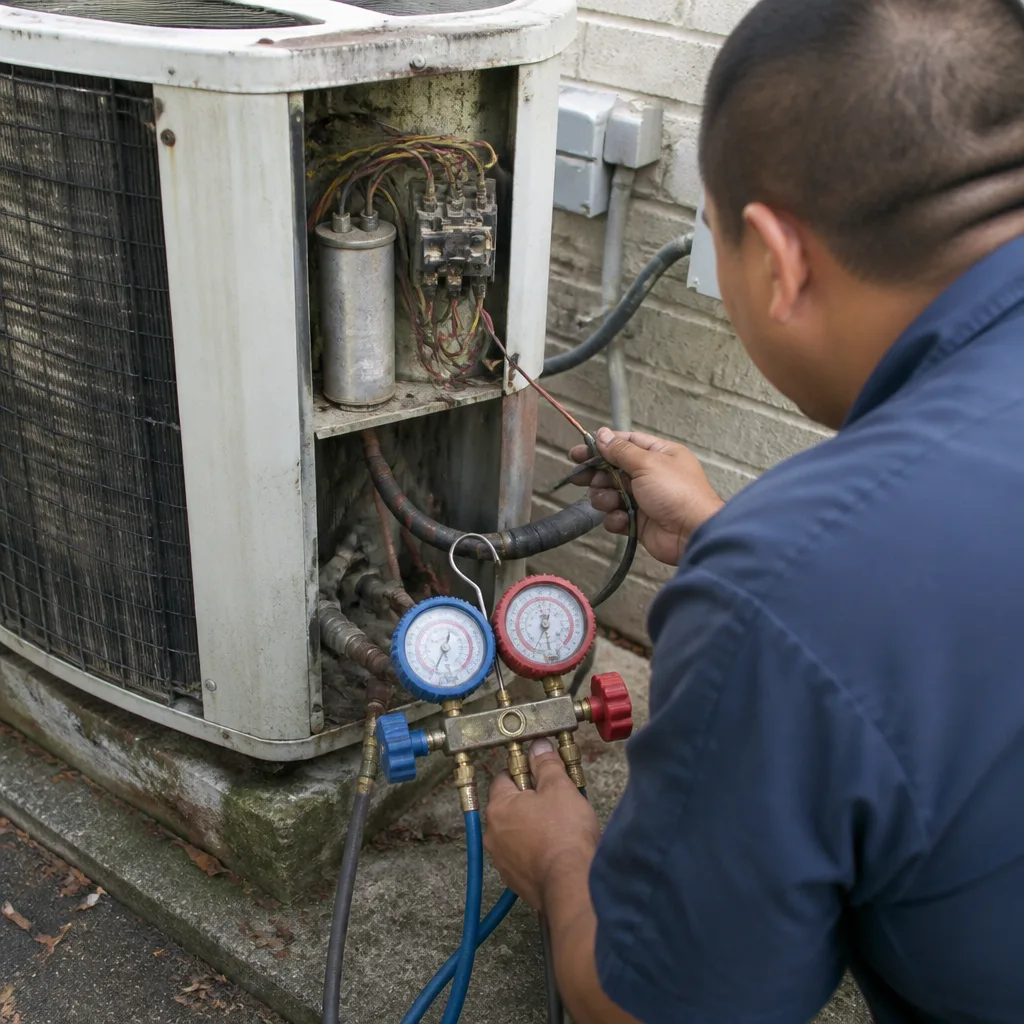 Before
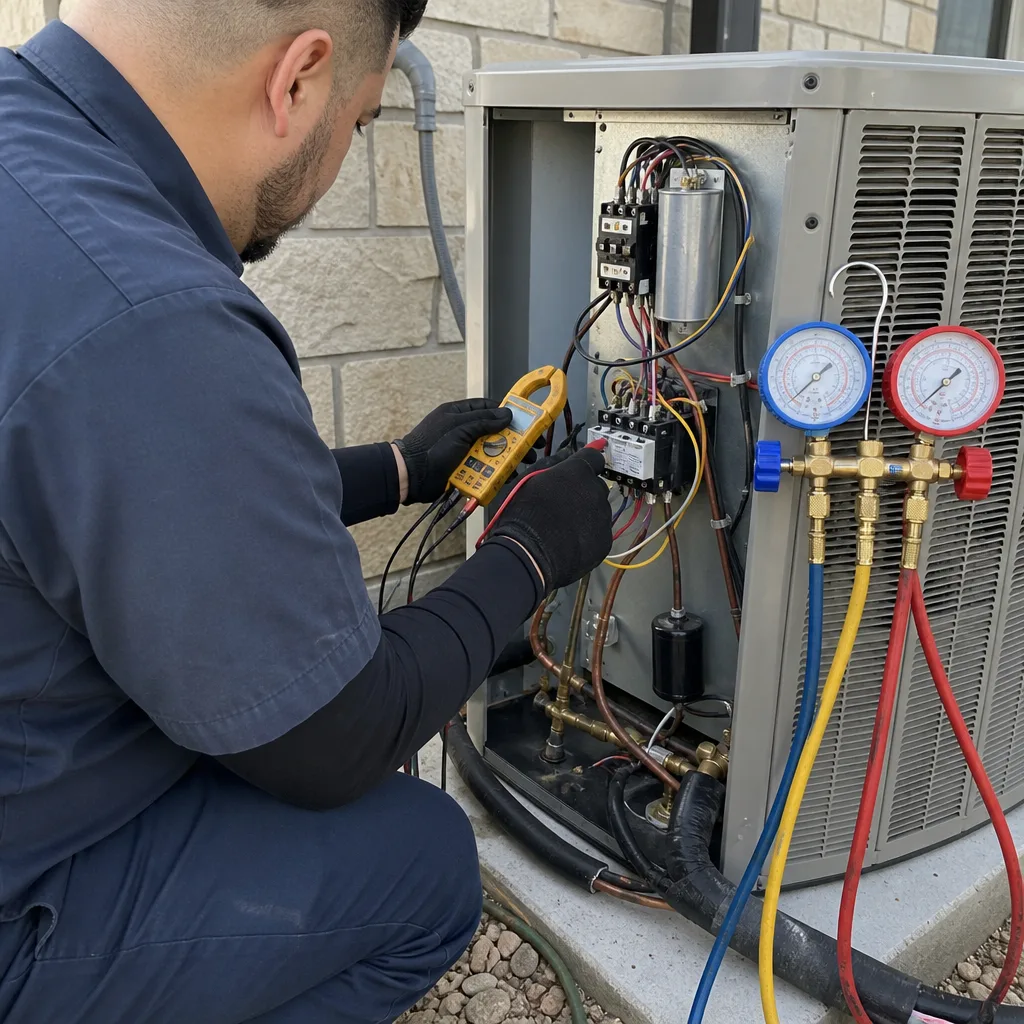 After
After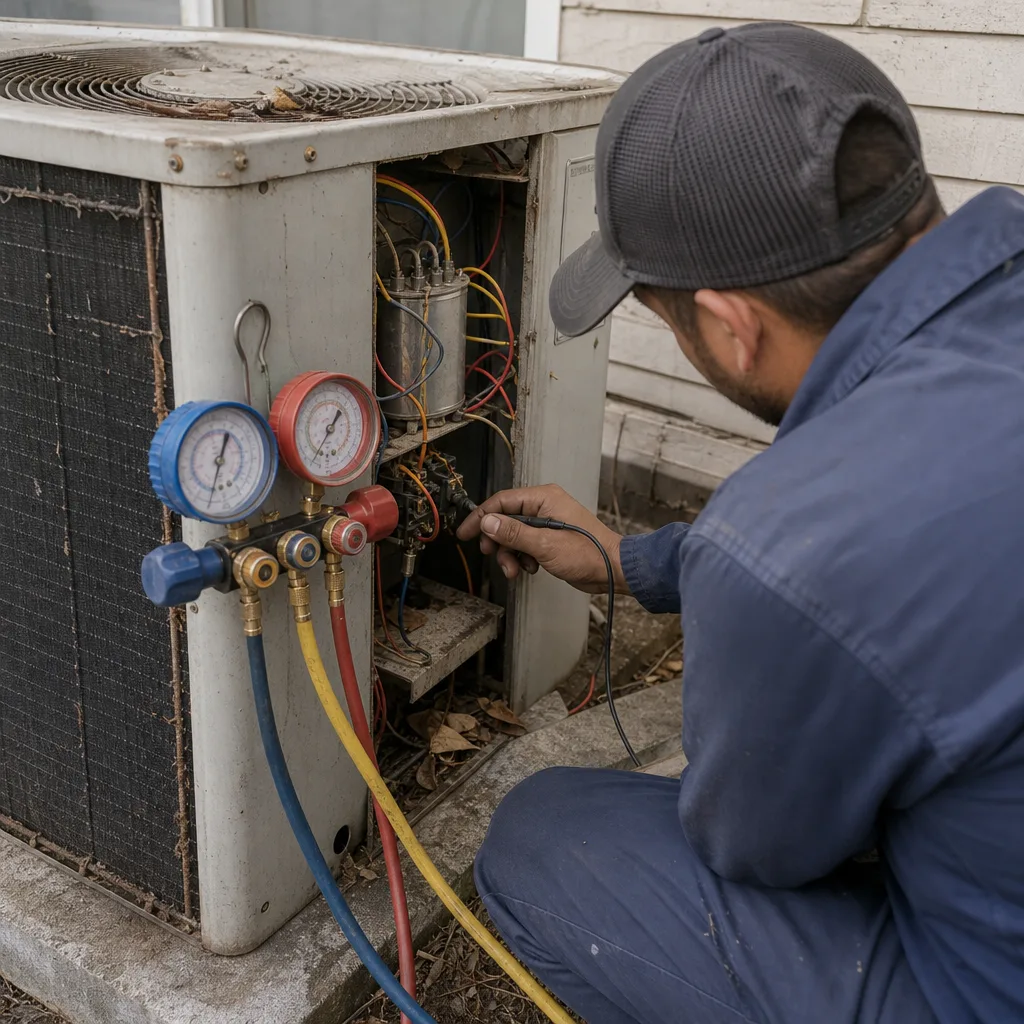 Before
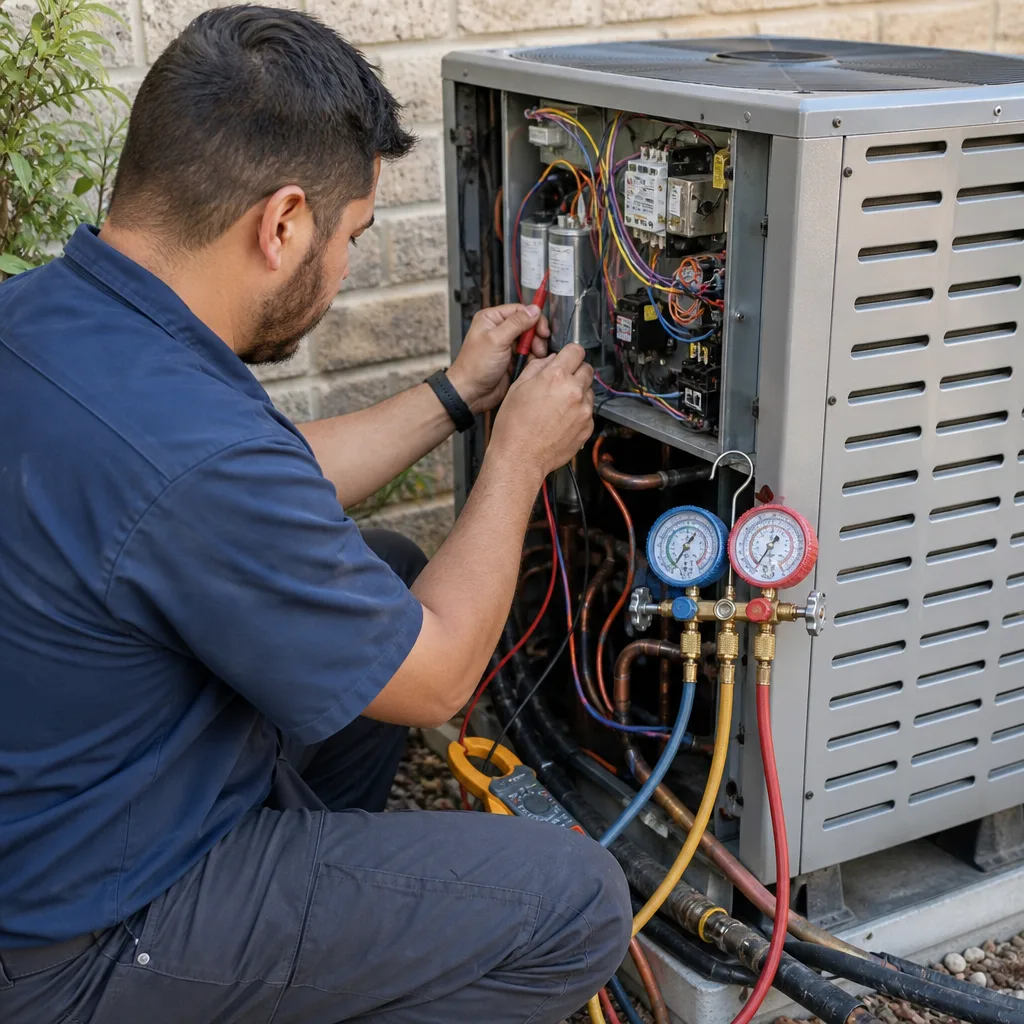 After
After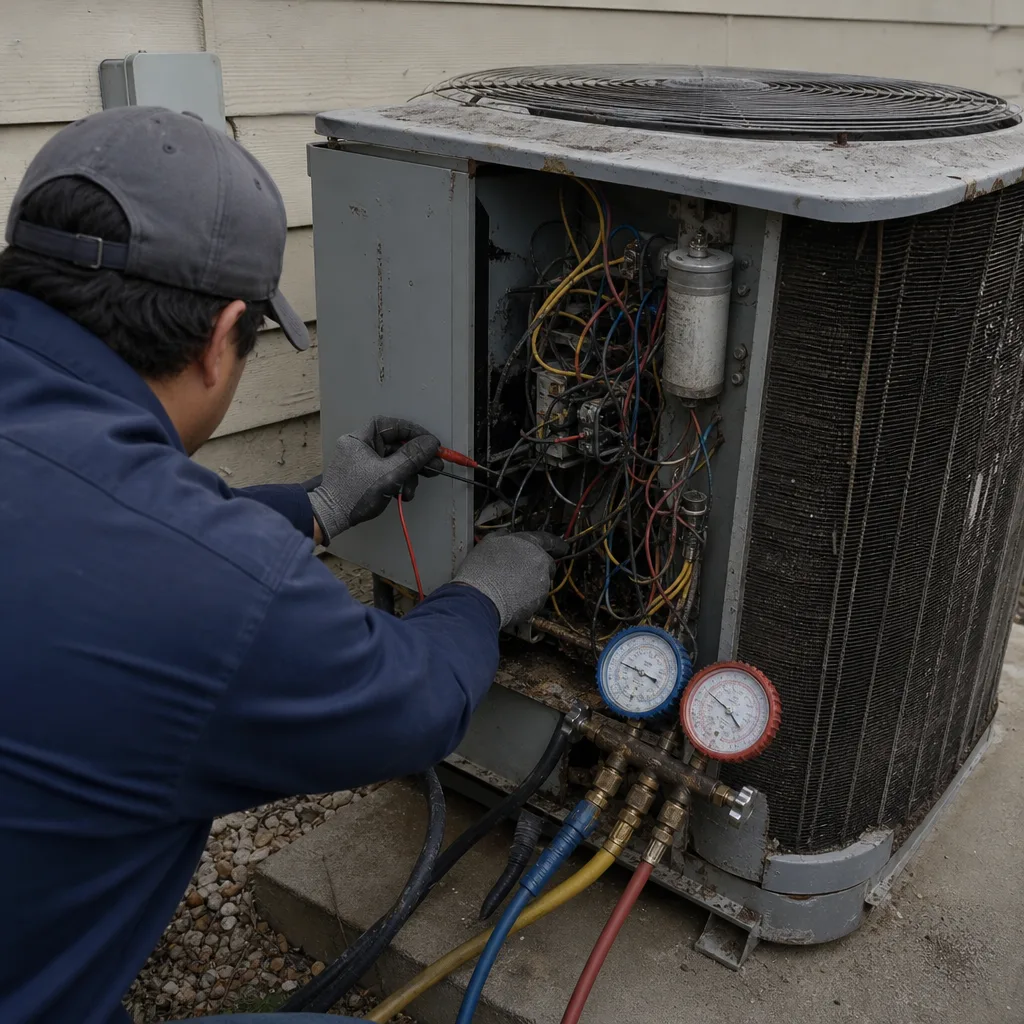 Before
 After
AfterWhen to Call a Professional
Some HVAC work is safe to handle yourself: changing a filter, clearing debris from around the outdoor unit, checking that vents are open. The rest is not. Refrigerant handling requires federal certification. Electrical work inside the air handler or condenser can seriously injure or kill you. Gas furnace repairs carry carbon monoxide risk. Anything involving the refrigerant circuit, the electrical panel, the heat exchanger, or the high-tension parts of the system should be left to a trained technician.
If your system is blowing warm air in August, making grinding noises, tripping breakers, or leaking water into your home, stop and call. Halden Heating and Air San Antonio offers free estimates in San Antonio, and every call is answered by a real person 24/7. Call (903) 623-6784 and you’ll get a written price before any work starts.
If you want to start with the full picture of what we do, visit our Halden Heating and Air San Antonio home page.
Frequently Asked Questions
How much does a new HVAC system cost in San Antonio?
A full system replacement in San Antonio typically runs between $7,500 and $14,000 depending on system size, SEER2 rating, and whether ductwork needs repair or replacement. The price difference between a baseline 14.3 SEER2 unit and a 17 SEER2 unit is usually $2,500 to $4,500, which most homeowners recover in energy savings within 4 to 7 years. Call (903) 623-6784 for a written quote on your specific home.
How often should I service my HVAC in San Antonio?
Twice a year minimum: once in late winter before cooling season begins, and once in fall before heating season. Because San Antonio’s cooling season runs March through November and heating demand is concentrated in a few cold weeks, the spring check is the more critical one. Skipping it means discovering in August that a $200 part has become a $2,000 compressor failure.
What SEER2 rating should I buy in San Antonio?
For most San Antonio homes, 16 to 17 SEER2 is the financial sweet spot. It costs more upfront than the 14.3 minimum, but the cooling season here is long enough that the energy savings pay back the difference in 4 to 7 years. Above 18 SEER2, the incremental savings shrink and the payback stretches past a decade for most homes.
Why does my AC run constantly but the house won’t cool below 78°F?
That’s a symptom of either an undersized system, significant duct leakage, or low refrigerant. In San Antonio, duct leakage in older pier-and-beam homes is commonly the culprit; the system is producing cold air, but 20 to 30 percent of it is escaping into the attic or crawl space before it reaches your vents. A duct blaster test will identify the problem in under an hour.
Are CPS Energy rebates worth pursuing for a new AC?
Yes. CPS Energy has paid rebates in the $300 to $1,000-plus range for qualifying high-efficiency AC units and heat pumps, and the funds are limited each year. It’s worth verifying that your chosen system qualifies and having your contractor file the paperwork. The federal 30 percent tax credit, up to $2,000, provides additional savings on qualifying heat pumps.
Can you install a new HVAC system the same day I call?
No reputable company will install a new system on the same day, and you should be wary of one that promises to. A proper install requires a load calculation, equipment ordering, and a scheduled installation window. That said, emergency repairs are often available same-day or next-day. For a replacement, expect a written fixed price and a set install date. Call (903) 623-6784 for your estimate.
The Bottom Line
San Antonio’s HVAC demands are specific: eight months of cooling, real humidity, a short but occasionally brutal winter, and soil that shifts under older homes. The right system for this city is sized by a Manual J calculation, rated in the 16 to 17 SEER2 range for most budgets, paired with ductwork that’s been tested and sealed, and installed by a contractor who puts pricing and guarantees in writing before the work starts. Get those four things right and your system will hold 72°F in August, strip humidity properly, and start on the first cold morning in January. Get one of them wrong and you’ll be calling for repairs at the worst possible time.
Call Halden Heating and Air San Antonio at (903) 623-6784 for a free estimate, a written price, and a process you can track to the door.
Written by Andre Fuller, Owner at Halden Heating and Air San Antonio, serving San Antonio since 2004.