
Last updated October 16, 2026
 AC repair
 Furnace & heating
 Heat pumps
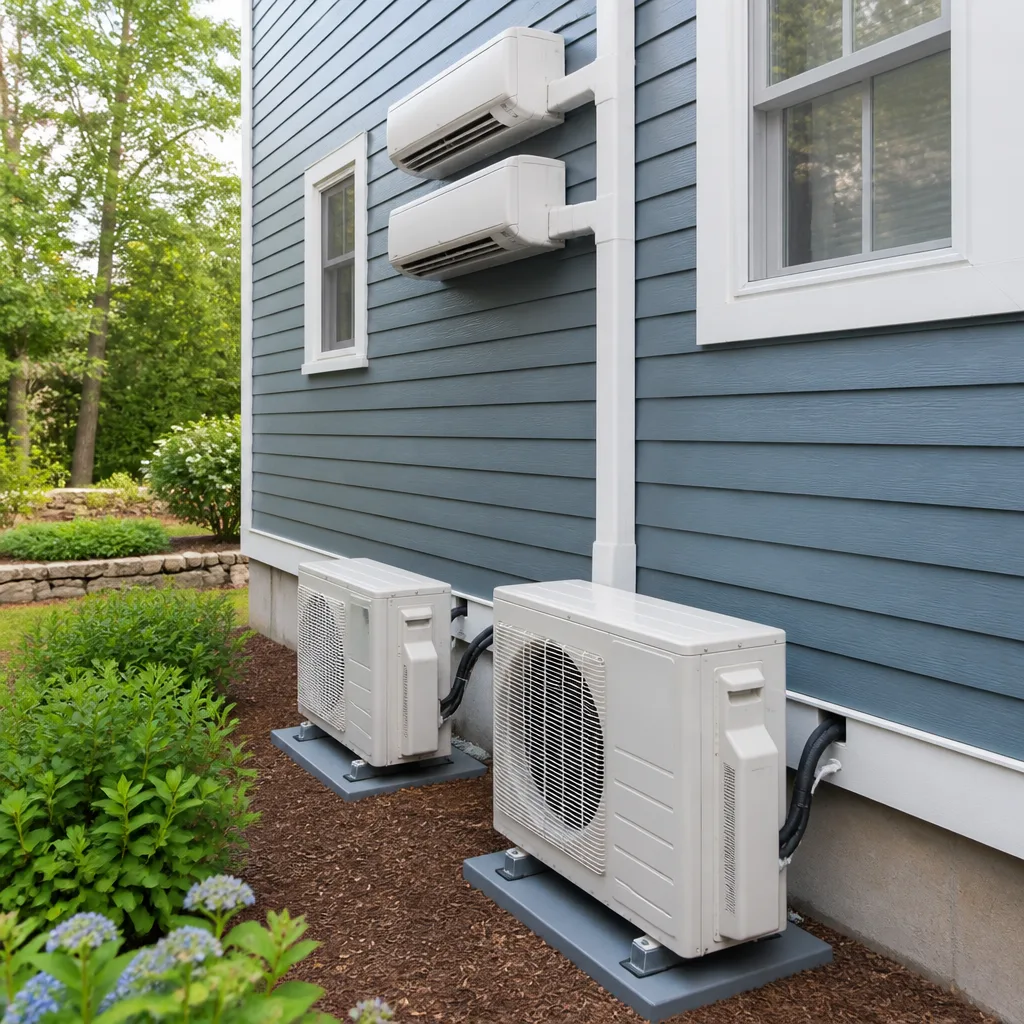 Ductless mini splits
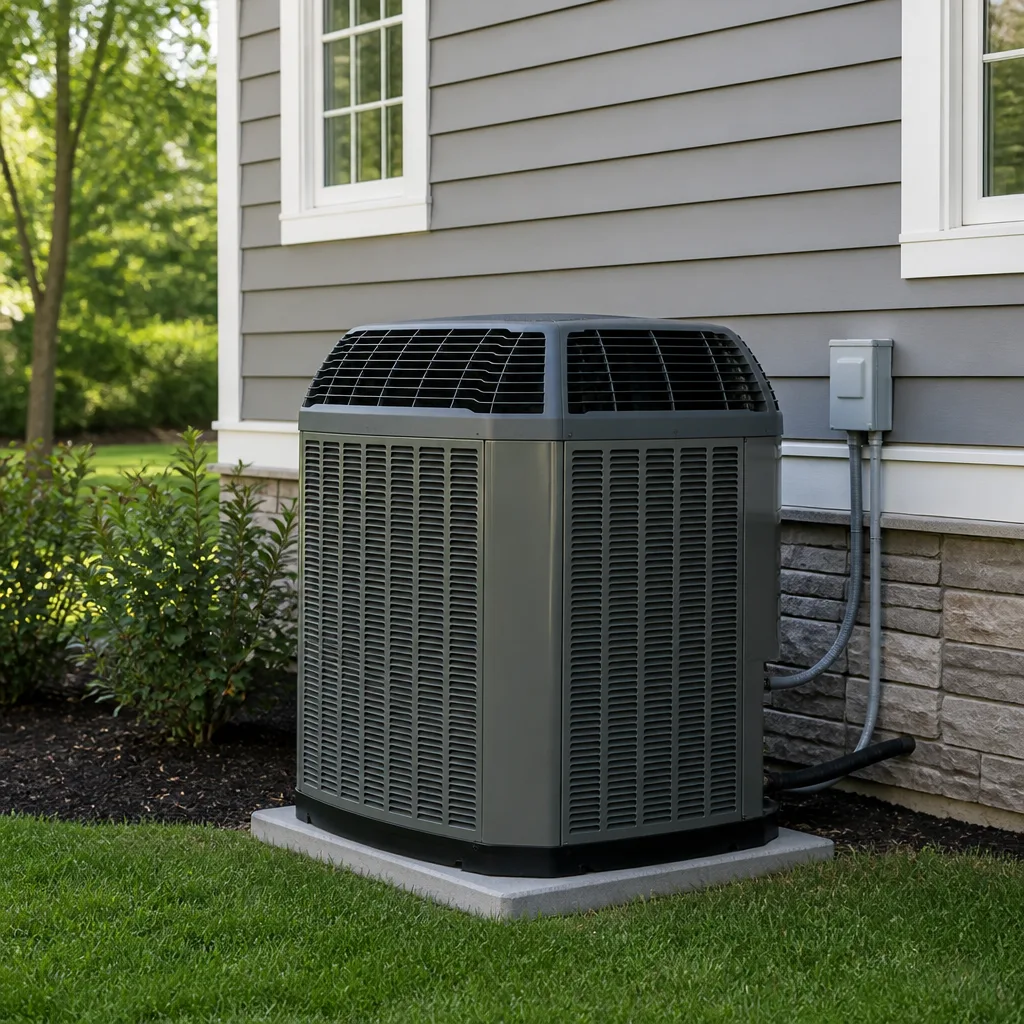 Trane
Trane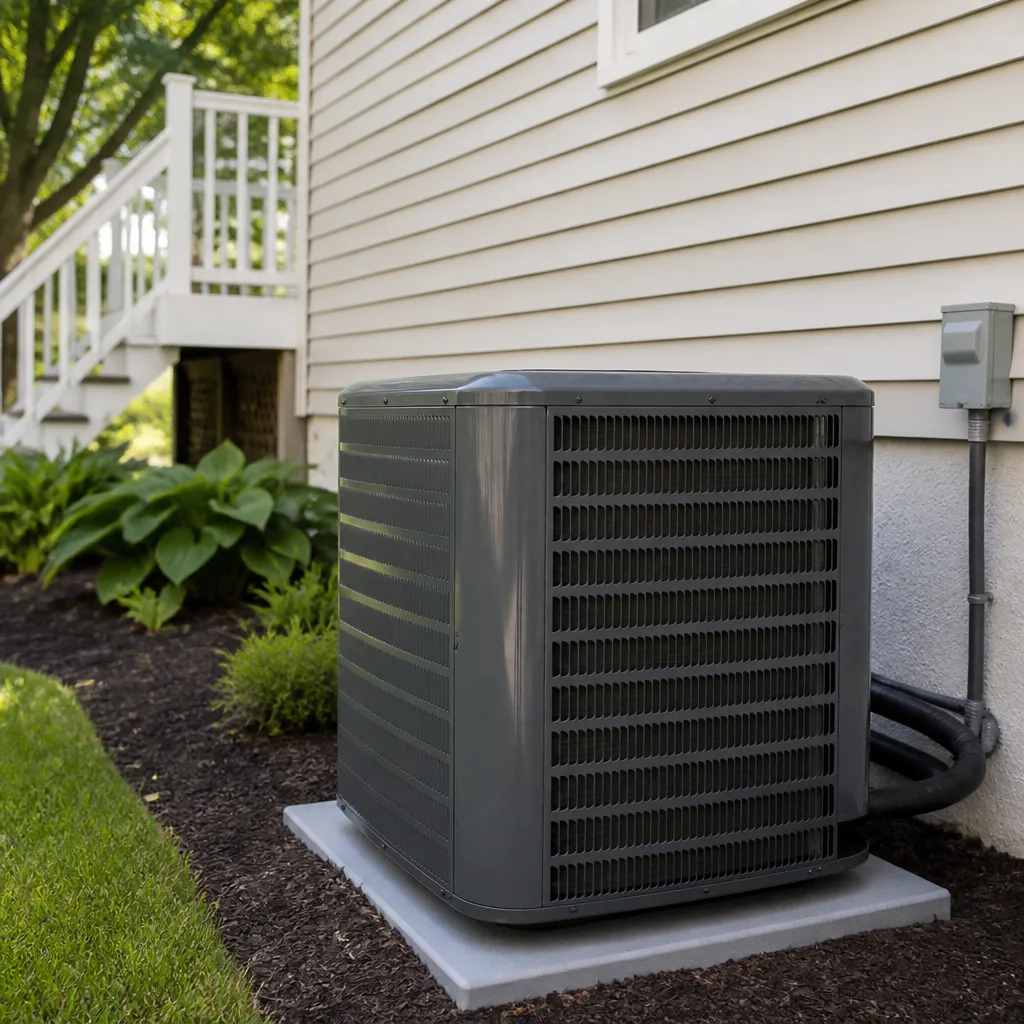 Goodman
Seasonal tune-up and full diagnostic on your Carrier, Trane, or Goodman system - readings shown to you before any repair is proposed
Diagnosis first, numbers second - you approve the repair price before a single part goes in.
Get your free estimateHVAC Cost Breakdown: The San Antonio Homeowner’s Reference for 2026
When we publish a locked written price for a San Antonio AC replacement before a technician is ever dispatched, the most common reaction we get isn’t relief. It’s surprise. Not at the number itself, but at the fact that a real number exists before anyone has shown up at the door. That surprise tells you everything about how HVAC pricing has worked in this city for decades. This guide exists to fix that. You’ll learn exactly what goes into a fair San Antonio HVAC quote in 2026, line by line, so you can decode any estimate you receive and spot both lowball bait-and-switch tactics and padded invoices before you sign anything.
Quick Answer
In 2026, a full AC replacement in San Antonio runs roughly $5,800 to $11,500 depending on system size and efficiency, with most 3-ton systems landing between $7,000 and $9,500. Furnace replacements typically cost $3,800 to $7,200. A repair call averages $150 to $500, and the single biggest pricing variable is not equipment brand but labor structure, warranty coverage, and whether the contractor locks the price in writing before work begins.
Styles & brands we work with
Table of Contents
- What AC Replacement Actually Costs in San Antonio
- Why Two Quotes for the Same AC Can Differ by $2,000+
- The Line-Item Breakdown: What You’re Really Paying For
- The Sanity Check: Is Your Quote in the Right Range?
- CPS Energy Rebates and Federal Tax Credits for 2026
- Locked Written Price vs. “Good Faith Estimate”
- Furnace Replacement and Coil Costs
- Duct Repair and Replacement Costs
What AC Replacement Actually Costs in San Antonio
A full central air conditioning replacement in San Antonio in 2026 is not a one-number answer. The equipment size your home needs, the efficiency rating you choose, and the contractor’s labor structure all move the final price by thousands. Here are the real ranges we see across Bexar County for complete system replacements, including equipment, labor, refrigerant, permit, and disposal:
- 2-ton AC replacement: $5,800 to $7,400 for a 14-15 SEER2 system; $7,800 to $9,600 for a 16-17 SEER2 high-efficiency unit
- 3-ton AC replacement: $6,900 to $8,500 for a 14-15 SEER2 system; $8,800 to $11,500 for a 16-17 SEER2 high-efficiency unit
- 4-ton AC replacement: $7,800 to $9,600 for a 14-15 SEER2 system; $10,200 to $13,400 for a 16-17 SEER2 high-efficiency unit
These ranges assume a standard horizontal attic or vertical closet air handler configuration common in San Antonio single-family homes. If your home has a gas furnace paired with the AC, expect the combined package to run higher, typically $9,000 to $14,500 for a 3-ton AC plus 80% efficiency furnace swap. Homes in older San Antonio neighborhoods like Alamo Heights, Monte Vista, or Jefferson with tight attic access or outdated duct connections often see labor add $400 to $900 over the baseline. The point is this: any quote you receive should fall within these bands, and if it doesn’t, there should be a clear line-item reason why.
Why Two Quotes for the Same AC Can Differ by $2,000+
You call two San Antonio HVAC companies. Both are licensed, both have good reputations, both quote the exact same Carrier or Rheem 3-ton unit. One says $7,200. The other says $9,400. Neither is necessarily ripping you off. Here are the three legitimate reasons this happens, and why understanding them matters more than the raw number on the quote.
Reason 1: Labor Market and Technician Pay Structure
San Antonio’s HVAC labor market tightened significantly through 2024 and 2025. Companies that pay technicians hourly with benefits and ongoing manufacturer training have higher overhead than shops that pay piece-rate or commission-heavy structures. The company charging $9,400 might be paying a tech $32 an hour plus health insurance and weekly factory training. The company charging $7,200 might be paying the same tech $22 an hour and hoping volume covers the gaps. That cost difference lands on your invoice. The quality difference lands on your system’s lifespan.
Reason 2: Overhead Structure and Fleet Size
A large San Antonio HVAC fleet with 40 trucks, a dispatcher on staff, and a parts warehouse has real monthly costs that a two-truck owner-operator doesn’t. That overhead buys faster response times during San Antonio’s July heat spikes, when 40-truck shops can reshuffle capacity and smaller shops are booked out 10 days. It also buys consistency: the same background-checked process, the same uniform standards, the same escalation path. You’re paying either for scale or for agility. Neither is wrong. Knowing which you’re buying is the point.
Reason 3: Warranty Labor Coverage Hidden in the Price
The most overlooked line in any HVAC quote is labor warranty. A Carrier or Trane parts warranty covers the parts, not the time a technician spends replacing them. If a compressor fails in year six, the part is free but the labor to install it can run $600 to $1,100 in San Antonio. Some contractors bundle five or ten years of labor warranty into the installation price. Others don’t mention labor warranty unless you ask. A $1,800 difference between quotes sometimes comes down to one contractor charging you now for warranty labor you’d otherwise pay later. Ask every bidder: “What does your labor warranty cover, for how many years, and what would a compressor replacement cost me in year six?” The answer tells you a lot.
At Halden Heating and Air San Antonio, our practice is to put the guarantee in writing before work begins. Every repair includes a written guarantee, and if it fails during the coverage window, the return visit is free. That is the standard we’ve held since 2004, and it’s a direct contrast to contractors who quote low and hope the warranty question never comes up. Our Halden Heating and Air San Antonio home page spells out the full 365-Day Done Right Promise in writing, which you should expect from any contractor you consider.
The Line-Item Breakdown: What You’re Really Paying For
Most San Antonio HVAC quotes are a single number with minimal detail. That is a red flag every time. A legitimate quote in 2026 should break down cleanly. Here is what a typical 3-ton AC replacement quote for a 1,600 to 1,800 square foot San Antonio single-story home actually contains, with real ranges for each line item.
- Equipment cost (condenser + evaporator coil): $3,200 to $4,800 for a 3-ton, 15 SEER2 system from a major brand like Goodman, Rheem, or Carrier. This is the single largest line and the one most likely to be padded by marking up the equipment beyond distribution price.
- Labor (mechanical install): $1,200 to $2,400. This covers removal of the old condenser and coil, setting the new equipment, brazing the line set, pulling a vacuum, and testing operation. San Antonio attic installs with vertical air handlers add time and typically $200 to $500.
- Refrigerant (R-410A or A2L): $150 to $450. New systems ship with a dry charge or come factory-charged. In 2026, the industry is mid-transition from R-410A to A2L refrigerants, which are classified as mildly flammable. A2L systems require specific training and handling protocols, and that cost is starting to show up in San Antonio quotes at roughly $100 to $250 more per install than 2023 pricing.
- Permit and inspection: $75 to $250. The City of San Antonio requires a mechanical permit for equipment changeouts, and the registered contractor pulls it. If a bidder says a permit isn’t needed or offers to skip it, walk away. Unpermitted work can void manufacturer warranty and complicate home resale.
- Disposal and haul-away: $50 to $150. The old condenser and coil must be removed and handled per EPA refrigerant recovery rules. This is a trivial line item but should appear on the quote. If it’s buried as “miscellaneous,” ask what it covers.
- Duct connection and plenum adaptation: $150 to $500. Your new equipment rarely matches the old duct connection exactly. A contractor who skips this line is either careless or hiding it inside another line item.
- Thermostat (if replaced): $80 to $350. A basic digital thermostat is cheap. A smart thermostat with Wi-Fi and scheduling runs higher. San Antonio homeowners on CPS Energy’s Wi-Fi thermostat program may qualify for a rebate on this line specifically.
Add those up and you get a mid-range 3-ton replacement between $6,900 and $8,900. If your quote is significantly below that, something is being left out, and you will find out what it is after the work starts. If it’s significantly above that with no explanation for labor warranty or unusual site conditions, you’re overpaying. If you’re comparing quotes for AC Installation in San Antonio, the same line-item logic applies to every bid you evaluate.
The Sanity Check: Is Your Quote in the Right Range?
You don’t need to calculate your home’s exact cooling load to spot a bad quote. You need a rough framework built on three things San Antonio homeowners already know: square footage, home age, and current system type. Here is a step-by-step sanity check you can run on any quote in about five minutes.
- Square footage to tonnage: In San Antonio’s climate, figure roughly 500 to 600 square feet of conditioned space per ton of cooling. A 1,500 square foot single-story home typically needs a 3-ton system (1,500 ÷ 500 = 3). A 2,400 square foot two-story home typically needs a 4-ton system, sometimes 5-ton if it faces full west sun. If a contractor quotes a 2-ton for a 2,200 square foot home, they’re undersizing, which means it will never hit setpoint on San Antonio’s 100-degree July afternoons and will run constantly, driving your CPS bill into triple digits.
- Home age and efficiency: Homes built before 2000 in San Antonio often have lower insulation values and leakier ducts than newer construction. If your home predates 2000 and you’ve never had insulation upgraded, the honest contractor will note that replacing your AC is only half the equation. The quote should still be in the normal range. If someone quotes you a 20 SEER2 top-tier system for a 1970s home with original windows, ask why. You’ll likely never recover the efficiency premium through living in the home long enough.
- Current system type check: If you currently have a heat pump and the quote is for a straight AC with no heat strip mention, ask whether your winter heating is being addressed. San Antonio winters are mild, but nights in the 30s happen every year, and heat pumps serve dual duty. Switching from a heat pump to straight AC plus electric strip heat changes the equipment list and the price. If the quote doesn’t mention the change, the contractor either didn’t look at your existing system or didn’t think it through.
This framework won’t give you a precise number, but it will flag quotes that are suspiciously low, suspiciously high, or mismatched to your home. The lowball risk in San Antonio is real: a $4,900 quote for a 3-ton replacement should alarm you, not excite you. That price point usually means the equipment is being sold below cost to get a foot in the door, and the upcharges come later. For context on what a repair versus replacement conversation should look like, see AC Repair in San Antonio for repair-specific pricing guidance.
CPS Energy Rebates and Federal Tax Credits for 2026
Most San Antonio homeowners learn about available rebates and tax credits after they’ve already signed an installation contract. That’s backwards, and it costs people real money. Here is what you should know before you sign anything in 2026.
CPS Energy Residential Rebates
CPS Energy, San Antonio’s municipal utility, runs a residential HVAC rebate program that changes slightly year to year. For 2026, the core structure is: rebates are paid per qualifying system based on SEER2 and EER2 efficiency ratings, with higher rebates for higher-efficiency equipment. The exact dollar amounts vary by program cycle, but historically CPS has paid between $150 and $500 per qualifying AC installation, with additional amount for heat pump conversions. The rebate is typically applied at the point of purchase by participating contractors, meaning you don’t front the money and wait on a check. Always confirm the contractor is a registered CPS participating contractor and that the specific equipment model qualifies before you sign. If a contractor can’t tell you the exact rebate amount for the exact model they’re quoting, that’s a sign they don’t do this often.
Federal Inflation Reduction Act Tax Credits (Still Active in 2026)
The federal 25C tax credit remains in effect through 2032. For 2026, the numbers are: up to $600 for qualifying central AC systems that meet specific SEER2 and EER2 thresholds, and up to $2,000 for qualifying heat pumps that meet the higher efficiency tier. The critical detail is the thresholds: not every system qualifies. A 14 SEER2 base-model AC typically does not qualify for the federal credit. The 16 SEER2 and above models usually do, and the EER2 rating matters as much as the SEER2. This is the single most common reason a homeowner thinks they’re getting a tax credit and discovers at tax time they aren’t. Ask your contractor to provide the AHRI certificate number for the exact system they’re quoting, and verify the model against the IRS qualification tables before you sign.
The practical impact in San Antonio: a homeowner who chooses a qualifying 17 SEER2 heat pump over a 14 SEER2 straight AC pays roughly $1,800 more upfront but receives up to $2,000 back as a federal credit plus a higher CPS rebate. Over a system’s 15-year lifespan in San Antonio’s cooling-dominant climate, the higher-efficiency unit also saves an estimated $80 to $150 per year in CPS electricity costs. The math often favors the high-efficiency unit, but only if you actually claim the credit.
Locked Written Price vs. “Good Faith Estimate”
The single most important phrase in any San Antonio HVAC contract is not the price. It’s whether the price is locked. Here is the practical difference between what you should accept and what you should reject.
What a Locked Written Price Means
A locked written price is a document that states the total cost of the job, itemized line by line, and explicitly says no additional charges will apply without your written approval. It is delivered before work begins. It does not contain contingency language that authorizes the contractor to add charges at their discretion. This is the standard we operate under at Halden Heating and Air San Antonio, and it’s the standard every San Antonio homeowner should demand from every contractor. It means the number on the page is the number on the invoice, period.
What “Good Faith Estimate” Actually Authorizes
A “good faith estimate” is not a contract. The phrase itself signals that the contractor reserves the right to revise. Watch for these specific clauses, because each one authorizes the contractor to charge you more without further approval: “additional charges may apply for unforeseen conditions,” “price subject to change based on site inspection,” “labor not included for duct modifications,” and “refrigerant charged separately at current market rate.” None of these are fraudulent. All of them are costs you will pay. The question is whether you knowingly agreed to them or discovered them on the invoice after the work was done.
When you evaluate quotes, ask one question: “Is this the exact total I will pay if I sign this today and nothing about my system changes?” If the answer is anything other than an unambiguous yes, you are looking at an estimate, not a price. In our experience, the language of the quote matters as much as the number, because a low number with open-ended clauses is often more expensive than a slightly higher number with a locked total.
Furnace Replacement and Coil Costs
San Antonio winters are mild compared to Minnesota, but January nights in the 30s mean your furnace still matters, and furnace replacement pricing follows its own logic. Here are the 2026 ranges for the most common furnace and coil jobs in San Antonio.
Furnace Replacement
- 80% efficiency gas furnace (standard): $2,800 to $4,200 installed for a 60,000 to 100,000 BTU unit. This is the most common replacement in older San Antonio homes with existing gas connections.
- 95%+ efficiency gas furnace (high-efficiency): $4,200 to $6,800 installed. The higher cost reflects the more complex venting required, which in San Antonio attics often means running new PVC vent lines through the roof line.
- Electric furnace or air handler with heat strips: $2,400 to $3,900 installed. Common in newer San Antonio subdivisions without gas service.
The furnace-specific failure mode we see most in San Antonio is cracked heat exchangers in 15+ year old units. Since the furnace sits unused from roughly March through October, homeowners often discover the crack during the first cold snap when they fire up the heat and smell gas. A cracked heat exchanger is a safety issue, not a repair item, and it’s a job we always flag for replacement. For repair-specific context, Furnace Repair in San Antonio has the breakdown for repair versus replace decisions.
Evaporator Coil Replacement
If your AC is 8 to 12 years old and develops a refrigerant leak, the evaporator coil (the indoor component that absorbs heat from your home’s air) is the most likely culprit. Coil replacement in San Antonio runs $1,600 to $2,800 for parts and labor, depending on whether the coil is under warranty and whether the system still uses R-410A or requires retrofit considerations. If the coil is under a parts warranty, the labor portion is typically $900 to $1,400. The decision point: if your system is 12+ years old and the coil fails, replacing the entire system is often the better financial call in San Antonio’s climate, where the system runs 2,000+ hours per year and the compressor is not far behind the coil in wear.
Duct Repair and Replacement Costs
Ductwork is the invisible part of your San Antonio HVAC system, and it fails in predictable ways. Attic ducts in San Antonio homes endure extreme heat cycles that break down duct tape seams, compress flexible duct insulation, and open gaps at register connections. Here are the 2026 costs for the most common duct jobs.
Duct Repair
- Sealing and reconnecting a disconnected duct run: $150 to $400 per run. A disconnected duct means you’re paying to cool your attic, and in San Antonio summers that is effectively throwing money into a 140-degree space.
- Re-taping and sealing accessible duct joints: $300 to $700 for a typical single-story home. This is the highest-value duct repair in terms of comfort improvement per dollar.
- Replacing a collapsed or crushed flexible duct section: $250 to $600 per section, depending on length and attic access difficulty.
Full Duct Replacement
Full duct system replacement in a 1,500 to 2,000 square foot San Antonio home runs $3,500 to $6,500. The variance depends on attic height, number of register drops, and whether the old ducts contain fiberglass or flex material requiring special handling. If you’re already replacing your AC system and your ductwork is 20+ years old with visible disconnections or mold at the registers, doing both at once typically saves $500 to $1,200 versus separate jobs, because the contractor is already in the attic with equipment staged.
Common Mistakes to Avoid
- Accepting a one-line quote: a single number with no breakdown is a blank check. If a San Antonio contractor won’t itemize a $8,000 job, the line items probably don’t hold up to scrutiny.
- Believing a lowball quote is a deal: a 3-ton replacement quoted at $4,900 in 2026 San Antonio means something is being cut, either the equipment, the labor, or the permit. You will pay for it eventually, usually within 24 months when the unit fails and the company is gone.
- Not asking about labor warranty: parts warranties are manufacturer-standard. Labor is where you get burned. Always ask what the labor warranty covers and for how long.
- Signing before checking rebate eligibility: the CPS Energy rebate and federal tax credit can change the economics by $2,000+. Verify the exact model qualifies before the contract is signed.
- Ignoring the duct question: if your San Antonio attic ducts are 20 years old and leaking, a new high-efficiency system won’t deliver its rated performance. Ask for a duct inspection as part of the replacement quote.
- Waiting until the unit dies: the worst time to negotiate an AC replacement in San Antonio is July when it’s 103 degrees and every contractor has a two-week backlog. Pre-planning in spring or fall saves money and gets better scheduling.
- Not verifying the contractor is CPS-registered for rebate processing: a contractor not registered with CPS Energy cannot process your rebate at point of purchase, which means you wait months for a check that may never arrive. This is a simple thing to check and almost nobody does.
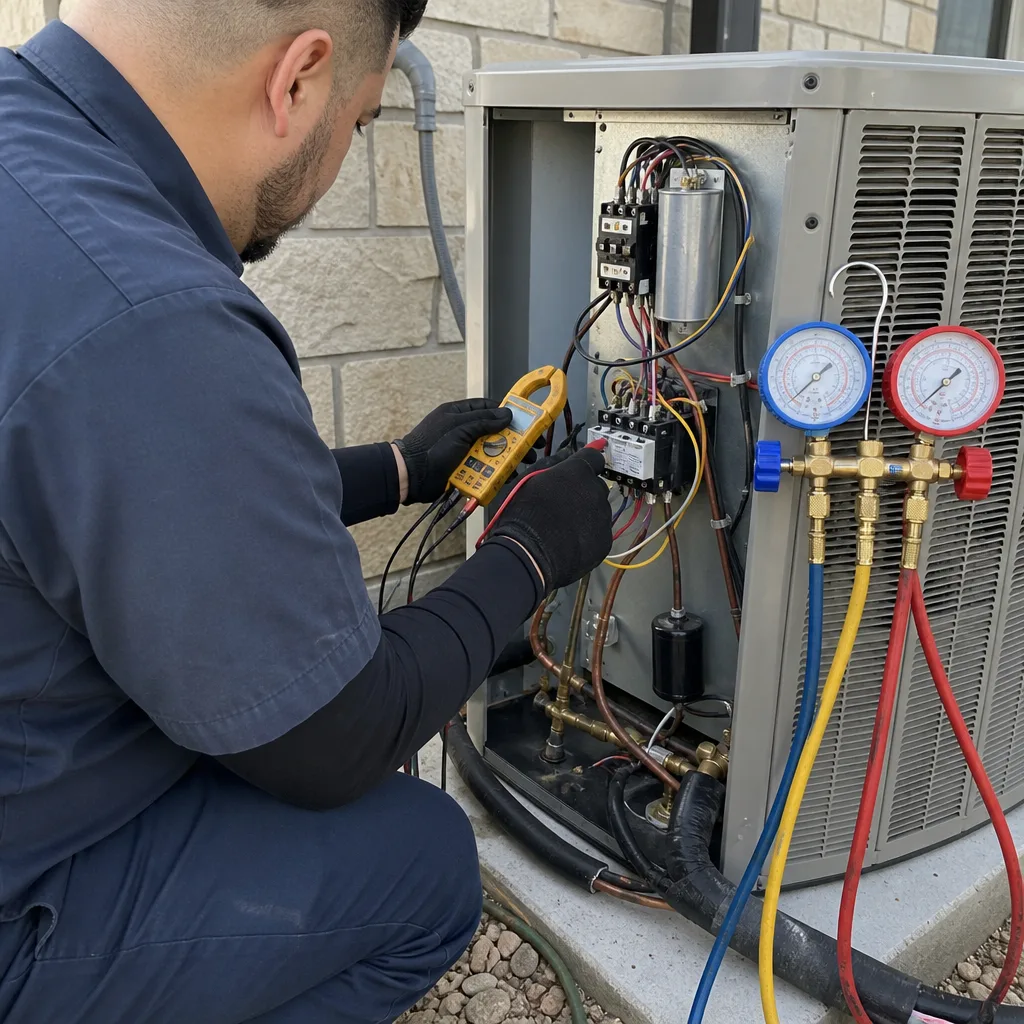
See the difference
 Before
 After
After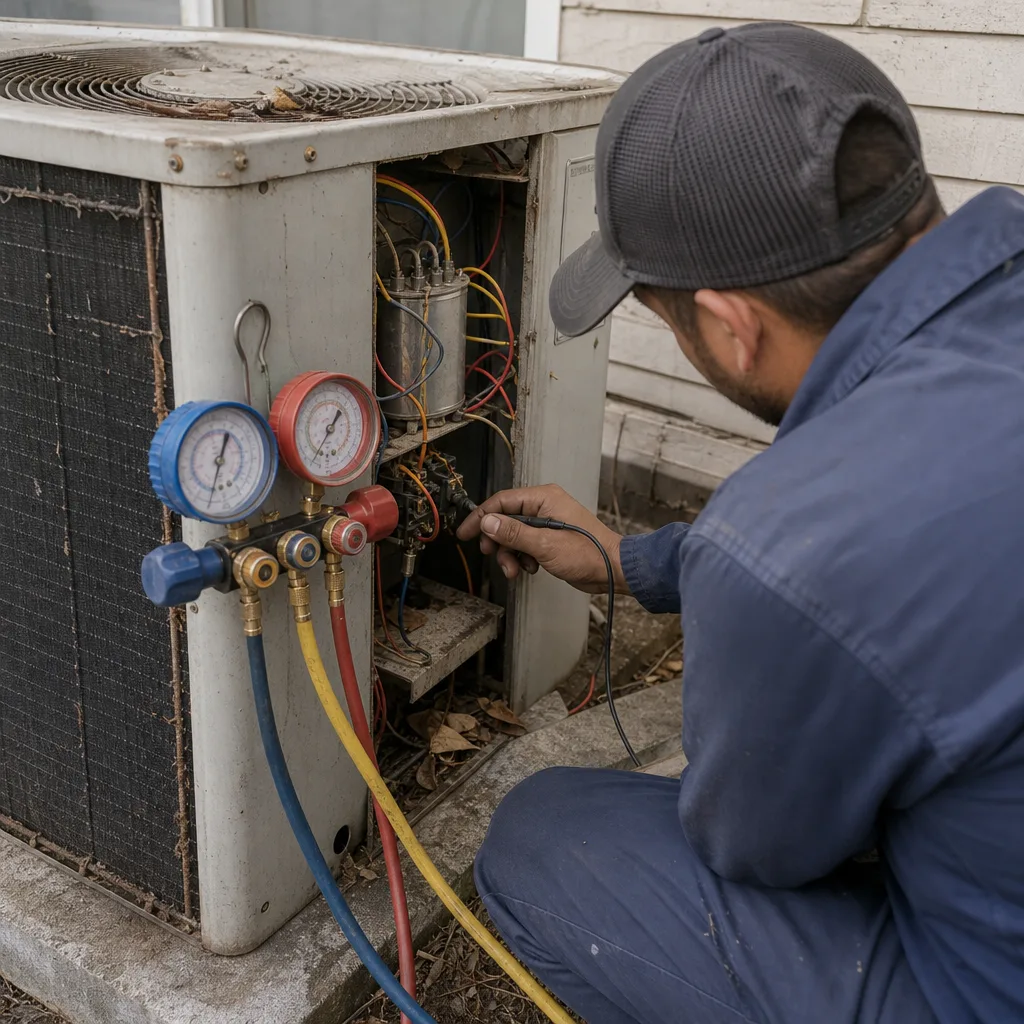 Before
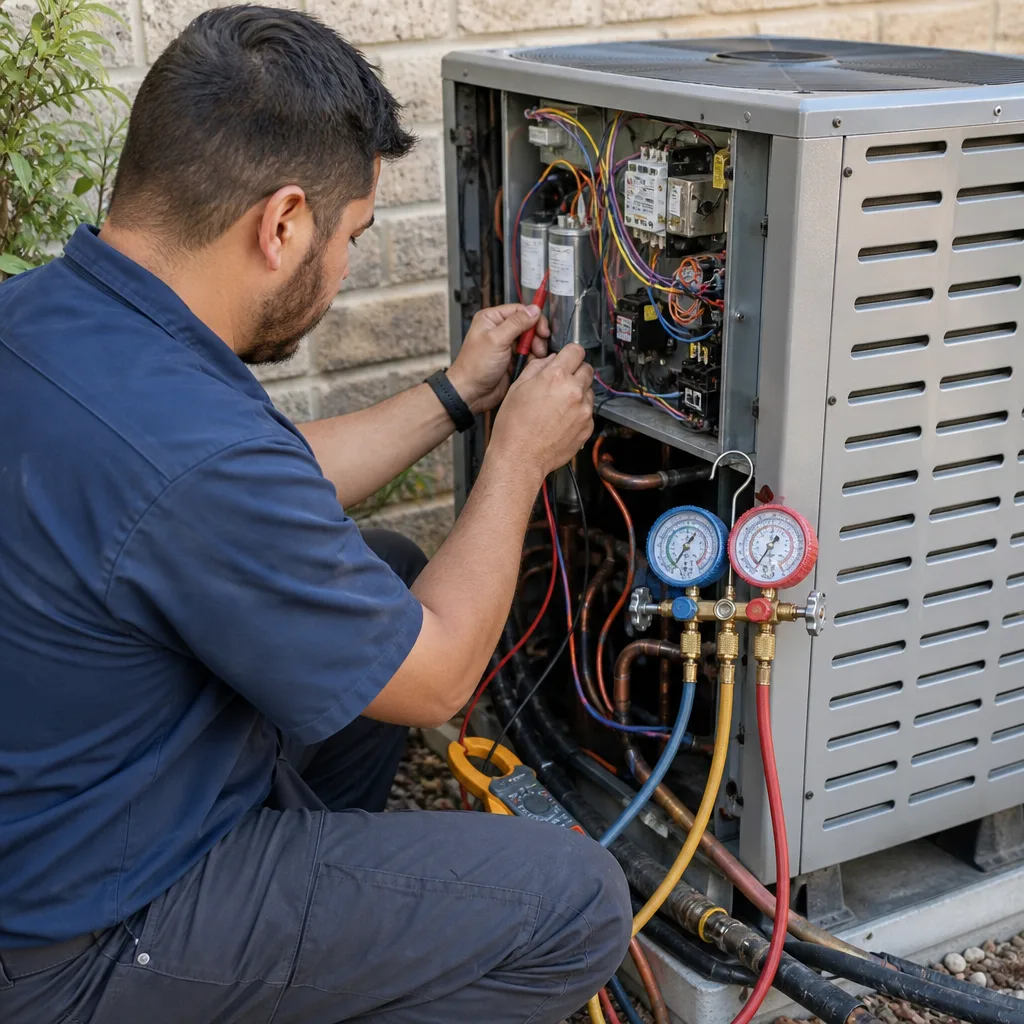 After
After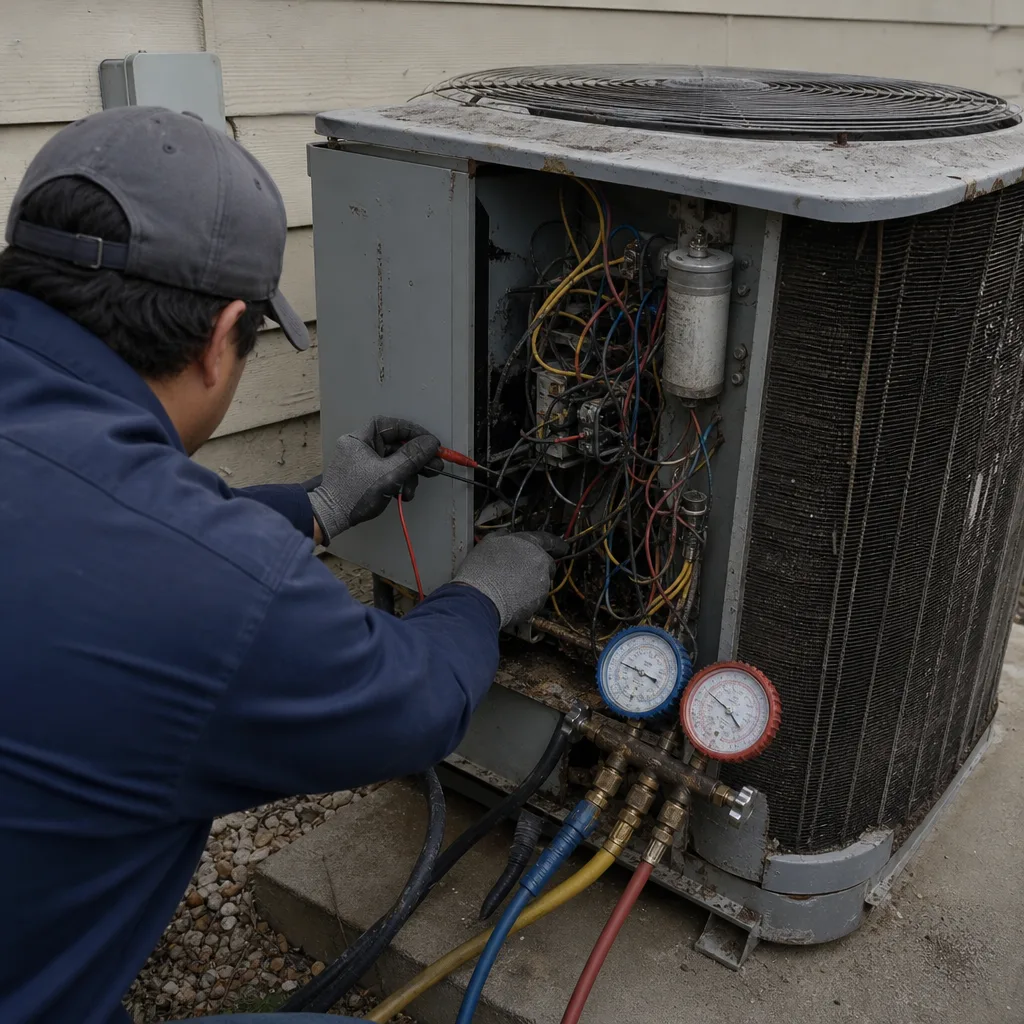 Before
 After
AfterWhen to Call a Professional
If your AC is blowing warm air on a San Antonio summer afternoon, if your furnace smells like gas on the first cold night of the year, or if your CPS bill spiked 40% month over month with no obvious explanation, call a professional-these are classic HVAC Warning Signs: A San Antonio Homeowner’s Reference Guide moments. These are not DIY situations, and in the case of a gas smell or refrigerant handling, they are genuinely dangerous ones that require training and licensing. Halden Heating and Air San Antonio offers free estimates in San Antonio. Call (903) 623-6784 to get a written price for your exact situation, with no obligation and no pressure. You’ll know the number before anyone touches your system, and that’s how it should work every time.
Frequently Asked Questions
A new AC system in San Antonio in 2026 costs between $5,800 and $11,500 depending on system size and efficiency, with most 3-ton mid-efficiency replacements landing between $7,000 and $9,500. The largest factors are tonnage, SEER2 rating, and whether the contractor offers a locked written price or an estimate with open-ended clauses. Call (903) 623-6784 for an exact quote on your specific home.
The general rule for San Antonio homeowners is: if the repair cost multiplied by the unit’s age in years exceeds $5,000, replace it. A $400 repair on a 12-year-old system equals $4,800, which is in the replace-now range. A $300 repair on a 6-year-old system equals $1,800, which is repair territory. The math changes slightly for systems still under parts warranty, but the 5,000 threshold is a solid starting point.
For most San Antonio homes, a 15 to 16 SEER2 system is the sweet spot between upfront cost and long-term operating savings. A 14 SEER2 system is cheaper but misses federal tax credit thresholds. A 17 SEER2 or higher system costs more but qualifies for bigger credits and CPS rebates. The right answer depends on how long you plan to stay in the home and your current CPS bill.
Same-day installation is unusual for a full system replacement because equipment ordering, permit filing, and scheduling take time. A company that promises same-day install for a specific size and brand is often substituting whatever equipment is available for what you were quoted. Expect a set install date within 3 to 10 days for most San Antonio replacements.
Yes. The City of San Antonio requires a mechanical permit for AC system changeouts, and the contractor must be registered with the city to pull it; for details, see HVAC Permits, Codes & Inspections in TX: What You Need to Know. A contractor who suggests skipping the permit is putting your warranty and home resale at risk. This is a non-negotiable line item.
The 365-Day Done Right Promise is a written guarantee on every completed job: if something isn’t right within a full year, we make it right at no charge. Every repair also includes a written guarantee, with a free return visit if the repair fails during the coverage window. This is the standard we’ve operated under since our founding in 2004.
The Bottom Line
HVAC pricing in San Antonio is not a mystery, but it is presented as one far too often. The ranges are knowable: $5,800 to $11,500 for a new AC, $3,800 to $7,200 for a furnace, $150 to $500 for a repair visit. The variations are explainable: labor structure, overhead, warranty labor coverage. The red flags are identifiable: one-line quotes, missing permits, skipped rebate verification, open-ended “additional charges may apply” clauses. Armed with this guide, you can decode any quote you receive in 2026 and know whether the number is honest. And if you want a number you can trust without running the analysis yourself, call Halden Heating and Air San Antonio at (903) 623-6784. A written price before work begins is not a request. It’s the standard.
Written by Andre Fuller, Owner at Halden Heating and Air San Antonio, serving San Antonio since 2004.