
Last updated October 16, 2026
 AC repair
 Furnace & heating
 Heat pumps
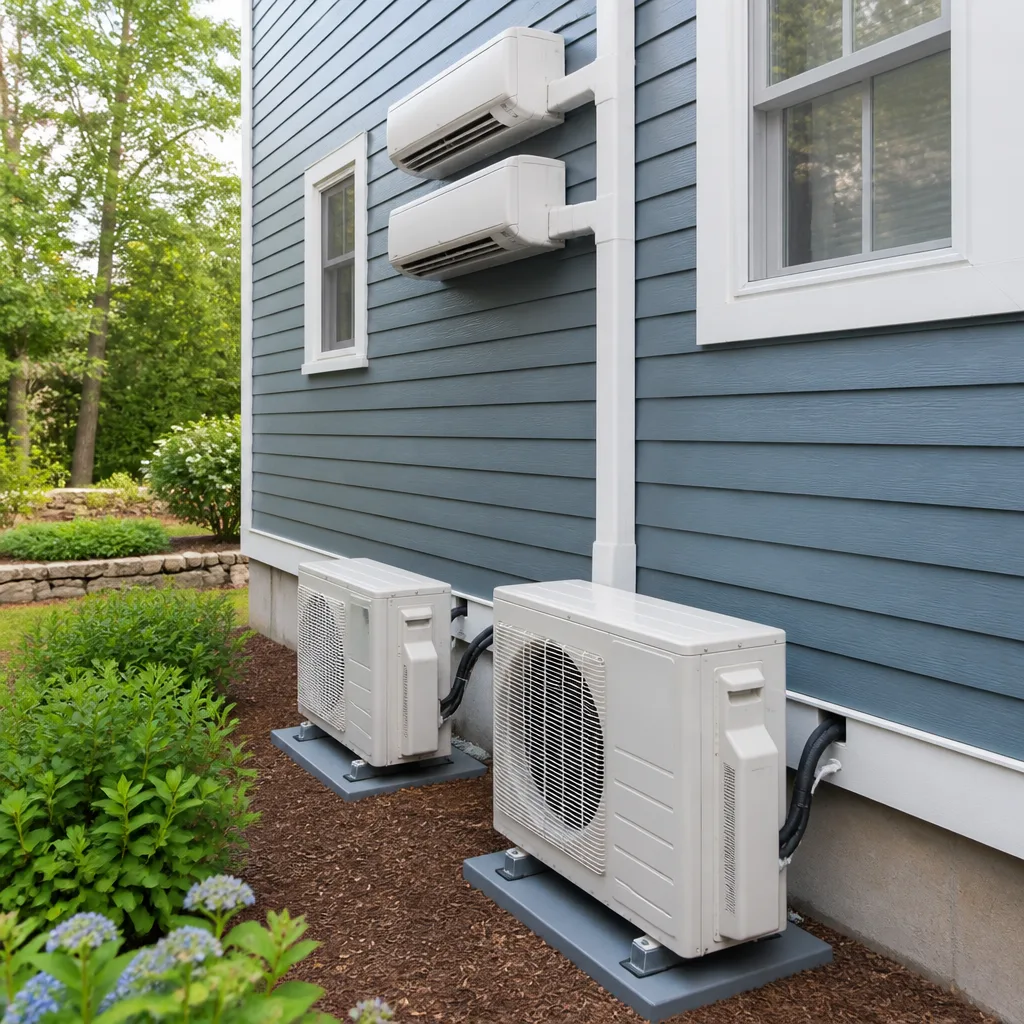 Ductless mini splits
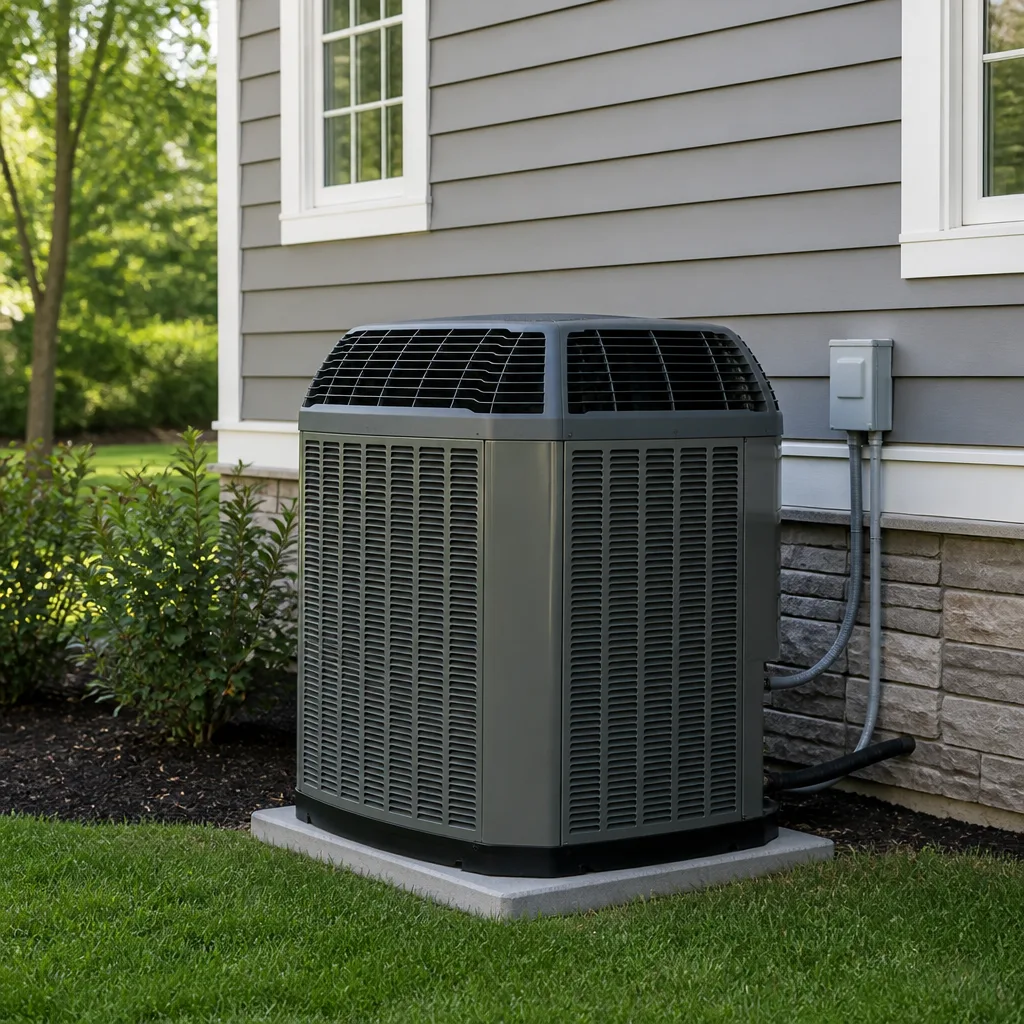 Trane
Trane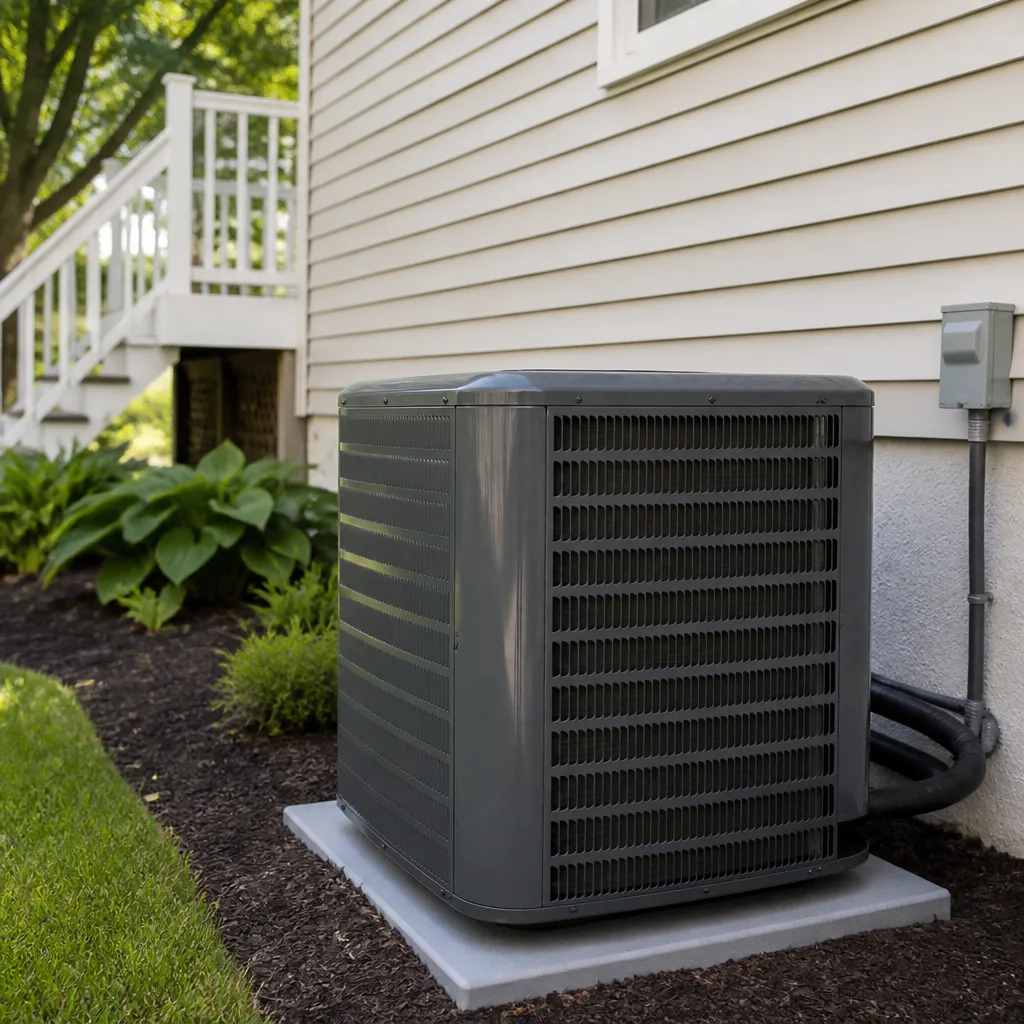 Goodman
Seasonal tune-up and full diagnostic on your Carrier, Trane, or Goodman system - readings shown to you before any repair is proposed
Diagnosis first, numbers second - you approve the repair price before a single part goes in.
Get your free estimateHVAC Warning Signs: A San Antonio Homeowner’s Reference Guide
The average San Antonio homeowner notices their AC struggling three to six weeks before it fails completely, and files it under “probably fine” until the system quits on a 103°F afternoon. The signs are almost never dramatic. They’re small: a faint smell, a slightly longer cooling cycle, a thermostat reading that doesn’t quite match how the room feels. This guide gives every common warning sign a severity level and a specific next action, so you stop guessing whether you’re looking at a $15 filter swap or a $4,000 emergency. If you own a home in San Antonio, this is the reference to keep bookmarked alongside our Complete Guide to HVAC in San Antonio.
Quick Answer
HVAC warning signs in San Antonio fall into three tiers: Act Today (burning smells, sparking sounds, no cooling when outdoor temps exceed 95°F), Schedule Within a Week (short cycling, frozen coils, weak airflow, rising utility bills), and Monitor and Log (intermittent odd noises, slight temperature swings between rooms, minor condensate drips). Most failures are preceded by three to six weeks of observable, fix-small symptoms. Catching a failing capacitor at $150 to $300 beats replacing a compressor at $1,500 or more, and the difference comes down to knowing which tier you’re in and acting on it.
Styles & brands we work with
Table of Contents
- The Three-Tier Severity System: Stop Guessing, Start Triaging
- Earliest Warning Signs That Something Is Off (And What They Actually Mean)
- San Antonio-Specific Warning Signs Most Guides Miss
- What That Sound Means: A Plain-Language Decoder
- Smells That Signal Trouble (And One That Signals Real Danger)
- Short Cycling in San Antonio: Why It Happens Here More Than Anywhere Else
- The Documentation Habit That Protects You From Upsell Pressure
- What Each Warning Sign Typically Costs to Fix in San Antonio
The Three-Tier Severity System: Stop Guessing, Start Triaging
Every HVAC symptom you’ll ever experience falls into one of three buckets. The buckets matter because your response should differ dramatically based on which one you’re in. Here’s the system we use when homeowners call us describing a problem.
Tier 1: Act Today. These are symptoms that mean a real risk of system death, safety hazard, or cascading damage within hours, not weeks. A burning or acrid electrical smell. Any sparking or popping from the outdoor unit. A complete loss of cooling when San Antonio is under a heat advisory. Water pooling around the indoor unit in a way that threatens drywall or electrical. Loud grinding that sounds like metal on metal. Any of these means shut the system off at the thermostat and call a professional. Do not run it again until a technician has looked at it.
Tier 2: Schedule Within a Week. These symptoms won’t kill your system tonight, but they indicate a component is degrading and the repair cost goes up the longer you wait. Short cycling (the unit turning on and off every few minutes), an evaporator coil frozen over, airflow that’s noticeably weaker in every room, an electric bill that jumped 30% or more without a rate change, a system that runs constantly but can’t hold 78°F during the day. The fix at this stage is usually a few hundred dollars. The fix six weeks from now when the compressor finally gives out is usually four figures.
Tier 3: Monitor and Log. Intermittent symptoms that come and go. A rattle that only happens for the first minute after startup. A room that’s consistently two degrees warmer than the others. A drip from the condensate line that stops and starts. A slight mustiness that disappears after a day. These don’t require an emergency call, but they do require documentation, which we cover below. If you notice a Tier 3 symptom happening more frequently or increasing in intensity, it moves up to Tier 2.
Most San Antonio homeowners we talk to have been sitting on a Tier 2 symptom for weeks, rationalizing it as seasonal heat or an old system doing its thing. That’s the expensive habit this guide exists to break.
Earliest Warning Signs That Something Is Off (And What They Actually Mean)
Before we get into the dramatic stuff, let’s cover the subtle signs that show up earliest. These are the ones that get dismissed because they don’t feel like emergencies, and that’s exactly why they matter.
Your system runs longer to hit the same temperature. If your AC used to knock the house from 80°F to 74°F in forty minutes and now it takes ninety, something changed. The most common culprits are a dirty condenser coil, low refrigerant, or a failing capacitor that’s causing the compressor to start sluggishly. All three are Tier 2 fixes. All three get worse if ignored.
Your energy bill climbs without explanation. San Antonio homeowners see electric bills spike every summer, but you should compare against last summer, not last spring. If July of this year is 25% higher than July of last year with the same thermostat settings and occupancy, that’s not weather. That’s your system working harder to produce the same cooling because something is degrading.
One room is always uncomfortable. A single hot room usually means a duct issue, a damper problem, or an airflow imbalance, not a failing compressor. But if the room that’s struggling is farthest from the air handler and the problem is new, it can also indicate declining blower performance. It’s worth having checked before the imbalance starts taxing the whole system.
The thermostat says one thing, your skin says another. If your thermostat reads 72°F but the room feels like 77°F, that’s a sign of humidity control failure. Your AC removes moisture from the air as part of the cooling process. When it stops doing that well, either the system is oversized for your home, the coil isn’t getting cold enough, or airflow is restricted. In San Antonio’s humidity, a system that can’t dehumidify is a system that can’t cool, even if the math on the thermostat says otherwise.
You’re changing filters twice as often as you used to. A system that’s suddenly producing dirtier filters faster is a system that’s pulling in more particulates, which usually means a duct leak on the return side or a house that’s developed air-sealing issues. It’s also a sign your blower is working harder than it should, which shortens its life.
San Antonio-Specific Warning Signs Most Guides Miss
Generic HVAC guides are written for a national audience, which means they miss the things that actually happen when you combine South Texas heat, high humidity, and hard, alkaline water. Here are the warning signs that are specific to living in San Antonio.
Frozen evaporator coils in August. It seems backwards that an air conditioner could freeze up during the hottest month of the year, but San Antonio’s humidity is what does it. When refrigerant is even slightly low, the coil temperature drops below freezing, and the moisture in our humid air condenses and freezes on the coil instead of draining away. The ice blocks airflow, which drops the coil temperature further, which freezes more ice. Within a few hours you have a solid block of ice where a coil should be and warm air blowing from your vents. If you see ice on the indoor unit or the copper lines running to it, turn the system off and call for service. Running it with a frozen coil is how you destroy a compressor.
The drain pan smell that’s worse here than anywhere else. South Texas is home to a specific bacteria that thrives in dark, wet, warm environments, which is a precise description of your AC’s condensate drain pan. The smell is sulfur-adjacent, sometimes described as “dirty socks” or “rotten eggs but fainter.” If you smell it when the system first kicks on, that’s stagnant water in the drain pan that’s been growing things. A drain line cleaning and a pan treatment usually fixes it, but left alone, that same bacteria clogs the drain line and the overflow can damage the air handler, your ceiling, or whatever is beneath the unit. This smell is far more common in San Antonio than in drier climates because our humidity feeds it year-round.
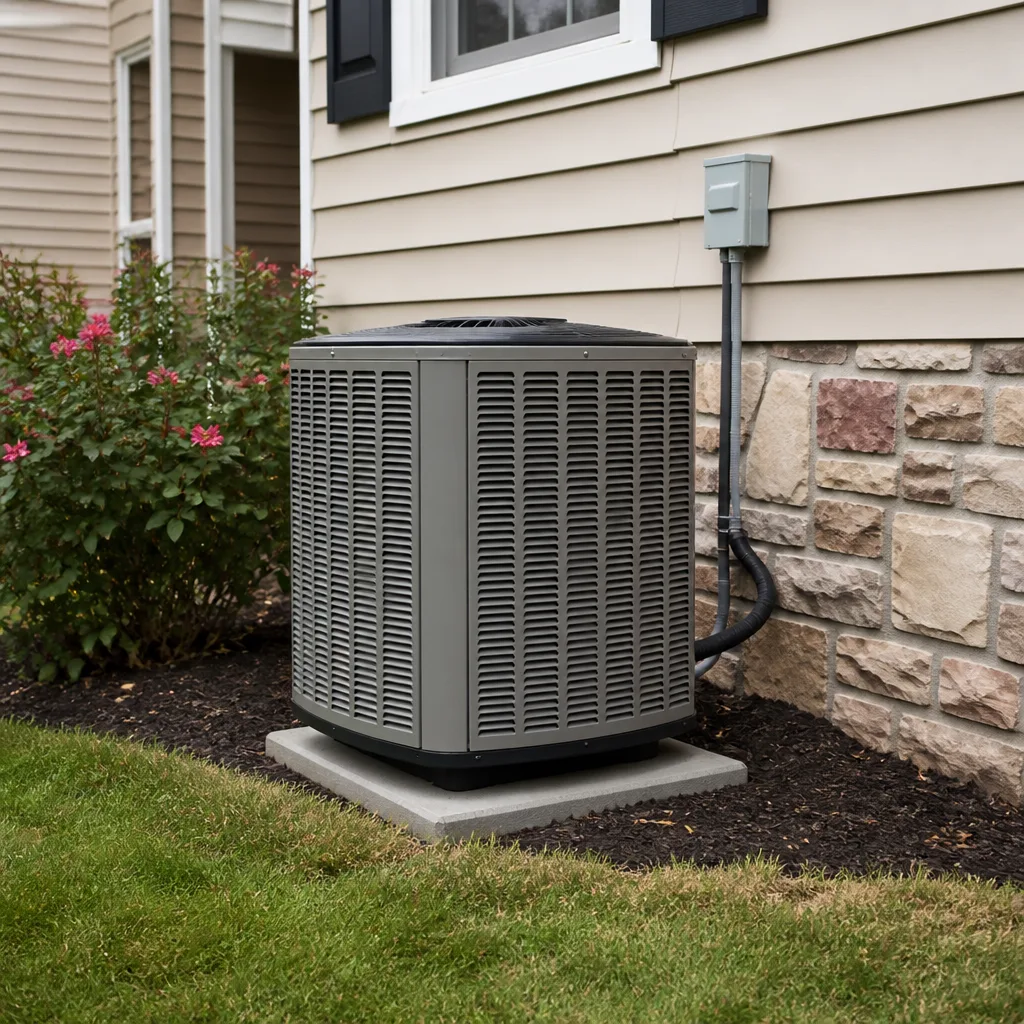
Outdoor unit fins that look like they’ve been through a sandstorm. San Antonio’s combination of construction dust, oak pollen, cottonwood fluff, and summer storms coats condenser coils in a paste that bakes on in the heat. When the fins on your outdoor unit look matted or packed with gray-brown gunk, the system is shedding heat less efficiently, which means it runs longer, runs hotter, and wears out faster. You can spray the unit down gently with a garden hose twice a year, but the inner coil often needs a professional cleaning with a coil cleaner that won’t damage the aluminum.
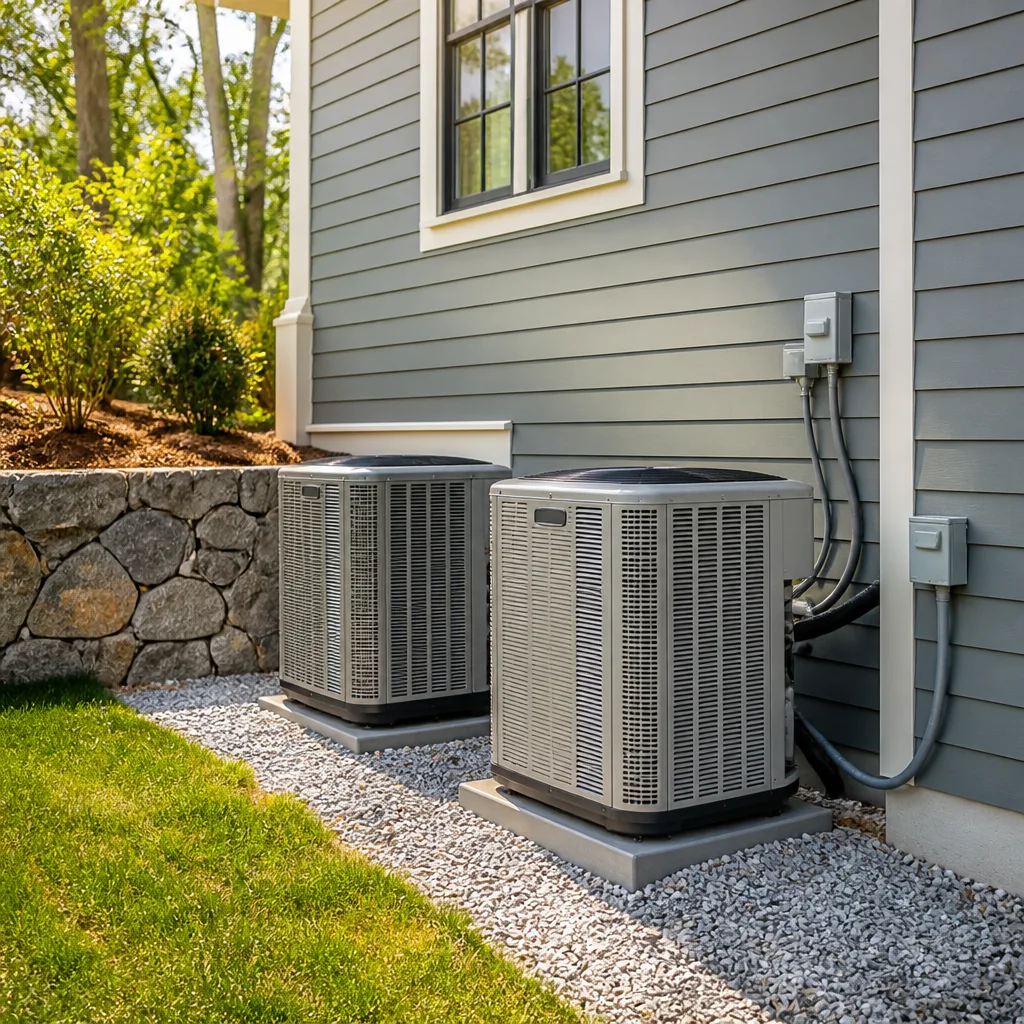
Water puddles near the outdoor unit that aren’t from rain. Some condensation near the outdoor unit is normal, especially on humid days. But a consistent puddle, a growing puddle, or water that’s accompanied by ice on the refrigerant line means the system is overworking, undercharged, or both. It’s a Tier 2 symptom in San Antonio specifically because our systems run so hard for so many months that a minor issue gets amplified into a major one faster than it would in a milder climate.
What That Sound Means: A Plain-Language Decoder
Your HVAC system makes a baseline set of sounds: the whoosh of air, the hum of the blower, the faint click of the thermostat relay. When a new sound appears on top of that baseline, it’s your system telling you something. Here’s a decoder based on what we hear described most often by San Antonio homeowners.
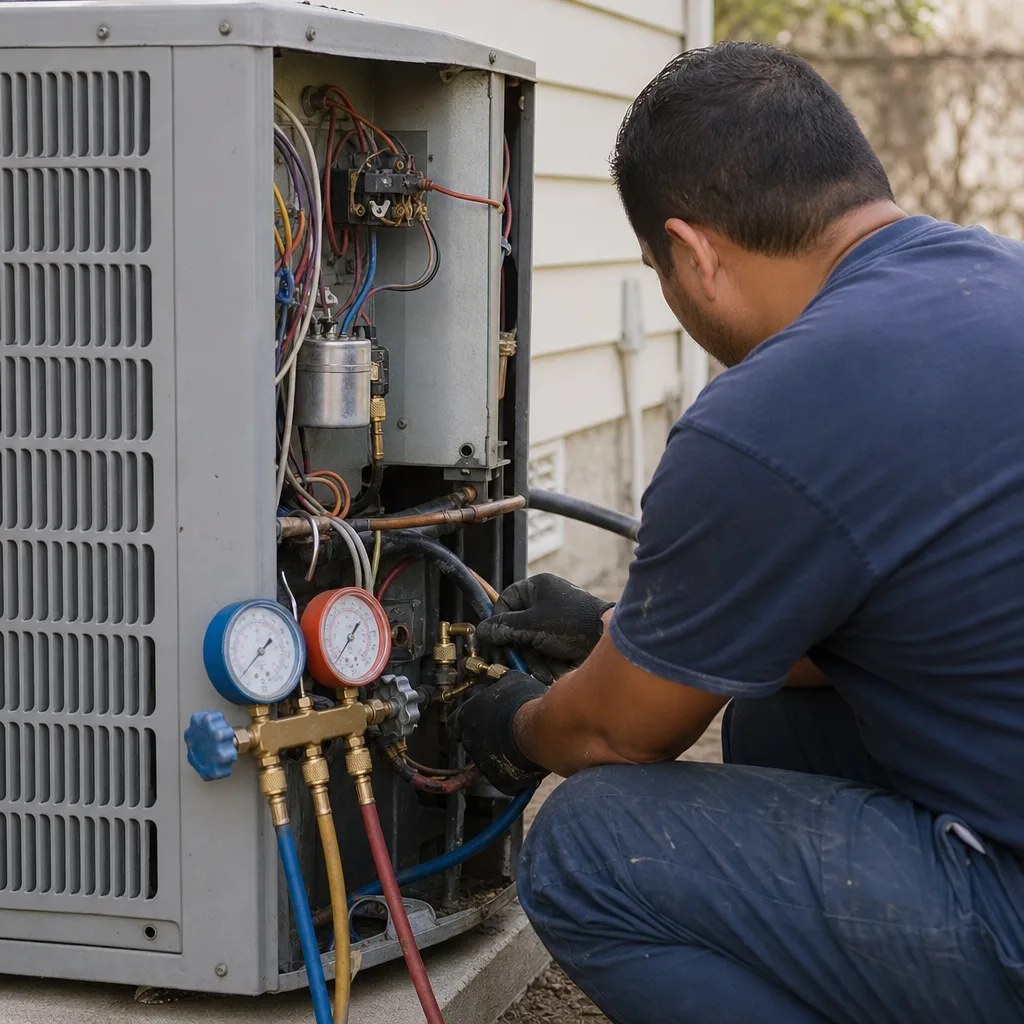
Buzzing or humming from the outdoor unit that’s louder than normal. This is the classic failing capacitor sound. The capacitor is a small cylinder that stores the electrical charge needed to start the compressor and fan motor. When it weakens, the system struggles to start and draws more current while trying, which produces the buzz. This is usually a $150 to $300 fix if caught now. If you ignore it, the compressor will eventually fail to start entirely, and that’s a $1,500 plus repair or a full system replacement.
Squealing or screeching during startup. That’s a belt slipping or a bearing going bad in the blower or the condenser fan motor. Belt issues are more common on older systems. Bearing issues are a warning that a motor is near the end of its life. Either way, it’s the kind of sound that usually gets worse over days or weeks, not months, so it falls in the Schedule Within a Week tier.
Grinding or metal-on-metal scraping. This one is Act Today. It means a bearing has failed completely, a fan blade has come loose, or the compressor’s internals are grinding against themselves. Running a system with this sound is actively causing damage. Shut it off at the thermostat and call for service.
Banging or thumping when the system cycles on. Usually a duct issue: a section of duct that’s come loose and is popping when airflow pushes it, or a damper that’s slamming shut. It’s annoying and inefficient, and it’s worth having fixed because loose ducts leak conditioned air into your attic, where it does absolutely no good for your living room.
Hissing or bubbling after you’ve turned the system off. Hissing from the indoor unit can be a refrigerant leak. Bubbling from the condensate line can mean the drain is partially clogged and air is gurgling through the water. Either one is worth a call. If the hissing is constant and the system is also not cooling well, that’s a refrigerant leak and it’s a Tier 1 or strong Tier 2 situation depending on severity.
Smells That Signal Trouble (And One That Signals Real Danger)
Your nose is one of the most underrated diagnostic tools in your home. Here’s what different smells tell you about your HVAC system in San Antonio’s climate.
Dirty socks or musty smell when the system starts. This is the drain pan bacteria smell we covered earlier, and in San Antonio it’s common enough that we’d call it the most frequent smell-related complaint. It means standing water and biological growth somewhere in the system, usually the drain pan or the evaporator coil. It’s not dangerous, but it is a signal that your drainage isn’t working properly, and it will get worse. A drain line flush and a pan treatment typically resolves it.
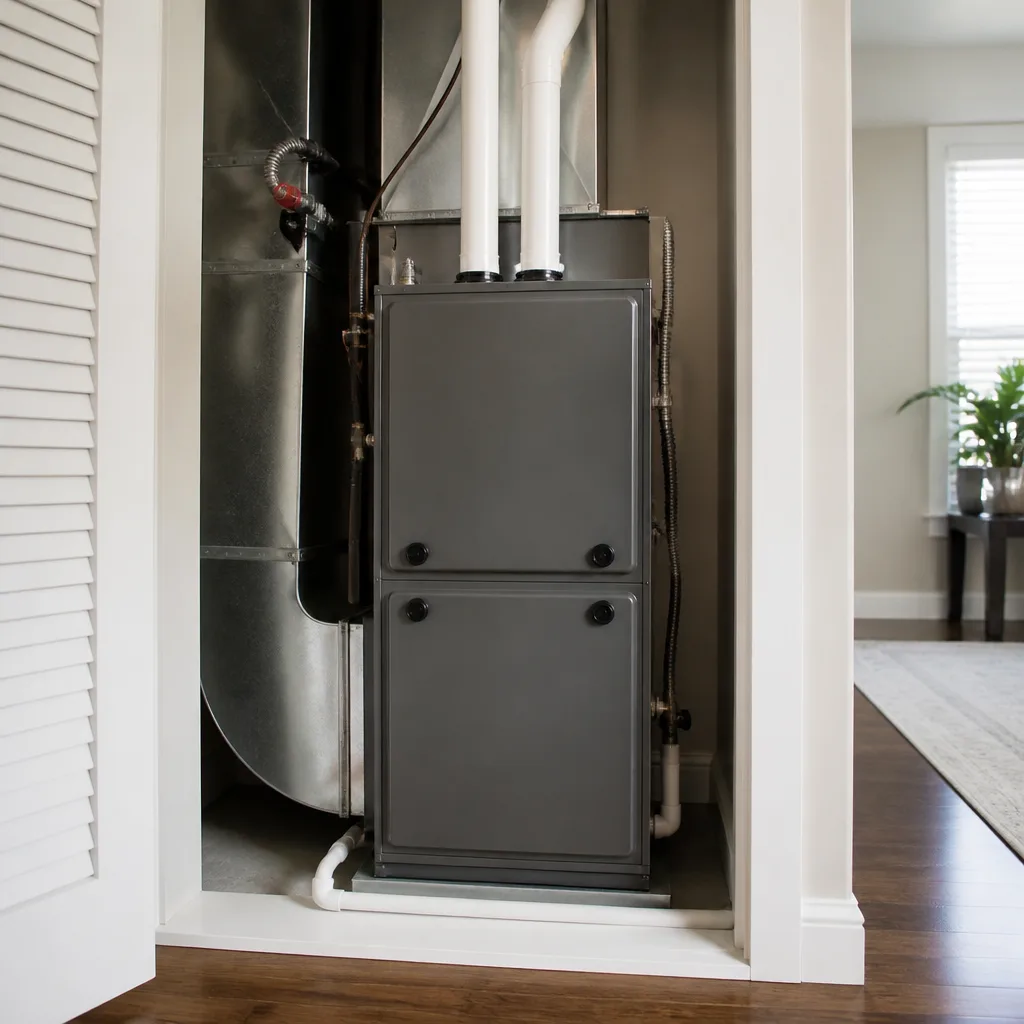
Burning dust smell on the first heating cycle of the season. This is normal and expected. Dust settles on the heat exchanger during the months the furnace sits idle, and the first time the burners light, that dust burns off. It should dissipate within a few hours. If it doesn’t, or if it smells acrid rather than dusty, turn the furnace off and call someone.
Electrical or acrid burning smell that doesn’t go away. This is Act Today and no exceptions. It means wiring is overheating, a capacitor is failing, or a motor is drawing too much current and melting its own insulation. Electrical fires in HVAC systems are rare but real, and the smell is the earliest warning you’ll get. Shut the system off, and if the smell is strong or you see smoke, call 911 first, then call us.
Rotten eggs or sulfur smell from the furnace vents. This one is the danger signal we referenced in the title of this section. Natural gas is odorized to smell like rotten eggs specifically so you’ll notice a leak. If you smell this from your vents or near your furnace, do not flip any switches, do not start your car, do not use anything that creates a spark. Leave the house, call your gas utility’s emergency line, and only after the gas company clears the scene should you call an HVAC professional to find and fix the leak.
Sweet or chloroform-like smell. This is refrigerant. If you smell it strongly inside your home, you likely have an evaporator coil leak, which means the system is losing the coolant it needs to create cold air. Refrigerant leaks also explain a lot of the other symptoms in this guide: frozen coils, longer run times, higher bills. The good news is a leak can usually be located and repaired. The bad news is running a system low on refrigerant is the single fastest way to kill a compressor.
Short Cycling in San Antonio: Why It Happens Here More Than Anywhere Else
Short cycling is when your AC turns on, runs for only a few minutes, shuts off, then turns on again a few minutes later. If you hear the system cycling on and off every five to ten minutes during a hot San Antonio afternoon, that’s short cycling, and it’s one of the most commonly misdiagnosed symptoms we come across.
In San Antonio, short cycling is more common than in drier climates for a simple reason: our systems are sized for extreme heat and high humidity, but they operate across a wide range of conditions. A system that’s slightly oversized for your home will cool the air quickly and shut off before it has a chance to remove enough humidity, leaving the house feeling clammy and triggering the thermostat to call for cooling again. It compounds our humidity problem instead of solving it.
But short cycling has three distinct causes, and they carry three very different price tags, which is why getting it diagnosed correctly matters so much.
Cause 1: Oversized system. The system has too much cooling capacity for the square footage it serves. It cools the air fast, shuts off, and repeats. In San Antonio, a system that’s too big also means a system that can’t dehumidify properly, because dehumidification requires longer, slower run times. The fix here is complicated: it might mean a properly sized replacement when the current system reaches the end of its life, or a variable-speed upgrade that can throttle its output down to match the load. This is a conversation to have with a professional who will do a load calculation, not guess.
Cause 2: Low refrigerant. When the system is low on refrigerant, the coil freezes, the airflow drops, and the compressor overheats and shuts down on its safety limit. Once the coil thaws or the compressor cools, it starts again. This is a dangerous loop because every cycle is overheating the compressor, and compressor replacement is the most expensive repair in the system. A refrigerant leak is usually a few hundred dollars to find and fix. A compressor replacement is typically $1,500 to $2,500 or more. The math is pretty clear.
Cause 3: A failing thermostat or a bad temperature sensor. The thermostat thinks the room is warmer than it is because its sensor is drifting or it’s located in a spot that doesn’t represent the actual room temperature, like next to a sunny window, above a lamp, or right at a return vent. This is the cheapest and easiest fix: a thermostat replacement or relocation, typically under $300 including labor. It’s worth checking this first before assuming something worse.
To figure out which cause you’re dealing with, count the cycles during the hottest part of the day. If the system cycles every five minutes consistently, note the air temperature coming from the vents. Warm air plus short cycles points to low refrigerant. Cold air plus short cycles points to sizing or thermostat issues. Either way, short cycling is a Tier 2 symptom: it won’t destroy your system today, but it’s wearing down the most expensive parts every single cycle.
The Documentation Habit That Protects You From Upsell Pressure
This section might be the most valuable thing in this entire guide, and it costs you nothing. For more guides & resources, visit our blog. When you have a baseline of what “normal” looks like for your system, you can spot changes early, and when a technician tells you something needs to be fixed, you’ll have evidence to either confirm or question the diagnosis.
Here’s the habit in four steps:
- Photograph your thermostat display once a month. Same day, same time. You’re looking for changes in runtime patterns, but also the photo gives you a record of what the temp was set to and what it actually achieved. When you call for service, you’ll be able to say “here’s what it looked like back in March” instead of relying on memory.
- Photograph the outdoor unit every time you notice a change. New sound, new ice, new leak, new dent. Snap a picture. If the symptom is audible, record a ten-second video with your phone. Sounds are hard to describe over the phone, but a recording means your technician knows what they’re listening for before they arrive.
- Save your energy bills in a folder. Digital or physical doesn’t matter. You’re looking for month-over-month and year-over-year comparisons. A spike that can’t be explained by the weather or a rate change is a diagnostic clue. A system that’s failing will often show up in your bill weeks before it shows up in your comfort level.
- Log every service call. Date, what was done, what was replaced, what the technician said, and the price. When a system has a documented history, the next technician can make better decisions. It also protects you from being sold a repair you already had done six months ago.
This habit does two things that matter. First, it gives a diagnostic baseline that shortens repair time and gets you a more accurate diagnosis. Second, it changes the power dynamic in the service call. When you can show exactly what the system looked like at its best and exactly when things changed, the conversation shifts from “trust me” to “here’s what’s happening,” which is the kind of conversation that leads to honest pricing and targeted repairs instead of upsell pressure. For more on how we handle AC Repair in San Antonio, we operate on written prices and written guarantees precisely because we want you to have that same clarity.
What Each Warning Sign Typically Costs to Fix in San Antonio
One of the most useful things a warning sign can tell you is what you’re likely to spend. Here’s a plain-language breakdown based on what we see across San Antonio, from the cheapest to the most expensive. These are real market ranges, not aspirational numbers.
- Dirty filter or obstructed return vent: $10 to $30 for a filter. Fix it yourself. If the filter is clean and airflow is still weak, move up the list.
- Clogged condensate drain line: $100 to $250 for a professional flush and pan treatment. This one’s worth having done by a pro because the line runs through areas you can’t see, and a partial clear often doesn’t hold.
- Failing capacitor: $150 to $300 installed. This is the most common repair we make in San Antonio during heat waves, and it’s the one where early action saves the most money.
- Thermostat replacement or relocation: $150 to $350 installed. A smart thermostat that learns your schedule can also cut your cooling bill.
- Refrigerant leak repair: $400 to $1,200 depending on where the leak is and whether any refrigerant needs to be added. This fixes the root cause, unlike a “recharge and hope” approach.
- Condenser fan motor replacement: $300 to $650 installed. This is the motor in the outdoor unit that blows air across the coil, and it fails more often in San Antonio because it runs longer and hotter than it would in cooler climates.
- Blower motor replacement: $500 to $1,200 installed. This is the motor in the indoor unit that pushes air through your ducts.
- Compressor replacement: $1,500 to $2,500 or more. This is the one you’re trying to avoid by paying attention to all the earlier warning signs. On a system that’s ten years old or older, compressor failure often tips the decision toward full system replacement.
- Full system replacement: $6,500 to $14,000 in San Antonio depending on system size, efficiency rating, and ductwork condition. A properly sized, properly installed system from brands like AC Installation in San Antonio with a strong warranty should last fifteen to twenty years in our climate.
These ranges assume a mid-range, reasonably accessible system. Actual prices vary based on the specific system, the accessibility of the unit, and the age of the equipment. What doesn’t vary is this principle: the earlier a symptom is addressed, the cheaper the fix. That’s not a sales pitch. It’s the difference between changing a $20 capacitor and changing a $2,000 compressor, and every HVAC professional in San Antonio has seen both sides of that equation.
If you’re weighing repair against replacement, the general rule in San Antonio is that a system older than twelve years that needs a major component replacement is often better served by a new, properly sized system, especially if the current one has required multiple repairs in the last two years. A new system also means a reset on efficiency, which matters in a city where cooling costs dominate utility bills for seven months out of the year. If you’re considering replacement, our guide to Halden Heating and Air San Antonio home services walks through how we scope projects, and for furnace work specifically, see Furnace Repair in San Antonio.
Common Mistakes to Avoid
- Ignoring the first hot afternoon of struggle. The first day your AC can’t hold temperature is the first day of a diagnosable problem, not a fluke. Units that “recover” overnight are still working harder than designed the next day.
- Topping off refrigerant without finding the leak. A recharge without a leak repair is like putting air in a punctured tire. It’ll hold for a few weeks and then you’re back where you started, with less money and a system closer to compressor failure.
- Closing vents in unused rooms to “save energy.” This increases static pressure in the duct system and can cause the evaporator coil to freeze, especially in systems that are already slightly undersized for San Antonio’s heat load.
- Setting the thermostat to 68°F on a 104°F day to “cool it down faster.” Your system cools at the same rate regardless of the setpoint. Setting it lower doesn’t speed it up; it just makes it run longer, which is harder on every component.
- Using a dirty filter for months and assuming it’s still good. A clogged filter restricts airflow, which freezes coils and overheats compressors. In San Antonio’s dust and pollen seasons, filters are often dirty after four to six weeks, regardless of what the packaging says.
- Trusting a diagnosis without documentation. If a technician tells you a component has failed, ask to see it. A blower motor with visibly failed bearings or a capacitor that’s swollen and leaking is a different conversation than a verbal description. If the tech won’t show you, that’s a red flag.
- Waiting until a failure to start researching HVAC companies. The worst time to choose a contractor is when you’re hot, stressed, and under time pressure. Know who you’ll call before the failure, so the decision is already made when the time comes.
See the difference
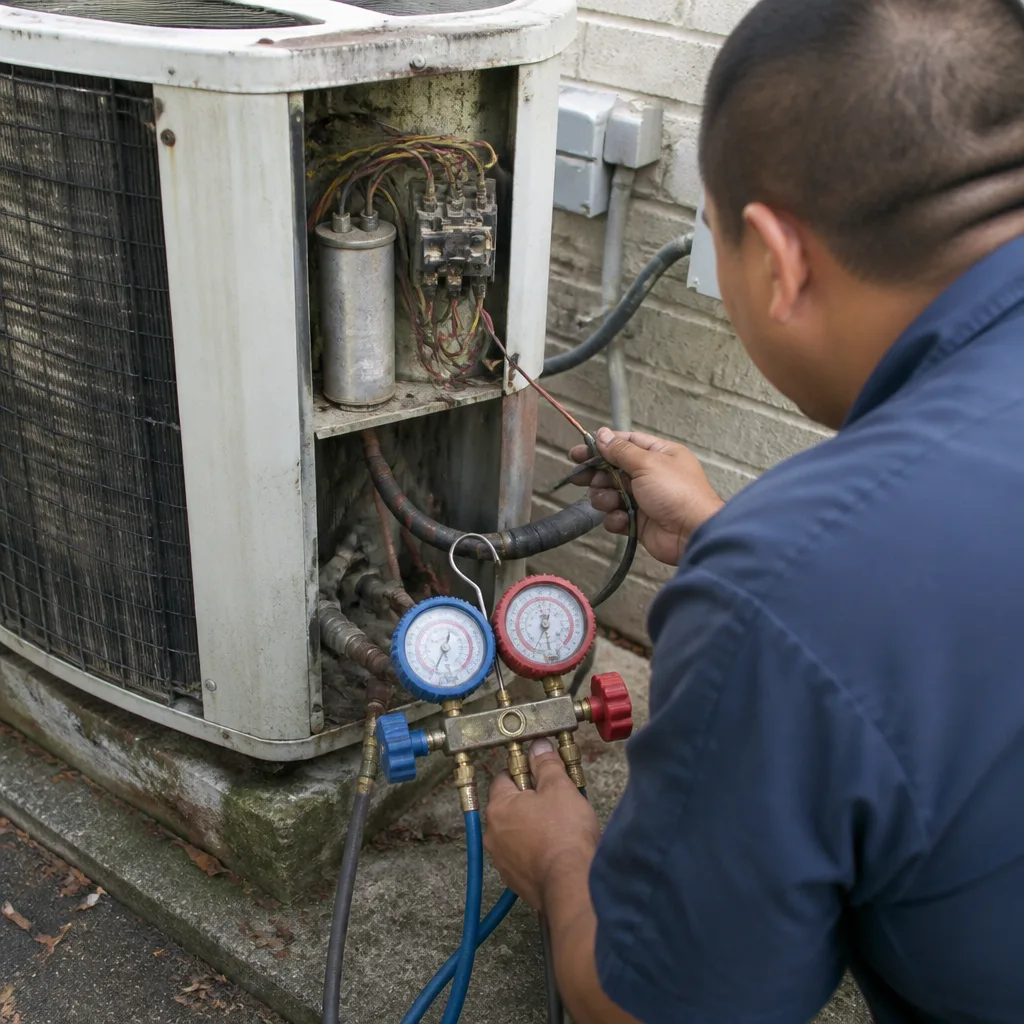 Before
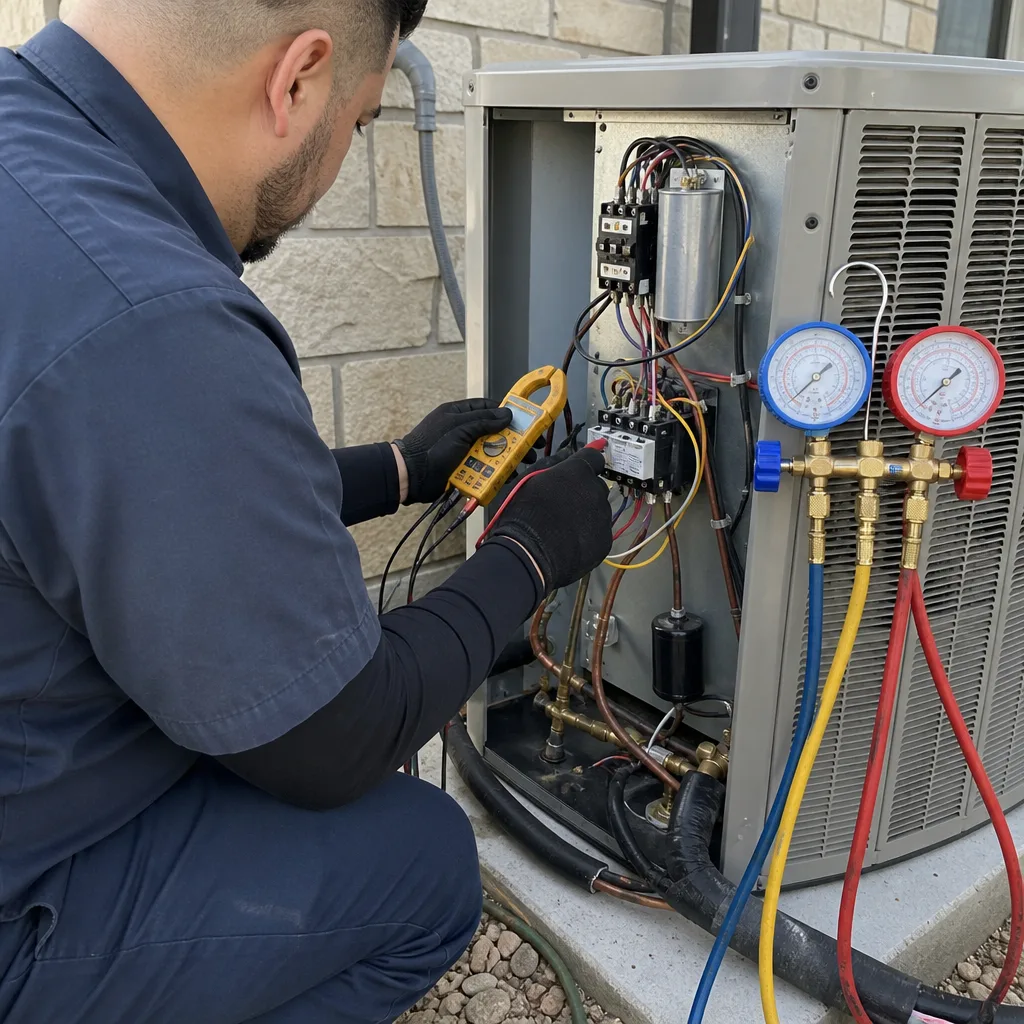 After
After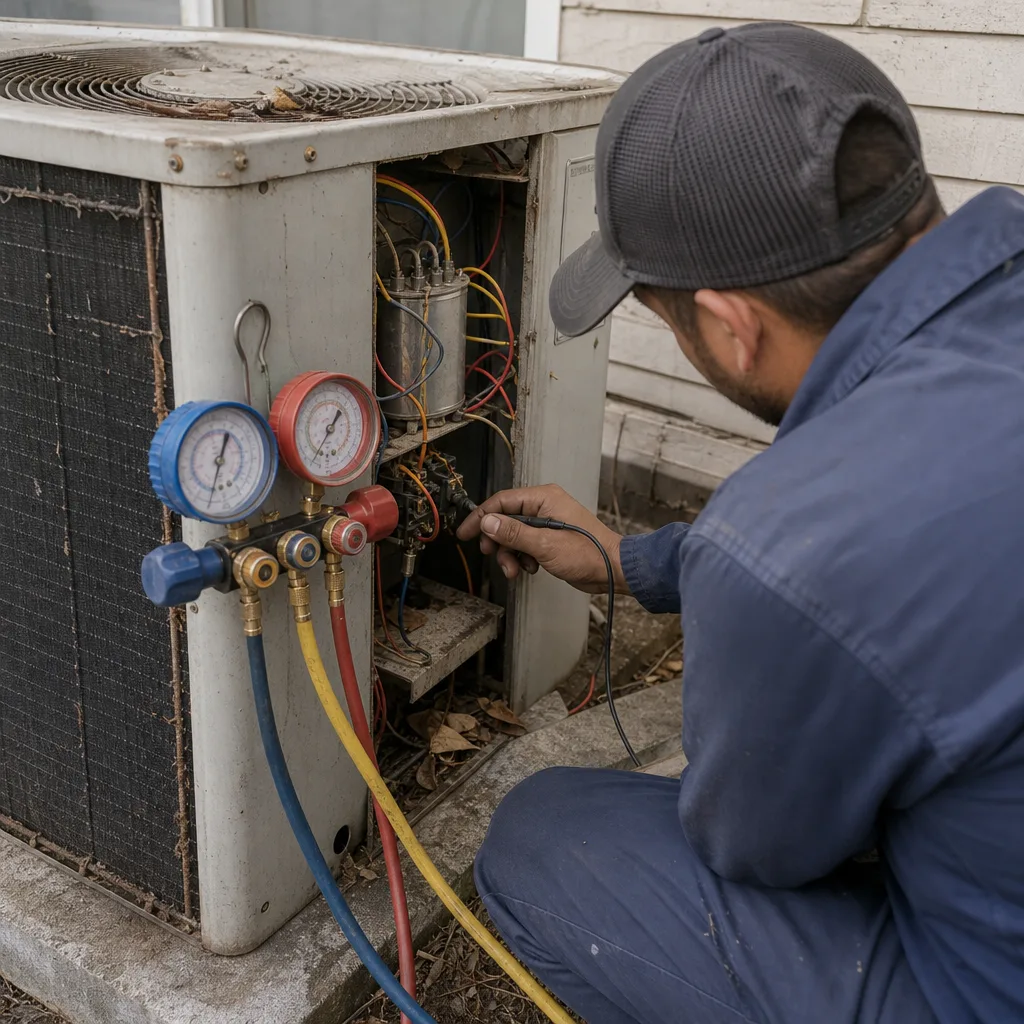 Before
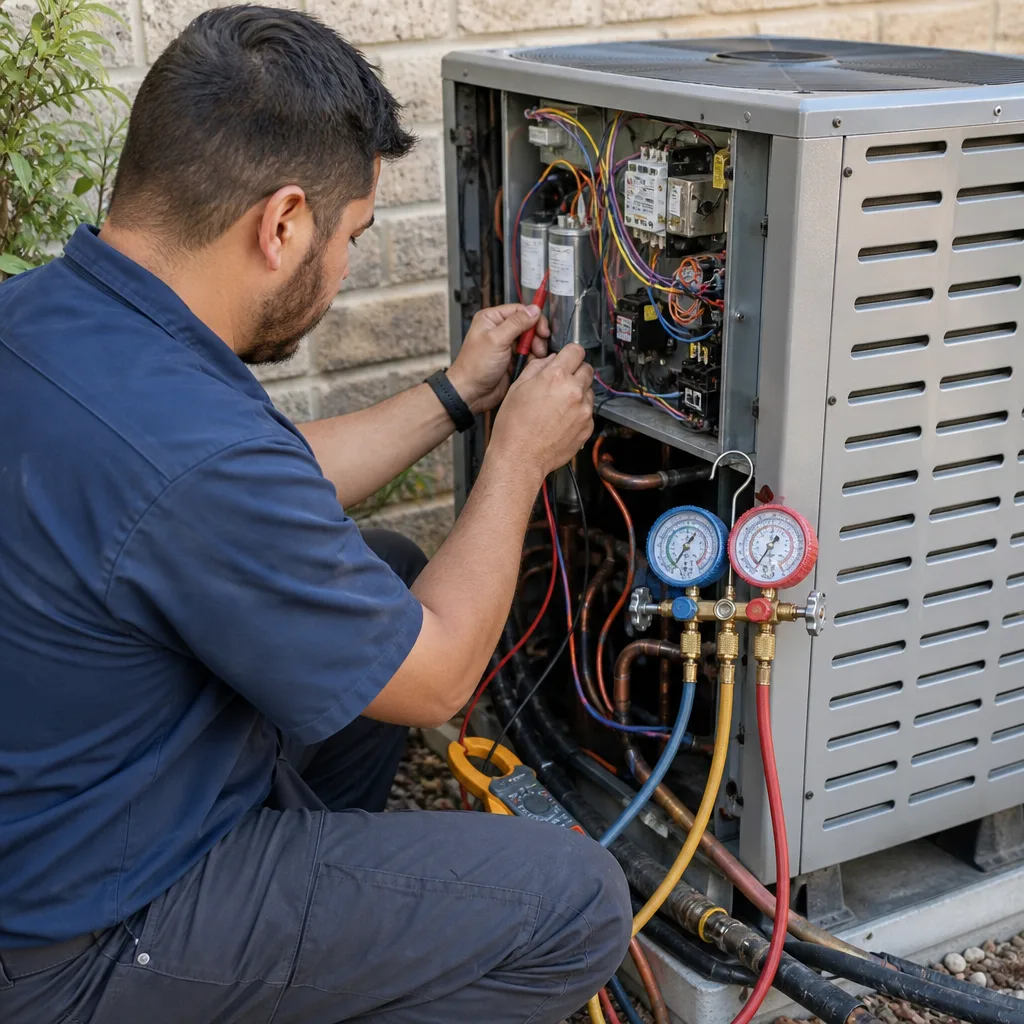 After
After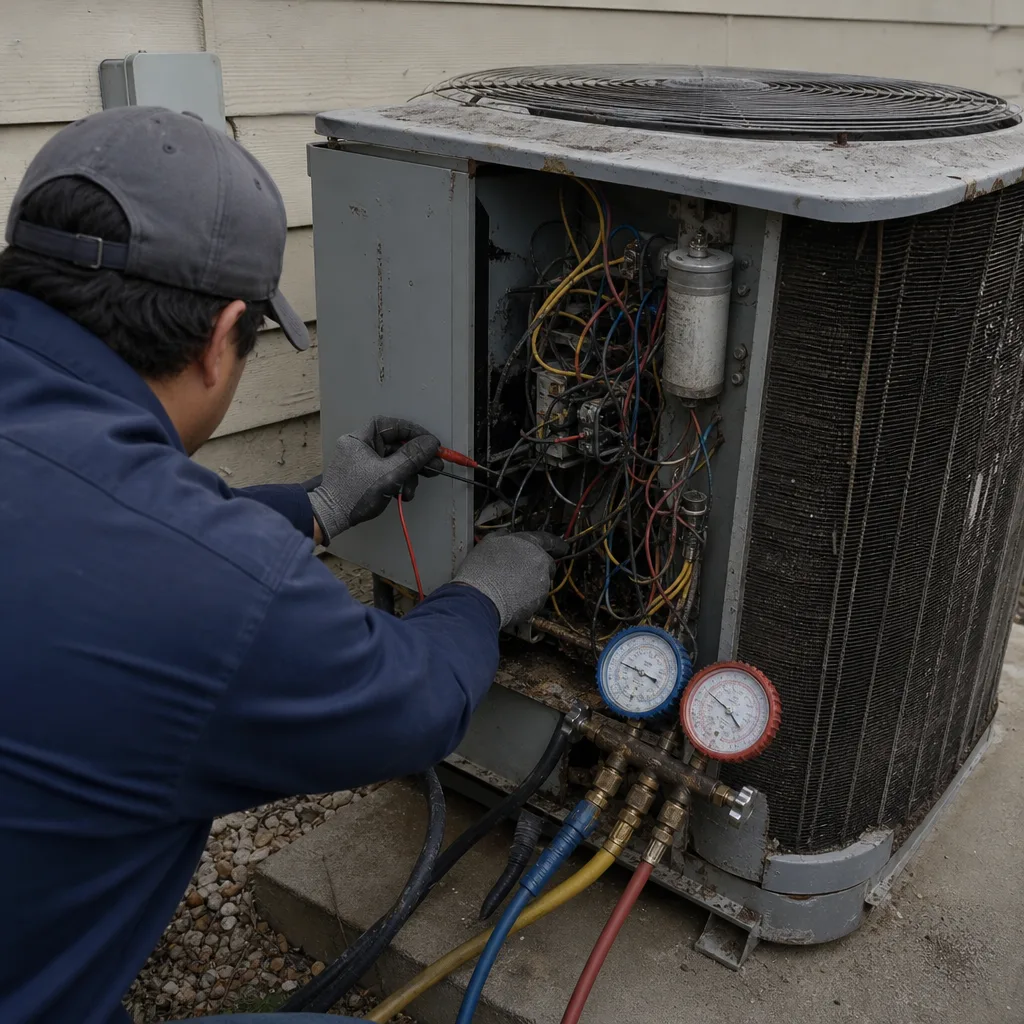 Before
 After
AfterWhen to Call a Professional
Call a professional the same day if you smell burning that doesn’t dissipate, hear grinding or metal-on-metal scraping, see sparks, have a frozen coil with no cooling, or suspect a gas leak (for gas leaks, call the utility first, then a professional). Call within a week if your system is short cycling, your bills have spiked inexplicably, your airflow is weak everywhere, your system runs constantly without satisfying the thermostat, or you notice a persistent drain pan smell. And call if you’re not sure which tier you’re in. A reputable company will tell you honestly whether a symptom can wait or needs attention now, and they’ll give you a written price before any work starts so you’re never surprised at the door. Halden Heating and Air San Antonio offers free estimates in San Antonio, and every repair comes with a written guarantee. Call (903) 623-6784 if you’d like a real person to talk through what you’re experiencing.
Frequently Asked Questions
The most reliable indicators of an impending failure are short cycling, a system that runs constantly without satisfying the thermostat, and a rising electric bill with no other explanation. These three symptoms together suggest a component is degrading, usually a capacitor or a refrigerant leak, and the system is working harder to produce less cooling. Addressing the warning sign now is typically a few hundred dollars; waiting until the system fails is typically four figures.
An AC that freezes in summer is usually low on refrigerant, which drops the coil temperature below freezing and turns South Texas humidity into ice. Restricted airflow from a dirty filter or closed vents can also cause freezing. Turn the system off and let it thaw, then call a professional before running it again, because running a system with a frozen coil is how compressors get destroyed.
A musty or dirty-sock smell from your AC means standing water in the drain pan has developed biological growth, which is more common in San Antonio’s humid climate than in drier regions. The drain pan and line need to be flushed and treated. Left alone, the same growth can clog the drain line and cause water damage to the air handler and surrounding areas.
Most warning sign repairs in San Antonio run between $150 and $500, covering things like capacitors, drain line cleanings, thermostats, and minor electrical fixes. Refrigerant leak repairs typically run $400 to $1,200. The most expensive common failure is the compressor at $1,500 to $2,500 or more, which is often avoidable if earlier warning signs are addressed. A full system replacement in San Antonio generally runs $6,500 to $14,000.
Short cycling is not immediately dangerous, but it’s one of the most expensive symptoms to ignore because every short cycle overheats the compressor, and compressor replacement is the most expensive single repair in the system. In San Antonio, short cycling can also indicate an oversized system that’s failing to dehumidify properly, which affects comfort and indoor air quality even when the temperature reading looks fine.
If your system is over twelve years old and needs a repair costing more than a third of a replacement, or if it has required multiple repairs in the last two years, replacement is usually the smarter long-term move in San Antonio’s climate. A new, properly sized system will be significantly more efficient than one from 2012 or earlier, and it resets the clock on both warranty coverage and expected lifespan. Call (903) 623-6784 for an exact quote on either path.
The Bottom Line
Your HVAC system talks to you for weeks before it fails, and the cost difference between listening early and ignoring the warning is routinely a thousand dollars or more. San Antonio’s climate makes this truer here than almost anywhere: our systems run harder, longer, and in higher humidity than systems in most of the country, which means small problems compound faster. The tier system in this guide gives you a simple framework: Act Today for danger signals, Schedule Within a Week for degradation signals, Monitor and Log for intermittent signals. Document what you notice, compare it to your own baseline, and when you call a professional, insist on a written price and a written guarantee. The best time to find a capacitor that’s about to fail is three weeks before it does. Now you know what to look for.
Written by Andre Fuller, Owner at Halden Heating and Air San Antonio, serving San Antonio since 2004.