
Last updated October 16, 2026
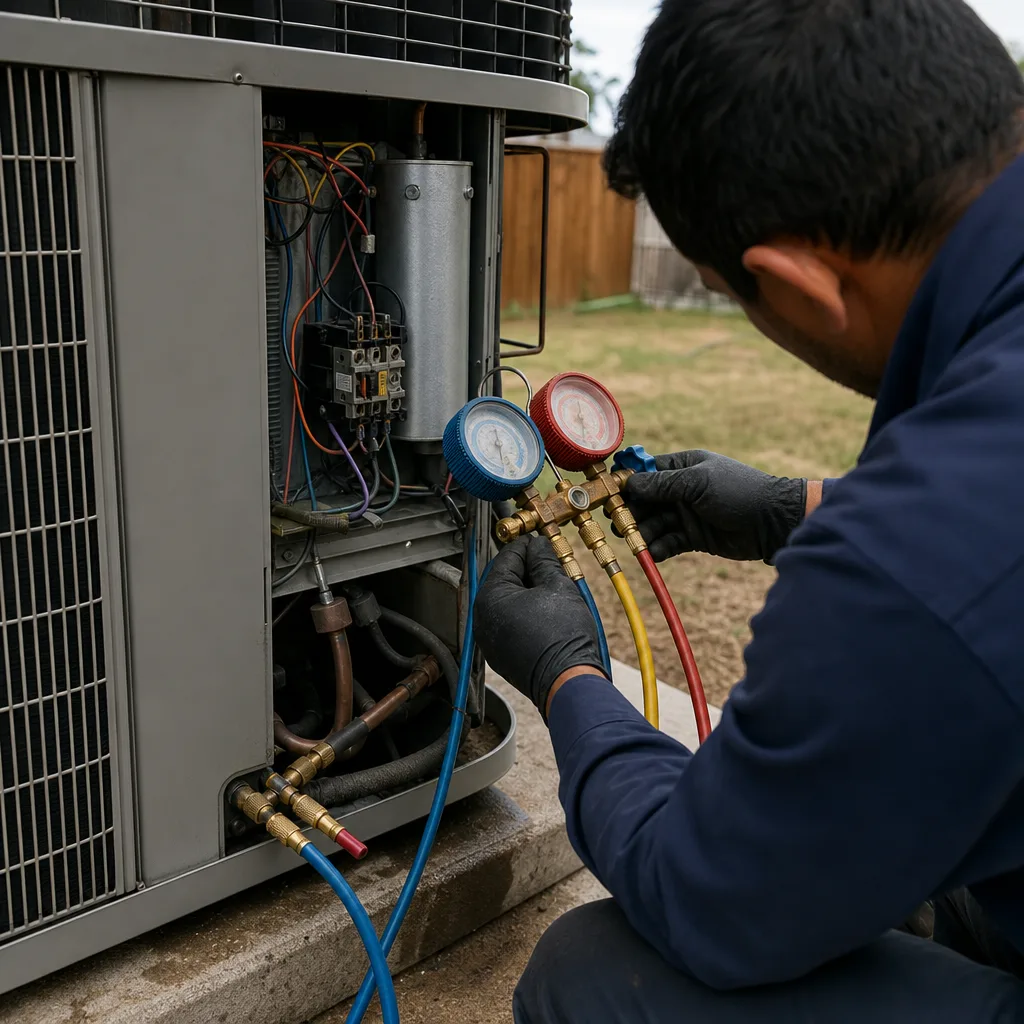
 AC repair
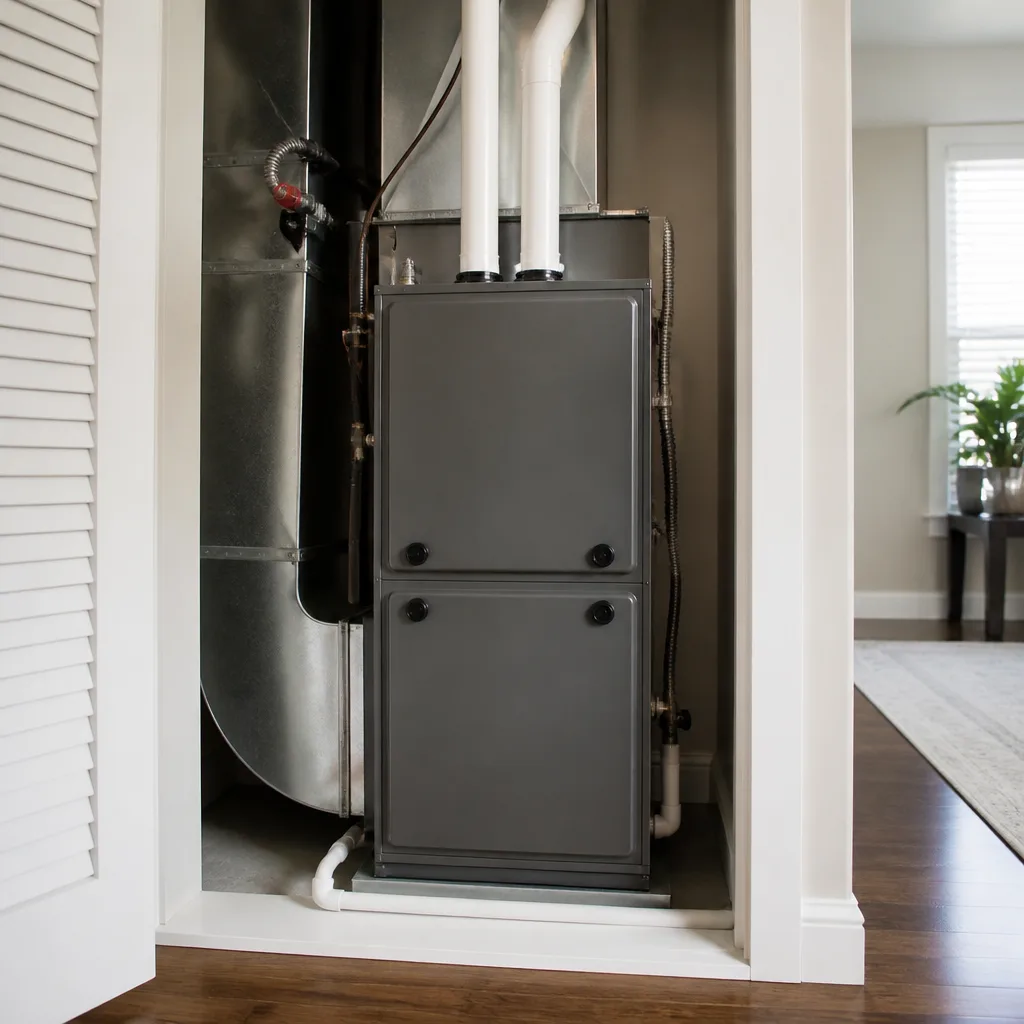 Furnace & heating
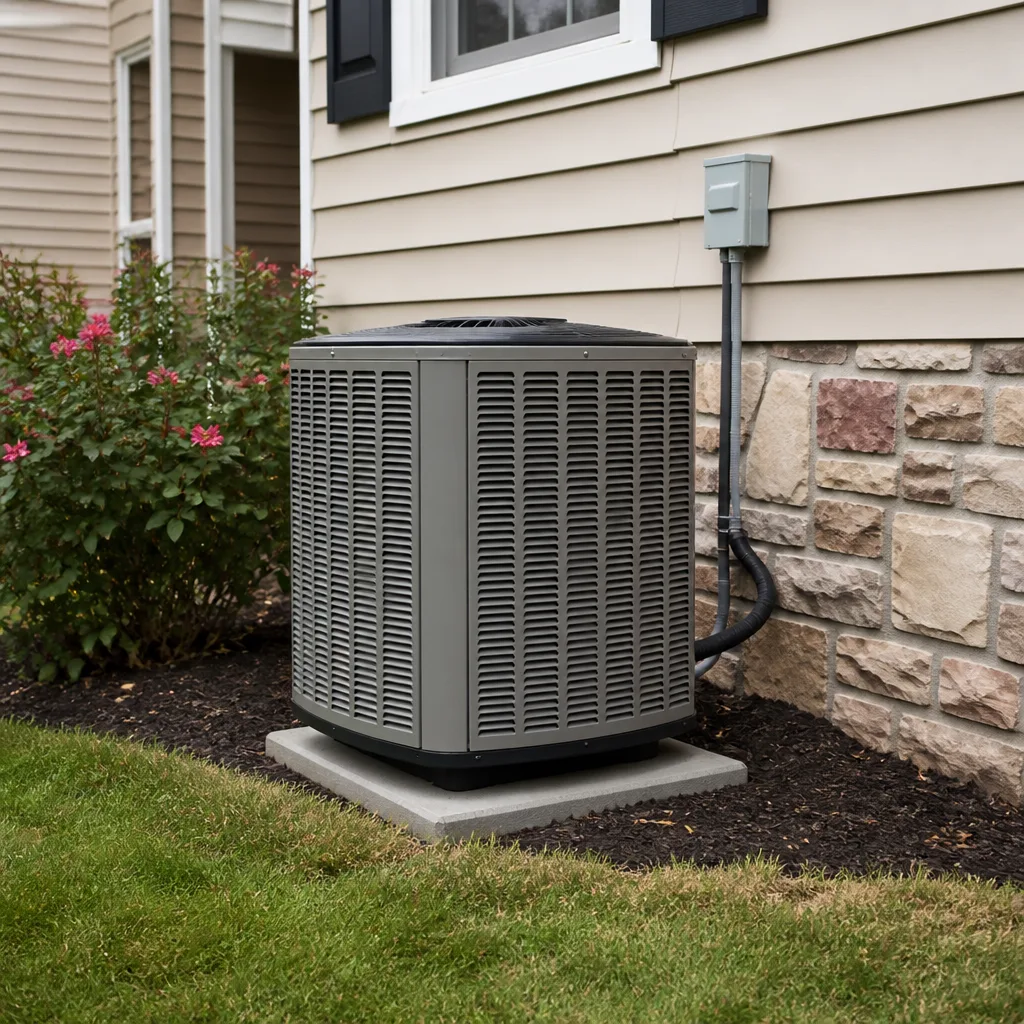
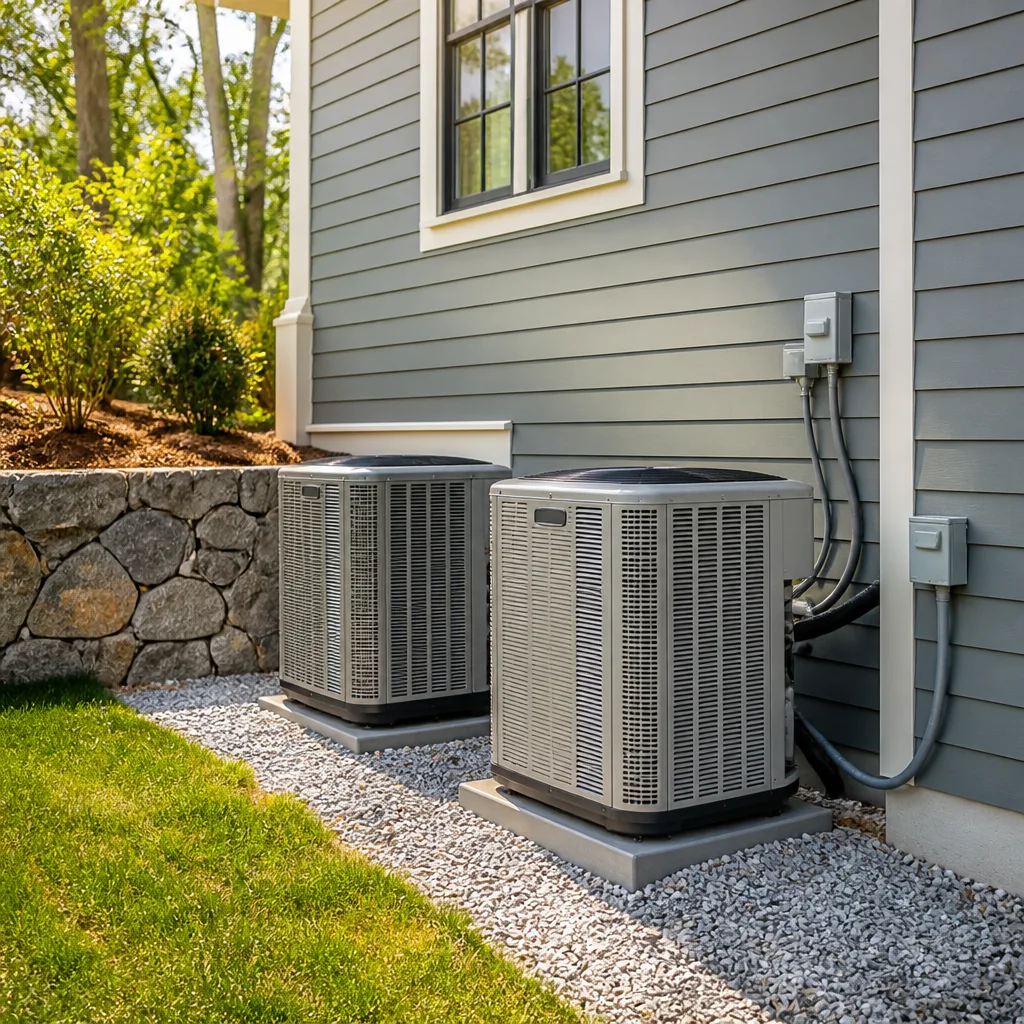 Heat pumps
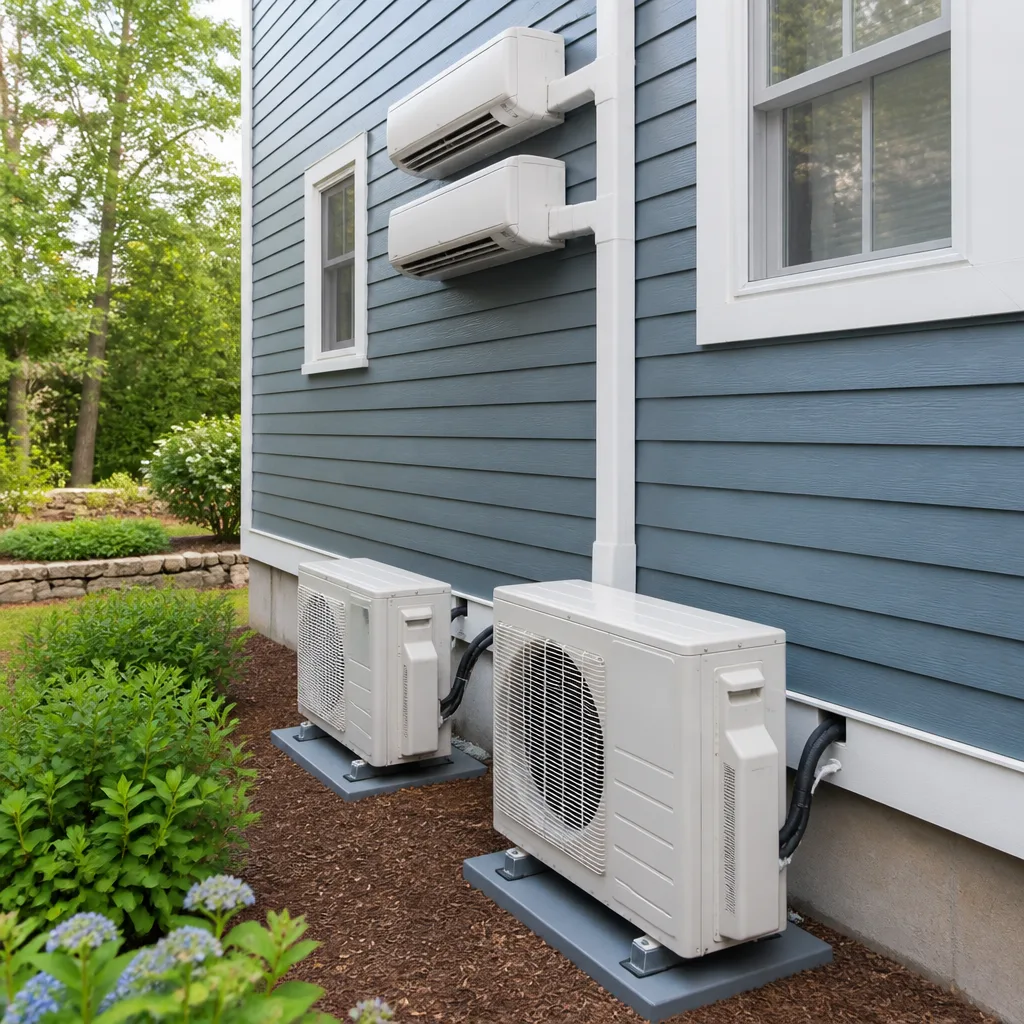 Ductless mini splits
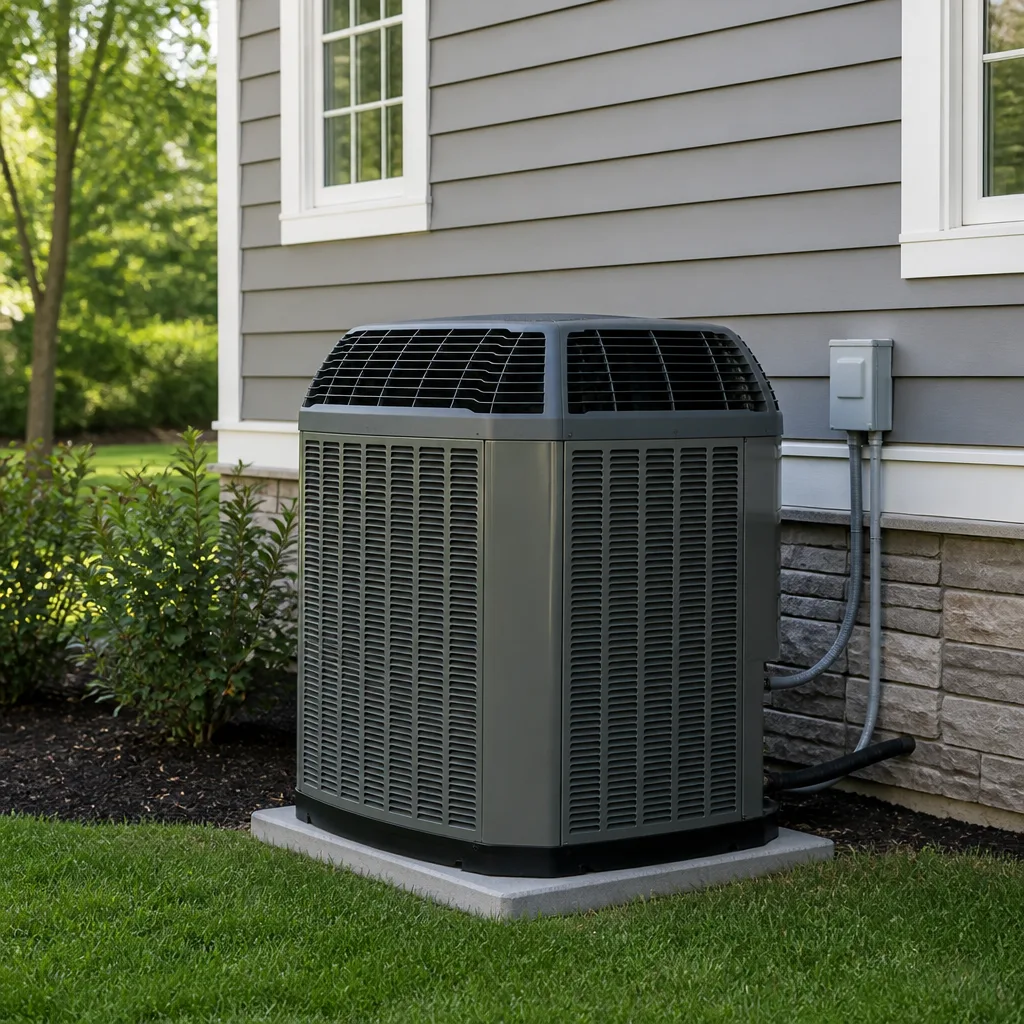 Trane
Trane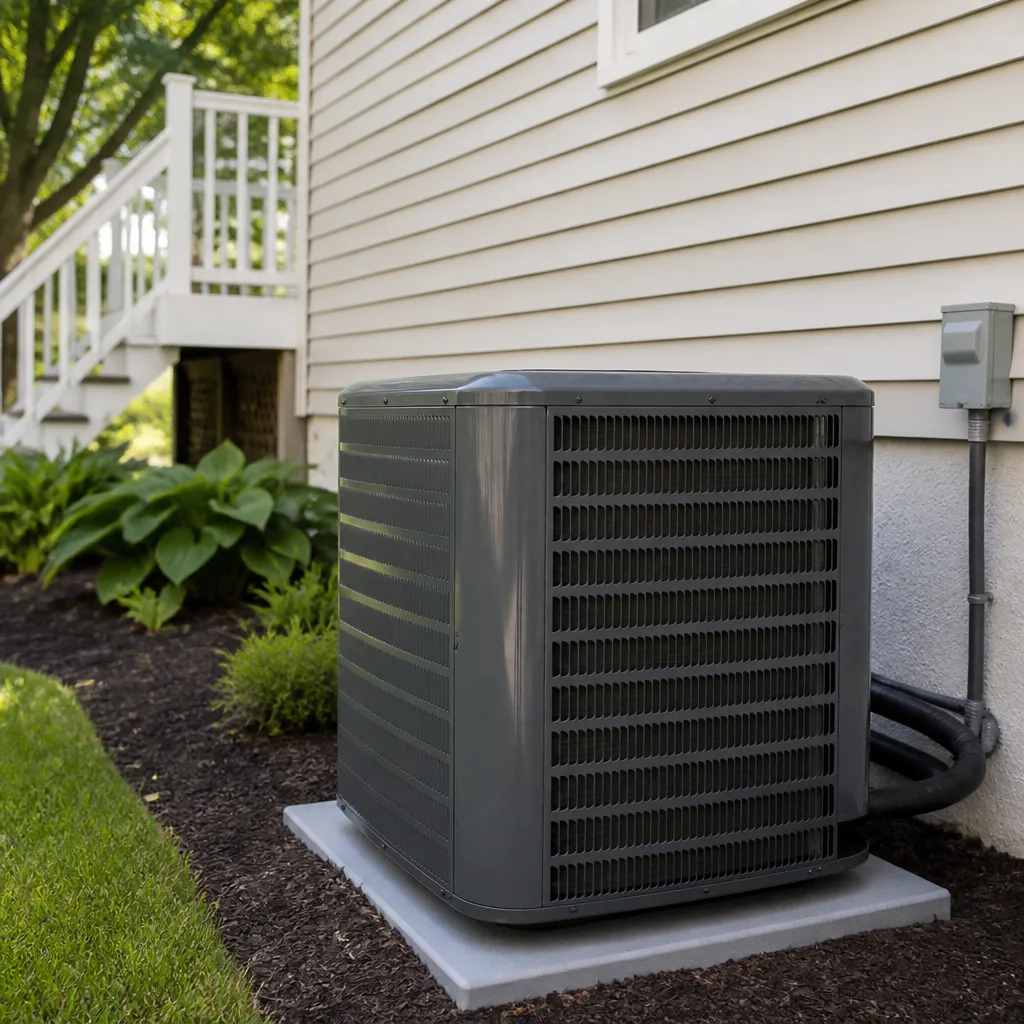 Goodman
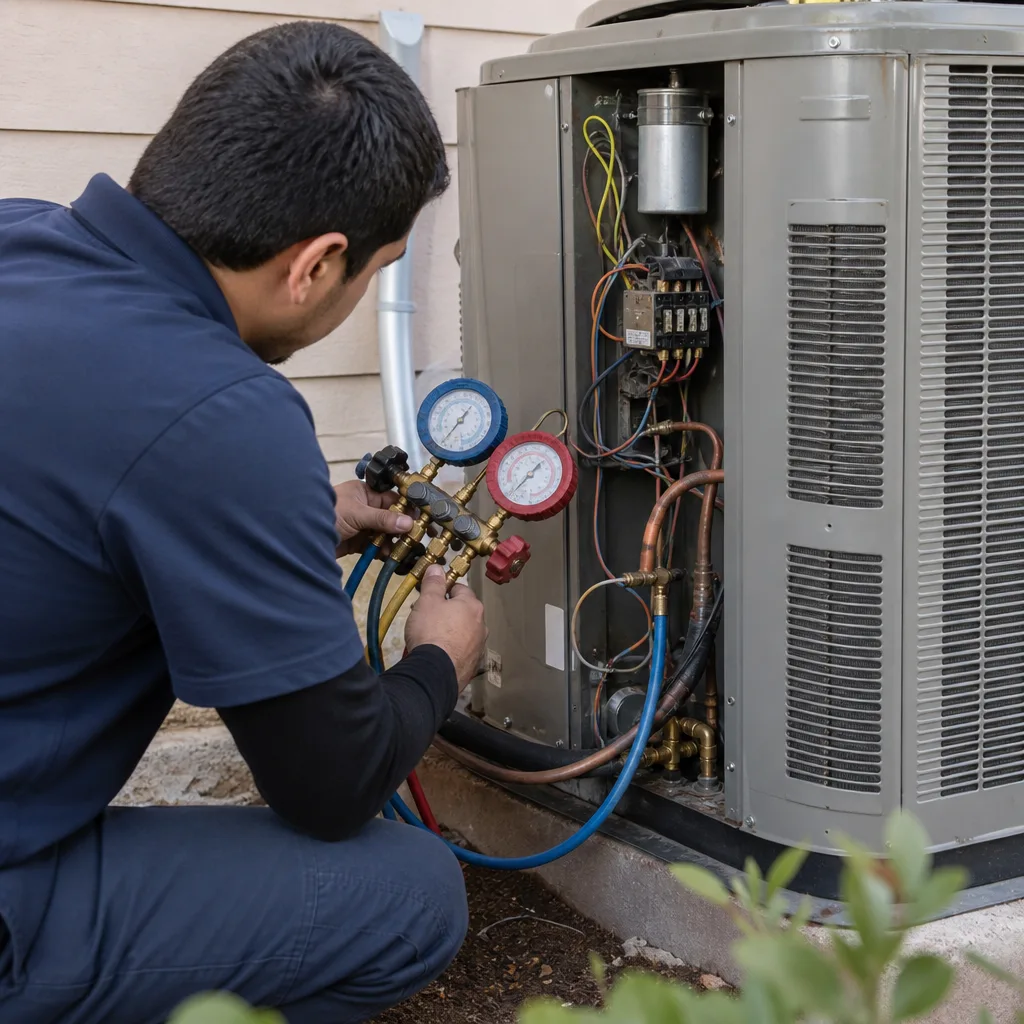
Seasonal tune-up and full diagnostic on your Carrier, Trane, or Goodman system - readings shown to you before any repair is proposed
Diagnosis first, numbers second - you approve the repair price before a single part goes in.
Get your free estimateHow to Hire a HVAC Contractor in San Antonio: A Step-by-Step Guide
Texas has a legal loophole that surprises most San Antonio homeowners: HVAC companies themselves don’t need a license. Only the individual technician holding the wrench does. That means a company can market itself as “licensed and insured” while sending unlicensed workers to your door. This guide shows you exactly how to verify credentials, read a written quote line by line, and spot the red flags that separate accountable San Antonio HVAC professionals from revolving-door outfits. You’ll finish with a 15-minute due-diligence checklist you can run on any contractor before they step foot inside.
Quick Answer
To hire an HVAC contractor in San Antonio, verify the individual technician’s Texas license on the TDLR website, request a Certificate of Insurance addressed to you personally, and demand a written quote with five specific line items before any work begins. Skip any company that quotes over the phone without seeing the unit, can’t give a written arrival window, or pushes same-day signatures. A trustworthy San Antonio HVAC contractor shows up with a live arrival time, puts the price in writing first, and backs the work with a written guarantee.
Styles & brands we work with
Table of Contents
- How to Verify a Texas HVAC License in Under Two Minutes
- Insurance Documents: What to Request and Why
- How to Read a Written Quote: The Five Line Items That Matter
- Red-Flag Scheduling and Communication Behaviors
- How Transparent Booking Platforms Shift Power to You
- San Antonio-Specific Considerations: Climate, Permits, and Market Realities
- Your 15-Minute Contractor Due-Diligence Checklist
- Common Mistakes to Avoid
How to Verify a Texas HVAC License in Under Two Minutes
Every technician who works on your AC or furnace in San Antonio must hold an individual license issued by the Texas Department of Licensing and Regulation (TDLR). The company itself doesn’t need one, which is exactly why you verify the person, not the brand. Here’s the two-minute process:
- Go to the TDLR license search page at tdlr.texas.gov and click “License Search” in the top navigation.
- Select “Air Conditioning and Refrigeration Contractors” from the license type dropdown menu.
- Enter the technician’s full name or license number. If you only have the company name, search that, then cross-check which technicians are actually listed under that business.
- Look for the license status field. It must say “Active” – not “Expired,” “Revoked,” or “Inactive.” A valid listing shows the license number, original issue date, expiration date, and the exact business name the technician is registered under.
- Confirm the license type matches the work being done. Texas issues two main classes: Class A (any size unit) and Class B (units up to 25 tons for AC, 1.5 million BTU for heating). Most residential work falls under either, but if you’re seeing a Class B on a large custom home, ask questions.
We’ve seen homeowners in San Antonio neighborhoods like Alamo Heights and Stone Oak hire “licensed companies” only to discover the tech at the door was a subcontractor with no license at all. A valid TDLR listing means the individual passed the mandatory four years of supervised experience and the state exam. It also means they’re required to complete eight hours of continuing education each year. If a technician refuses to provide a license number or gets defensive when asked, that’s the end of the conversation. Legitimate San Antonio HVAC pros hand over their license number before you even ask.
Insurance Documents: What to Request and Why
Most homeowners believe “insured” is a yes-or-no checkbox. It isn’t. There are layers of insurance that protect you differently, and requesting the wrong proof leaves gaps that can cost you real money if a technician gets hurt on your property or damages your home. In San Antonio, where summer AC replacements happen during 100-degree days and crews move fast, the risk of property damage or workplace injury is real.
Here’s exactly what to request:
- Certificate of Insurance (COI) addressed to you by name. A generic COI with no certificate holder listed is nearly worthless. The insurance company should issue a COI that names you, your address, and the project as the certificate holder. That gives you the right to be notified if the policy cancels mid-project.
- General liability coverage with a minimum of $1 million per occurrence. This covers damage to your home caused by the contractor. If a rooftop unit falls through your ceiling or a poorly routed refrigerant line floods your kitchen, general liability is what pays.
- Workers’ compensation insurance, not just a waiver. In Texas, private employers can opt out of workers’ comp. If an uninsured tech falls off a ladder in your driveway, you could be liable for their medical bills. Ask directly: “Do you carry workers’ compensation insurance?” If the answer is no, consider that a dealbreaker for anything beyond a simple repair.
Request the COI before booking, not on the day of the appointment. Any established San Antonio HVAC company keeps a current COI on file and can email it inside an hour. Companies that stall, say “it’s in the office,” or promise to send it later are telling you something important about how they run their business. Legitimate operators like Halden Heating and Air San Antonio provide proof of insurance as standard practice, not as a favor.
How to Read a Written Quote: The Five Line Items That Matter
A written quote from an HVAC contractor in San Antonio tells you far more than the price. It reveals whether the company plans to cut corners, pad expenses, or play games down the road. Before you sign anything, check for these five line items. Every legitimate estimate includes all five. If any are missing, walk away or demand a revised quote in writing.
- Exact equipment model number and capacity. Not “3-ton AC unit” but “Carrier 24SCA536, 3-ton, 16 SEER2.” Vague descriptions mean you can’t compare prices across bids, and you can’t verify what gets installed matches what you paid for.
- Labor and materials broken out separately. The quote should distinguish equipment cost from installation labor. This protects you from hidden price hikes and makes warranty claims easier to navigate later.
- Scope of work in plain language. It should list exactly what gets done: “Remove and dispose of existing Goodman 2.5-ton condenser, install new Bryant 3-ton condenser and matching evaporator coil, reconnect existing ductwork, vac pump to 500 microns, test for leaks, charge per manufacturer specs, haul away old equipment.” If the scope is three vague bullet points, the job will be vague too.
- Permit fees and who pulls the permit. In San Antonio, permits are required for most HVAC replacements. A legitimate quote lists the permit cost and clearly states that the contractor, not you, will file the paperwork. This matters because the City of San Antonio’s Development Services Department requires licensed contractors to pull mechanical permits for equipment replacements. Unpermitted work can void manufacturer warranties and complicate home sales.
- Payment terms and schedule. No legitimate San Antonio contractor demands 100% upfront. Expect a deposit between 10% and 50%, with the remainder due after the work is complete and passing inspection. If payment terms aren’t in writing, they don’t exist.
In our experience across San Antonio, quotes missing item four, permit fees, are the most common red flag. It signals a contractor who regularly works unpermitted, which puts you at risk when you eventually sell the house and the buyer’s inspection flags unpermitted HVAC work.
Red-Flag Scheduling and Communication Behaviors
How a company handles your initial call tells you everything about how they’ll handle the job. San Antonio’s HVAC market is crowded, and homeowners have options. Here are the specific behaviors that should send you searching elsewhere:
- Quoting a price over the phone without seeing the unit. A serious diagnosis requires eyes on the equipment. A company that quotes “around $300” for a repair they haven’t seen isn’t doing you a favor. They’re setting up a door-step bait-and-switch where the final bill will be higher.
- Refusing to give a written arrival window. “We’ll be there sometime between 8 and 5” is not acceptable in 2025. A professional San Antonio HVAC company gives you a live arrival time you can track, not a twelve-hour guessing game. Halden Heating and Air San Antonio sends a confirmed time with live tracking so you can watch your tech drive to your door.
- Pushing same-day signatures on replacement quotes. AC installation is a major purchase, often $6,000 to $12,000 in San Antonio. A contractor who pressures you to sign today, citing a “one-day only price” or a suddenly available slot, is using high-pressure tactics. Take 24 hours. Any legitimate company honors a written quote for at least a week.
- No written guarantee on repairs. A repair without a written guarantee is a gamble. The industry standard in San Antonio varies wildly, with some companies offering 30 days and others offering nothing. Expect a minimum of one year on parts and labor for any meaningful repair.
- Sending different technicians each visit without explanation. Continuity matters. If a company rotates unknown techs through your house without a handoff, you lose the benefits of a technician who knows your system’s history.
Trust your gut on communication. If getting a straight answer about scheduling, pricing, or guarantees feels like pulling teeth before the job starts, it won’t get easier when the AC goes out on a 104-degree August afternoon in San Antonio’s Medical Center district.
How Transparent Booking Platforms Shift Power to You
Traditional HVAC booking in San Antonio works like this: you call, leave a message, wait for a callback, negotiate a four-hour window, sit around waiting, and finally meet a tech who quotes a price after diagnosing the issue. The homeowner holds zero leverage in that model. Transparent booking platforms flip the dynamic entirely.
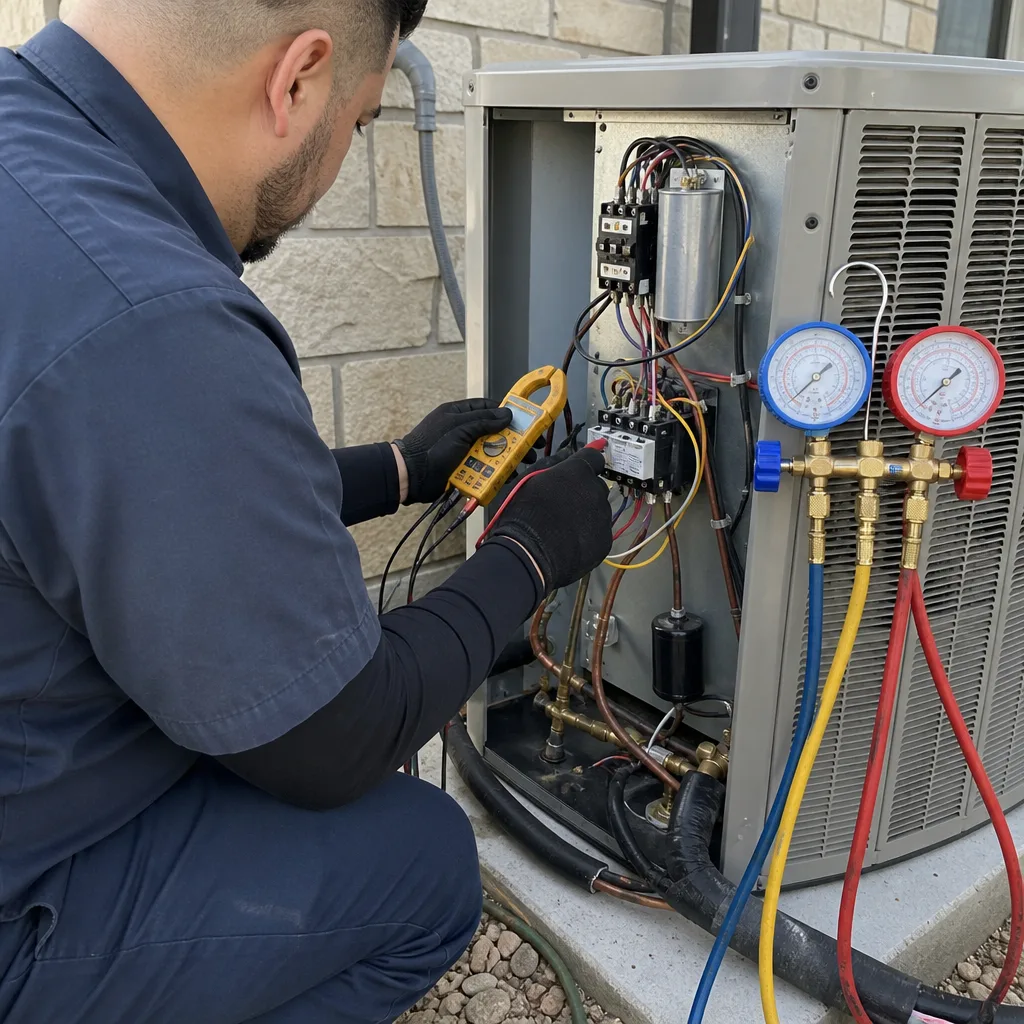
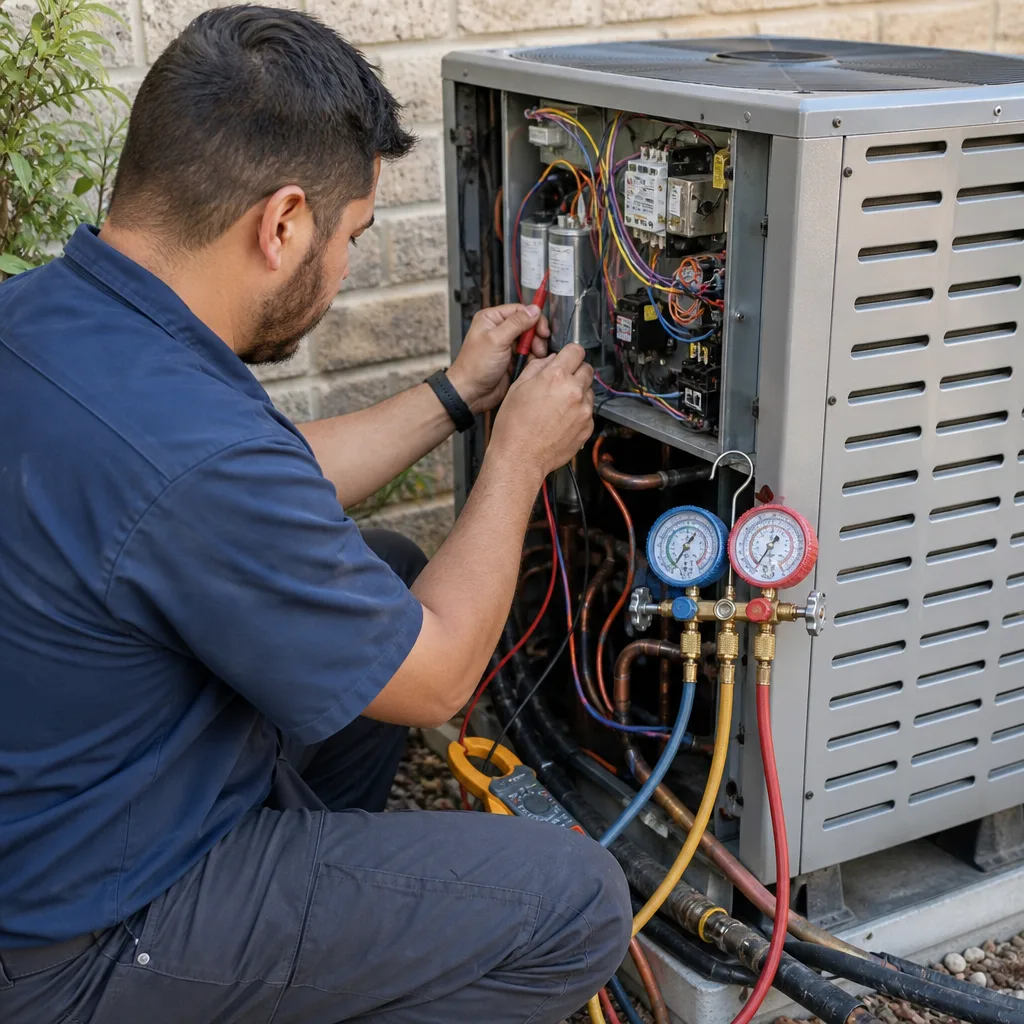
Our booking process at Halden Heating and Air San Antonio is built on the Relay Home Co. standard. When you book online or by phone, you get a live arrival time and a link to track your technician to your door in real time, rideshare-style. Before work begins, you receive a written price that locks. No surprises at the door, no “while we’re here” upsell pressure. The tech documents the job with before-and-after photos, so there’s a visual record of exactly what was done.
This model changes what negotiating power means. Instead of haggling at the door with a tech who knows you’re desperate for cold air, you evaluate a written price on your own terms. If it works for you, you approve it. If it doesn’t, there’s no awkward confrontation and no sunk-cost feeling from having “wasted” the tech’s time. The price was transparent from the start.
Ask any contractor you’re considering how they handle booking and pricing. If the answer involves “we’ll see when we get there,” you’re dealing with an old-model shop. A modern San Antonio HVAC company can tell you who’s coming, when they’ll arrive, and what it will cost before anyone picks up a tool.
San Antonio-Specific Considerations: Climate, Permits, and Market Realities
San Antonio’s climate isn’t just hot. It’s intensely hot for long stretches, with summer highs regularly exceeding 100 degrees, combined with humidity that pushes heat index values even higher. That combination means your AC system works harder than national averages, fails more often, and ages faster. A heat pump in San Antonio’s climate is an efficient option year-round, but the cooling load dominates. When you’re hiring an HVAC contractor here, you want someone who understands this specific strain.
San Antonio also sits on limestone and expansive clay soils, which can shift foundations over time. That matters for HVAC because settled slabs can put stress on ductwork, disconnect refrigerant lines, and cause condensate drain lines to back up. A contractor who’s worked in neighborhoods like Helotes, Shavano Park, or Terrell Hills knows to check for drainage issues that a national franchise tech flying in from out of market might miss.
Permit requirements in San Antonio add another layer. The city’s Development Services Department requires mechanical permits for most HVAC equipment replacements. The permit protects you because it triggers a city inspection, which verifies the installation meets current code. For a deeper look at local rules, see our HVAC Permits, Codes & Inspections in TX: What You Need to Know. Contractors who skip permits save a few hundred dollars but leave you with no independent verification of the work. If you’re planning to sell your San Antonio home within a few years, unpermitted HVAC work is exactly the kind of thing that kills a deal in the option period.
The San Antonio market has also seen an influx of high-volume discount operators running on thin margins. These companies survive on volume, not on repeat business or reputation. They use subcontractors heavily, which means the licensed technician who sells you the job may not be the person who installs it. When you’re comparing quotes, the cheapest price in San Antonio often comes with the least accountability. A price that’s 30% below the market average isn’t a deal. It’s a warning.
Your 15-Minute Contractor Due-Diligence Checklist
Run this checklist before you book any HVAC contractor in San Antonio. It takes about 15 minutes and protects you from the most common pitfalls in this market:
- Verify the technician’s TDLR license on tdlr.texas.gov. Status must say “Active,” and the business name should match the company you’re hiring.
- Request a Certificate of Insurance addressed to you personally. Confirm at least $1 million in general liability coverage and ask specifically about workers’ comp.
- Get a written quote with all five line items: exact model number, labor and materials separated, detailed scope of work, permit fees and responsibility, and payment terms.
- Ask about the booking process. Can they give you a written arrival window? A live tracking link? What happens if they’re late?
- Confirm the guarantee in writing. Every repair should come with a written guarantee. Ask what happens if the repair fails within the coverage period.
- Check who actually does the work. Will the licensed technician you spoke with perform the job, or will it be subcontracted to someone else?
This checklist catches most of what’s wrong with the worst operators in the San Antonio market. If a company passes all six checks, you’re dealing with a professional operation. If they fail on any single point, ask hard questions before proceeding.
Common Mistakes to Avoid
- Assuming the company license covers the technician. Texas doesn’t license HVAC companies. You must verify the individual technician’s TDLR license separately, or you could end up with an unlicensed subcontractor working in your attic.
- Accepting a verbal estimate as a binding quote. If it’s not in writing, it doesn’t exist. Verbal estimates in San Antonio’s competitive market are notorious for growing by 30% or more between the initial call and the final invoice.
- Choosing the lowest bid without comparing scope. Three quotes that all say “replace AC” aren’t necessarily bidding the same job. One includes permits, a matching coil, and disposal. Another quotes only the condenser and leaves the old evaporator coil in place, which hurts efficiency and voids warranties.
- Paying 100% upfront. No legitimate contractor in San Antonio demands full payment before work begins. A large upfront demand usually signals cash-flow problems or an operation with nothing to lose.
- Skipping the permit to save money. The few hundred dollars you save becomes a headache during resale and potentially voids a manufacturer warranty if the installation doesn’t meet code.
- Not reading the warranty exclusions. Some warranties only cover parts, not labor. Others exclude specific components like compressors after year one. Read the fine print before you sign.
- Assuming a big brand name means a big company behind it. Franchise HVAC brands in San Antonio often operate through independent franchisees, which means the quality varies by location as much as any independent shop. Verify the local operator, not just the national name.
See the difference
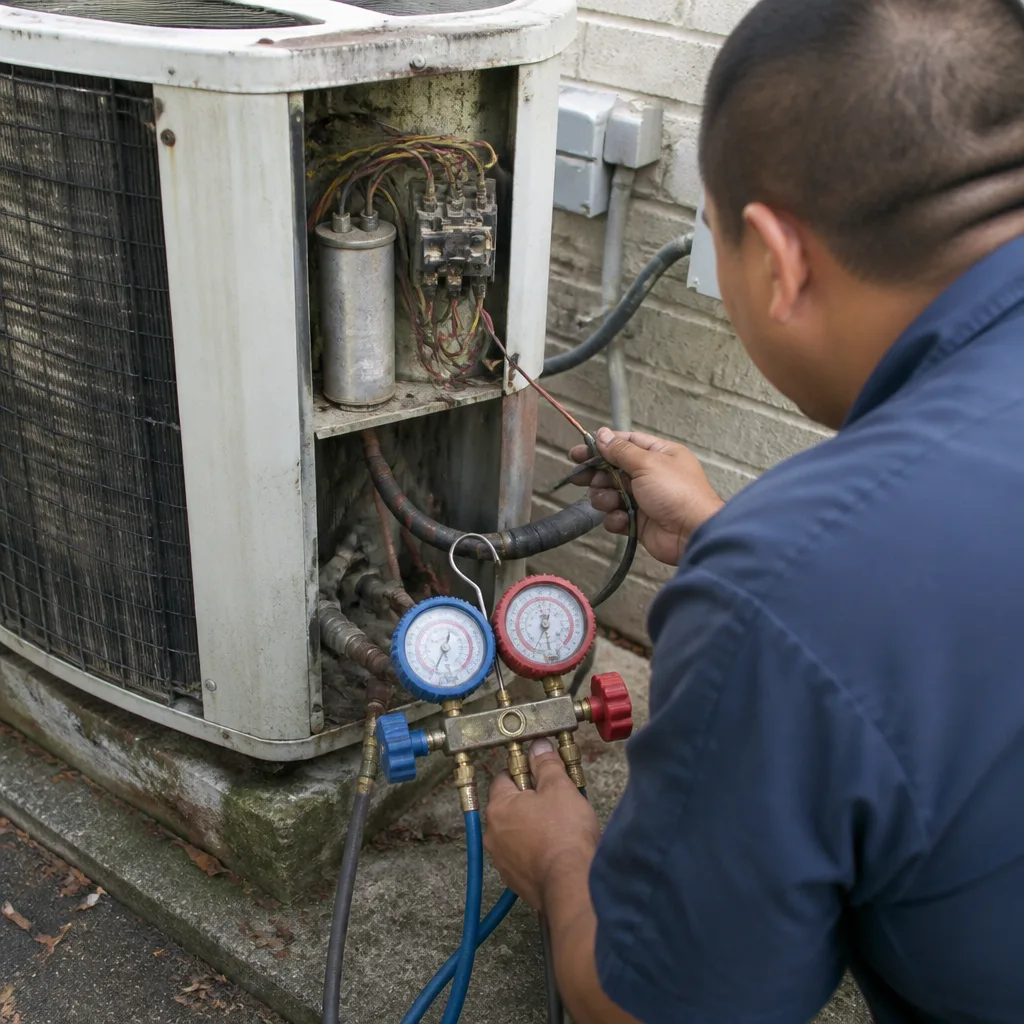 Before
 After
After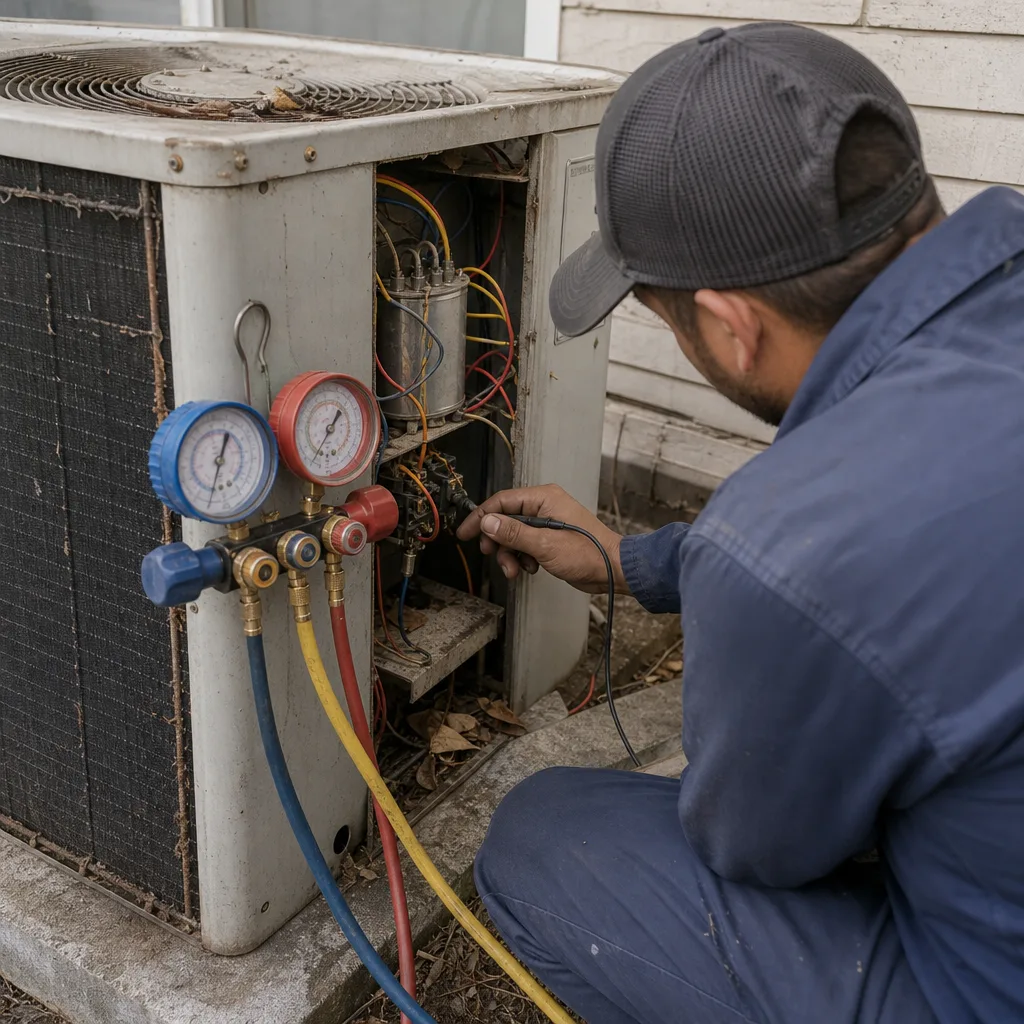 Before
 After
After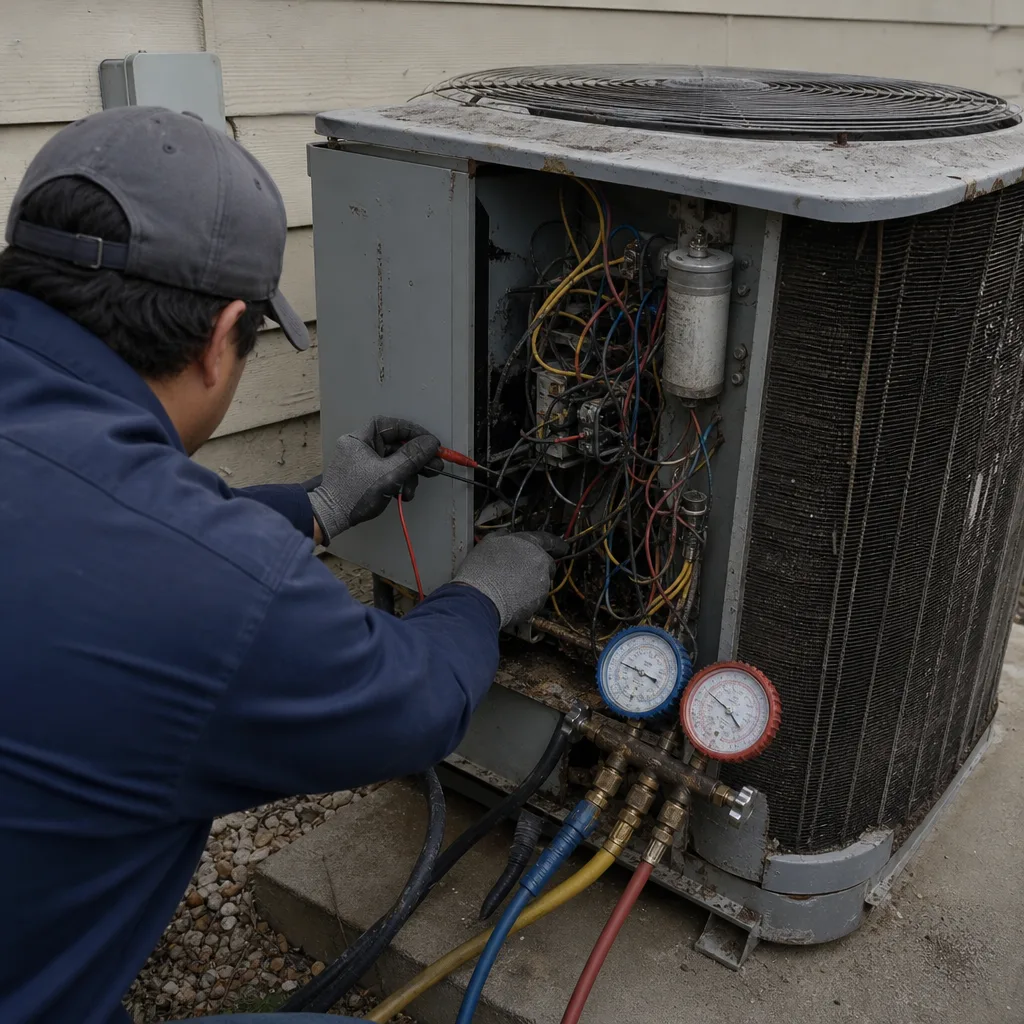 Before
 After
AfterWhen to Call a Professional
Some AC and furnace issues are safe to investigate on your own: a tripped breaker, a dirty air filter, a closed supply vent. Problems involving refrigerant, electrical components, gas lines, or anything requiring opening the sealed system need a licensed San Antonio technician. Refrigerant is a controlled substance regulated by the EPA, and working with it legally requires Section 608 certification. Gas furnace work carries carbon monoxide and fire risks. High-voltage electrical work in your HVAC system is genuinely dangerous and not a DIY project. If your system makes unusual noises, trips breakers repeatedly, blows warm air, or produces a burning smell, shut it down and call a professional. Learn what to watch for in our HVAC Warning Signs: A San Antonio Homeowner’s Reference Guide. Halden Heating and Air San Antonio offers free estimates in San Antonio. Call (903) 623-6784 and we’ll get a licensed technician out to diagnose the issue with a written price before any work starts.
Frequently Asked Questions
Most AC repairs in San Antonio run between $150 and $500 depending on the part and complexity. AC installation or full replacement typically ranges from $6,000 to $12,000 for a complete system, while furnace repair runs $150 to $450 for common issues. For detailed pricing factors, read our HVAC Cost Breakdown: The San Antonio Homeowner’s Reference for 2026. These are general ranges, and your exact price depends on your home’s size, ductwork condition, and equipment efficiency tier. Call (903) 623-6784 for an exact written quote. Estimates are free.
No. Texas does not license HVAC companies at the state level. The individual technician performing the work must hold an active TDLR license, but the company itself can operate without one. This is why verifying the technician’s specific license number is essential before letting anyone work on your system in San Antonio.
Use the TDLR license search tool at tdlr.texas.gov, select “Air Conditioning and Refrigeration Contractors” from the license type dropdown, and enter the technician’s name or license number. A valid listing shows “Active” status with the technician’s license number, expiration date, and affiliated business name. If the listing shows “Expired” or “Inactive,” do not hire that technician.
If your system is under 10 years old and the repair costs less than 30% of replacement cost, repair usually makes sense. In San Antonio’s climate, most systems last 12 to 15 years with proper maintenance. If your unit is over 12 years old, uses R-22 refrigerant, or needs a compressor replacement, replacement is often the smarter long-term investment. The higher efficiency of modern systems also reduces summer electricity bills significantly in San Antonio’s heat.
A reliable price requires seeing the equipment. While you can get rough price ranges over the phone, any company that gives you a firm repair price without inspecting the unit is guessing or setting a low anchor. A serious San Antonio HVAC company sends a technician to diagnose the issue, then provides a written price before work begins. At Halden Heating and Air San Antonio, that written price is locked before any tool is picked up.
Yes, through several channels. CPS Energy, San Antonio’s municipal utility, offers rebates for high-efficiency heat pumps and AC systems that meet specific SEER2 ratings. Federal tax credits under the Inflation Reduction Act also apply to qualifying heat pumps and high-efficiency systems. Your contractor should handle the paperwork and include the rebate value in your written quote. Call (903) 623-6784 to find out which rebates apply to your specific installation.
The Bottom Line
Hiring an HVAC contractor in San Antonio comes down to verification, documentation, and communication. Verify the individual technician’s license on the TDLR website. Request a Certificate of Insurance addressed to you personally. Insist on a written quote with all five line items, including permit fees and responsibility. Avoid companies that quote over the phone, refuse written arrival windows, or push same-day signatures. The best San Antonio HVAC experience includes live tech tracking, a locked written price, photo documentation, and a written guarantee covering the work. Explore more guides & resources to protect your home and budget. Halden Heating and Air San Antonio has served homeowners since 2004 with these standards on every job. Call (903) 623-6784 for a free estimate.
Written by Andre Fuller, Owner at Halden Heating and Air San Antonio, serving San Antonio since 2004.