
 Furnace & heating
 AC repair
 Heat pumps
 Ductless mini splits
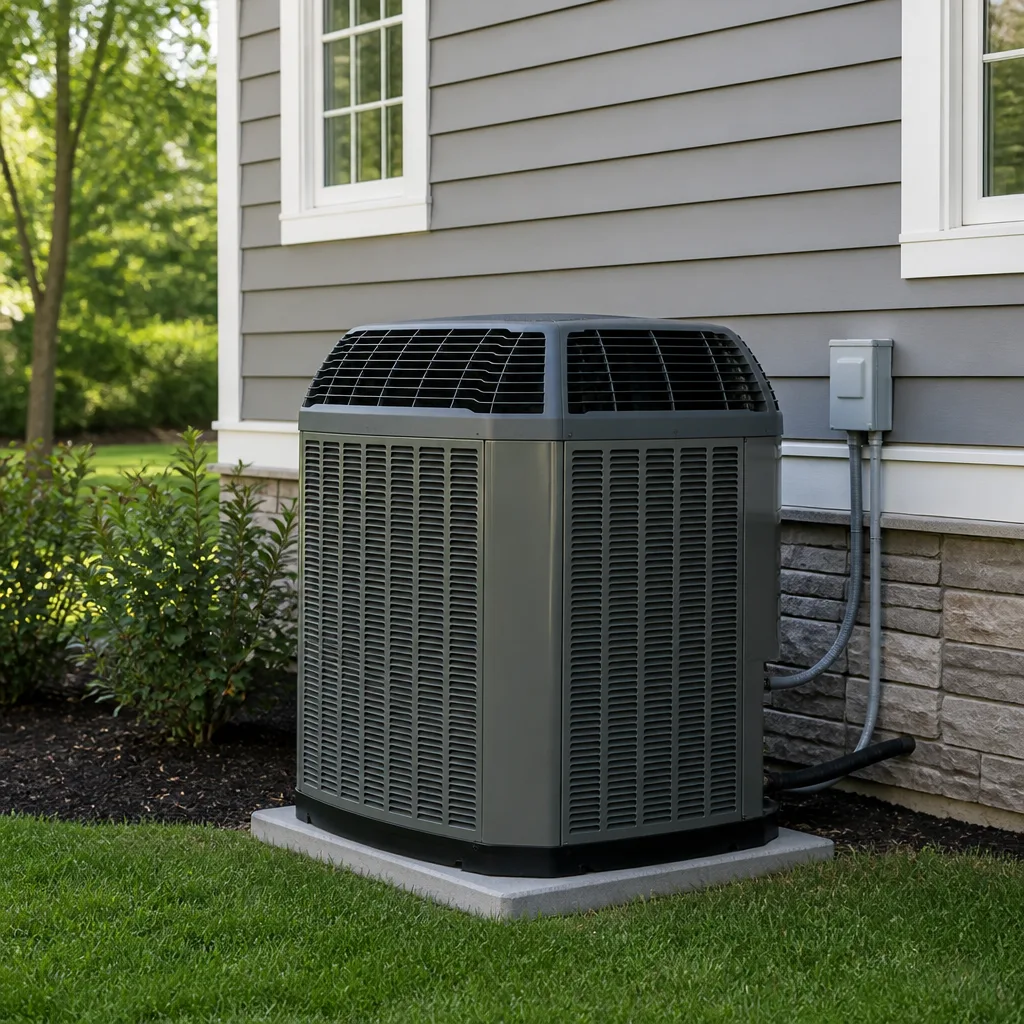 Trane
Trane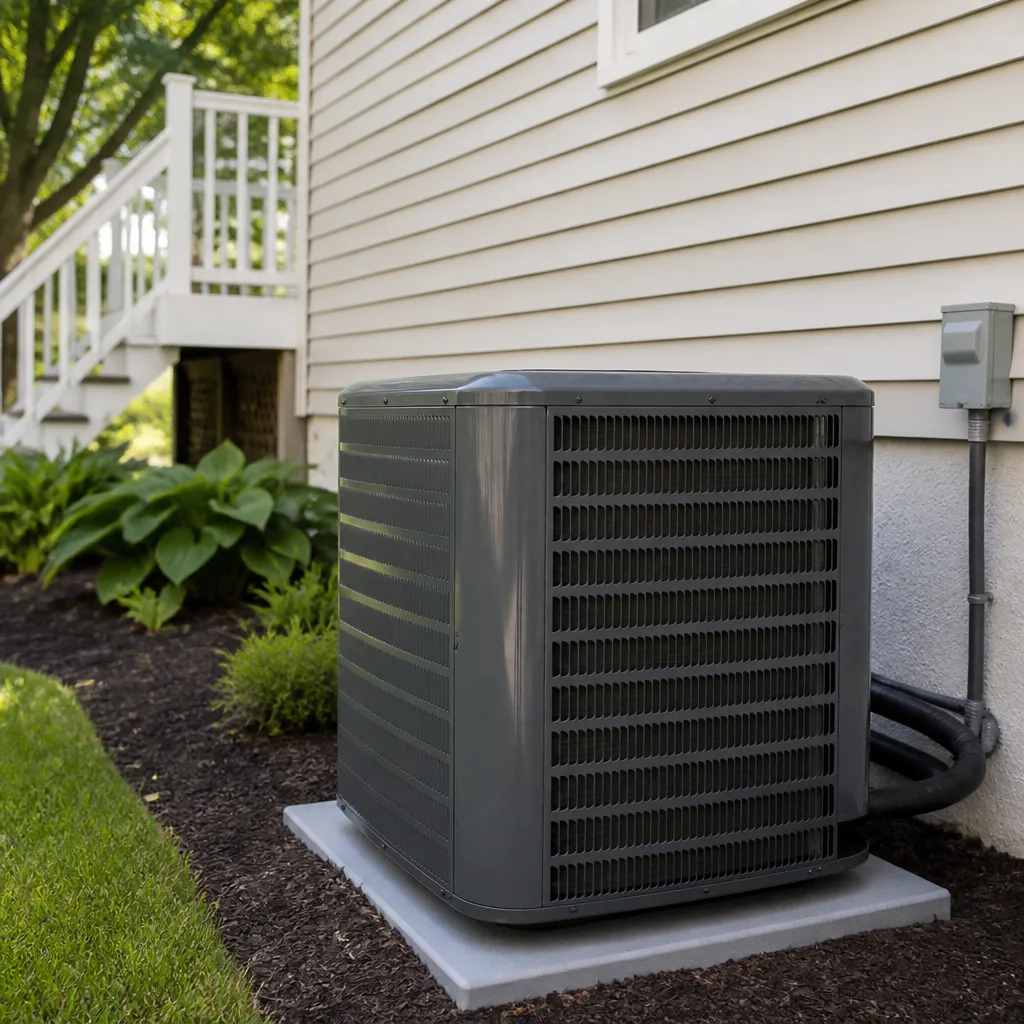 Goodman
Seasonal tune-up and full diagnostic on your Carrier, Trane, or Goodman system - readings shown to you before any repair is proposed
Diagnosis first, numbers second - you approve the repair price before a single part goes in.
Get your free estimateTrane Capacitor Replacement: The San Antonio Owner’s Guide
If your Trane condenser is humming but the fan won’t spin, or the compressor clicks and gives up, you’re almost certainly looking at a failed capacitor. We stock Trane-compatible capacitors on our trucks and replace them the same day in most San Antonio neighborhoods, typically for $180 to $340 installed depending on your Trane model and whether it’s a single or dual capacitor. You’ll know this part failed because the outside unit starts acting lazy: it struggles to kick on, makes a low hum, shuts off on its own, or the system keeps tripping the breaker while the indoor blower keeps blowing warm air.
Which Trane Models This Applies To
Capacitors are not a one-size-fits-all part, and Trane is pickier than most brands about getting the specs right. The capacitor bolted to a Trane XR14 is different from the one on an XL18i or a newer XV20i variable-speed system. If you’re a homeowner trying to match this yourself, the label on your old capacitor tells you two numbers that matter: the microfarad (µF) rating, often written as something like 45/5 or 35/5, and the voltage rating, which should be 370 or 440 VAC. Trane tends to use dual-run capacitors (two ratings in one metal can, one for the fan motor and one for the compressor) on most residential condensers from the XR, XL, and XV series going back to the early 2000s. If your unit is a heat pump, add the reversing valve wiring into the mix and a wrong capacitor can leave you with a system that cools but won’t heat. We carry OEM Trane capacitors as well as high-quality aftermarket options from suppliers like AmRad and Titan HD, and we’ll show you the difference in person before we install anything.
Styles & brands we work with
Signs Your Trane Capacitor Replacement Is Failing
- The outside unit hums but the fan doesn’t spin. That hum is the compressor trying to start against a dead capacitor. If the capacitor only has enough juice to start the fan but not the compressor, you may see the fan spinning slowly while the compressor just clicks. Either way, don’t let this go – that compressor is pulling locked-rotor amps and heating up every second it sits there.
- Your AC runs for a few minutes, then shuts off. Then repeats. This “short cycling” is the capacitor losing its ability to hold a charge under load. It’ll start the compressor, but it can’t sustain it. We see this version constantly on San Antonio afternoons when the attic hits 140 degrees and thin wires start losing capacity.
- You have to give the fan a push with a stick to get it going. This is the classic weak-capacitor trick from decades of window units, and it works on Trane condensers too. It also means the capacitor is a fraction of its original rating – maybe 5 µF instead of 7.5. The fan motor is working harder than it should, and the strain shortens its life.
- The capacitor looks swollen, bulged, or leaked oil onto the control panel. This is a dead giveaway. A healthy capacitor is a perfect cylinder. A failed one looks like a slightly swollen soda can, and sometimes there’s a brownish oil stain underneath where it vented. In San Antonio heat, this is the most common failure mode we find – the internal dielectric breaks down from years of 100-degree attic or yard exposure.
- Your breaker trips when the AC tries to start. A failed hard-start capacitor can cause inrush current spikes that trip a standard 30-amp or 40-amp breaker. If you’ve flipped the breaker twice in one summer already, call before the third time, because a stuck compressor at full lock is only one trip away from a much bigger bill.
See the difference
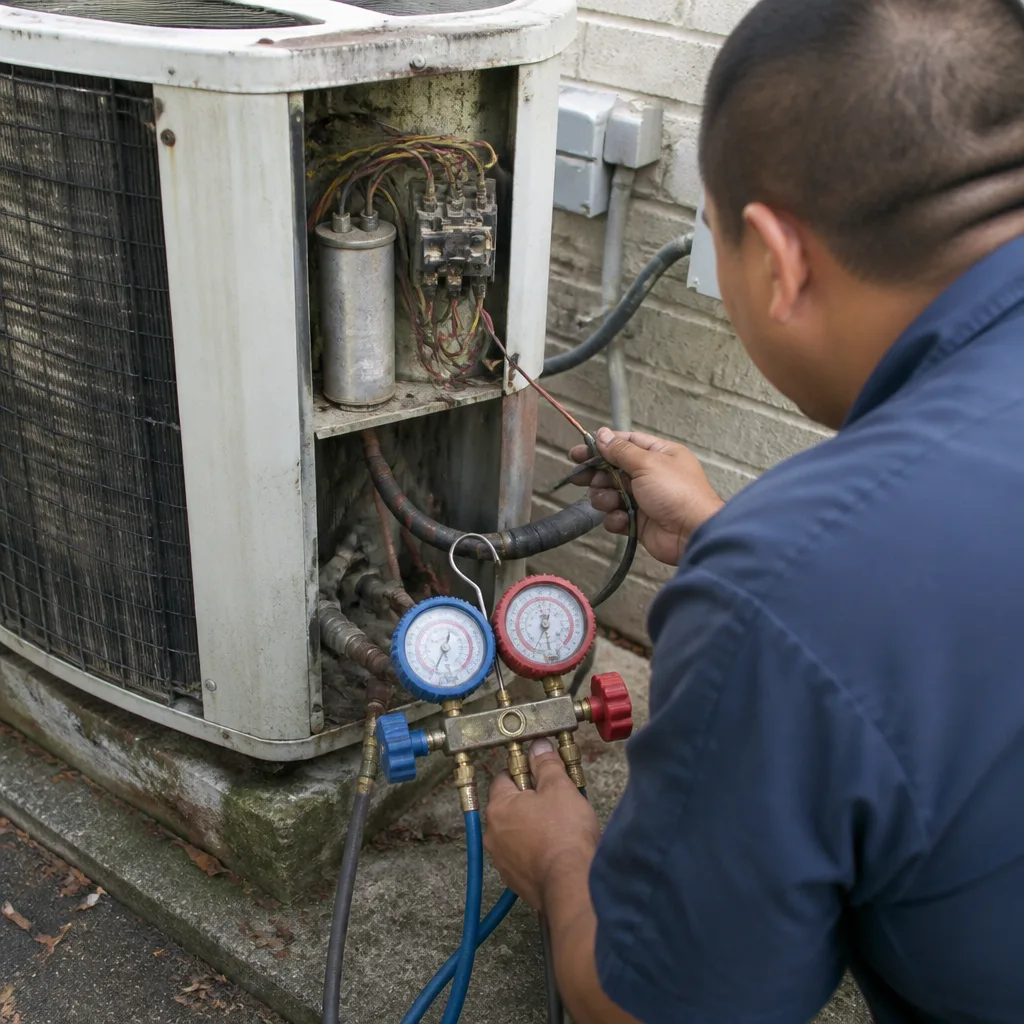 Before
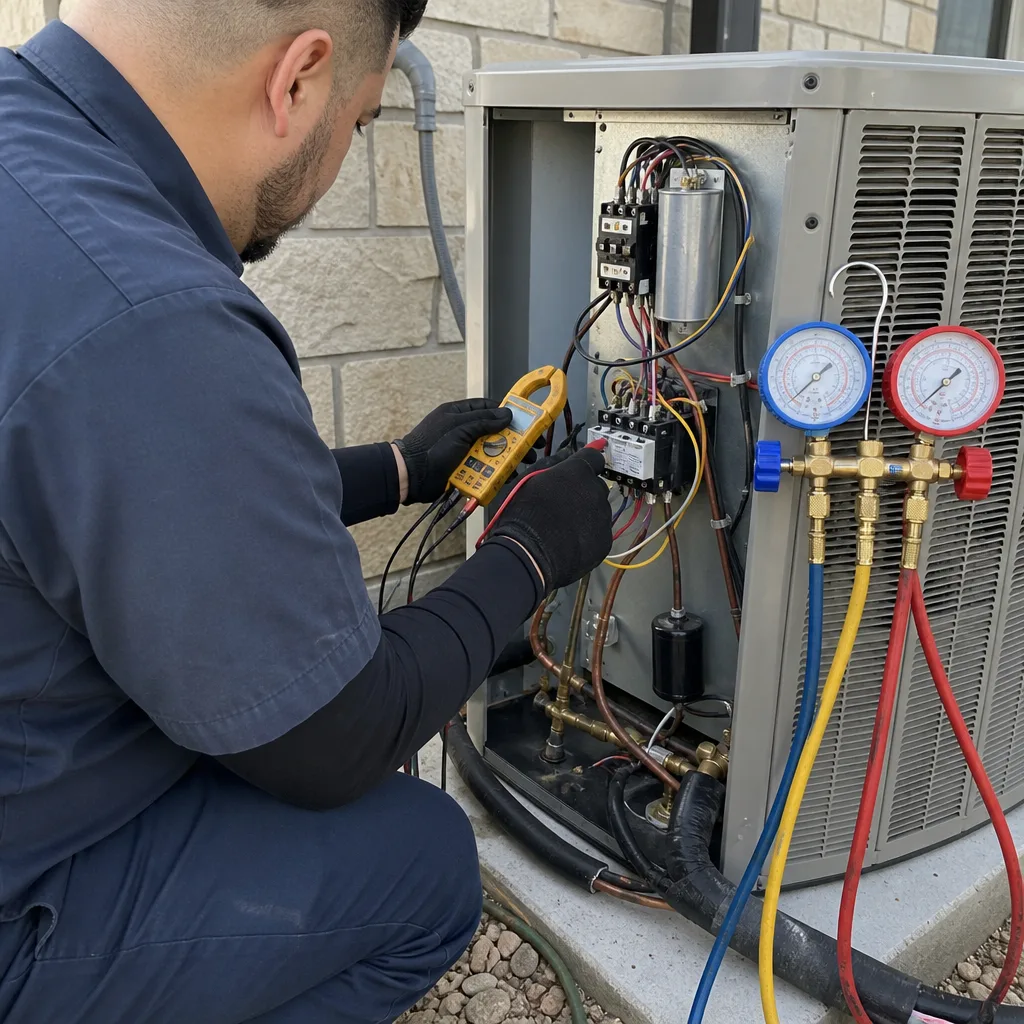 After
After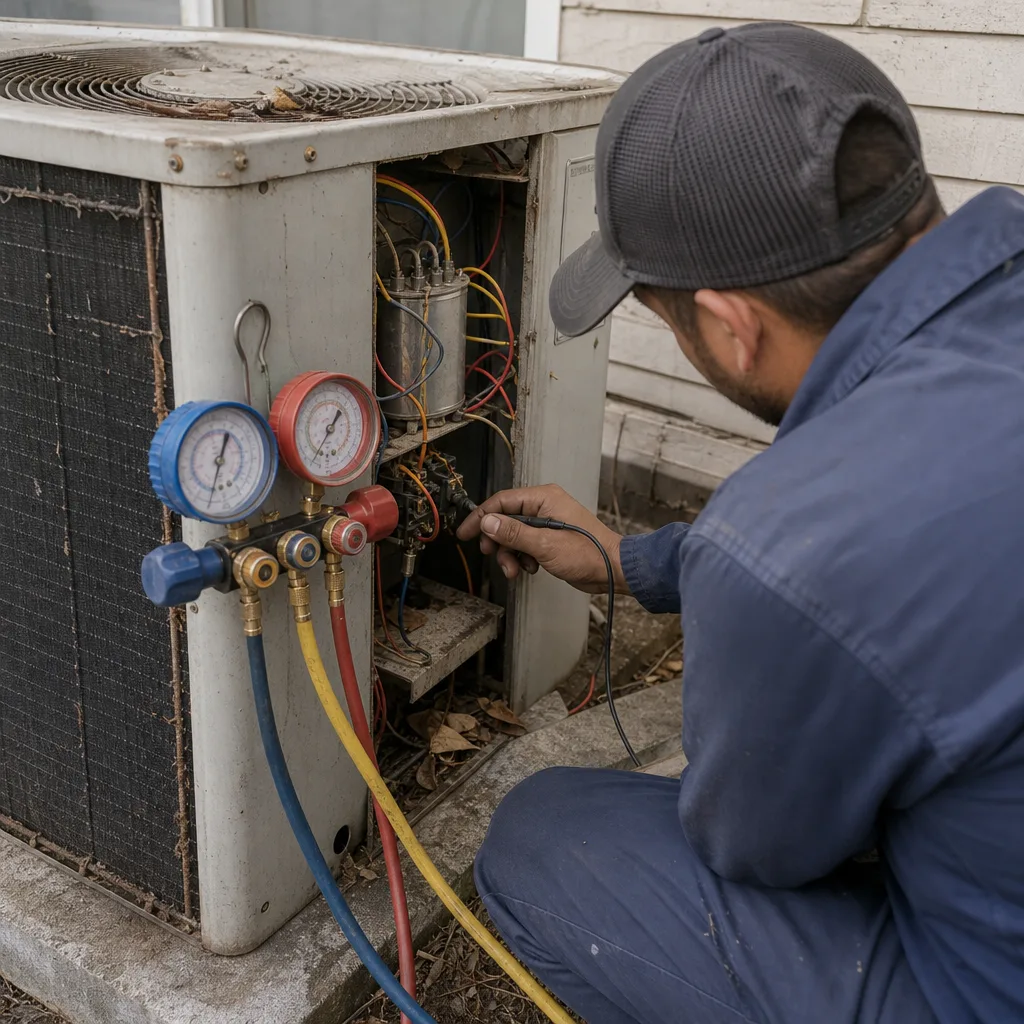 Before
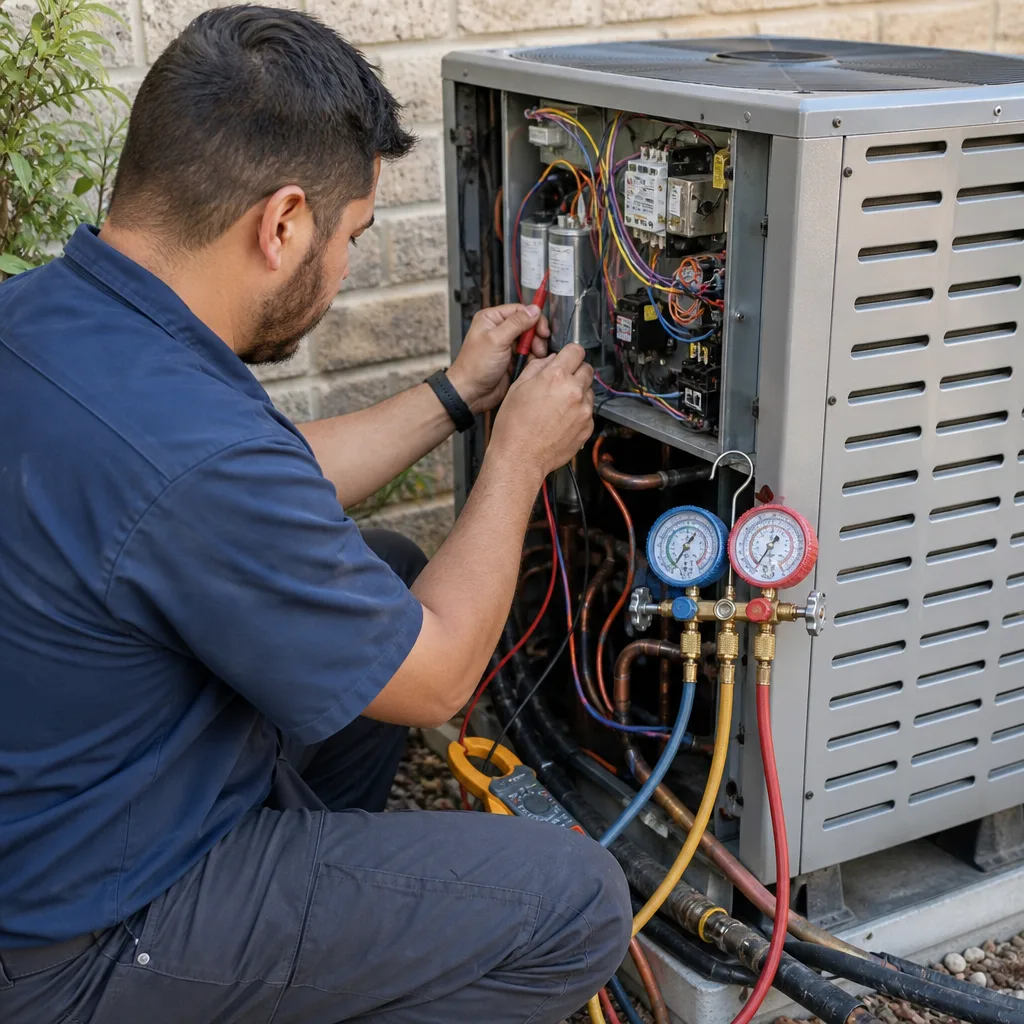 After
After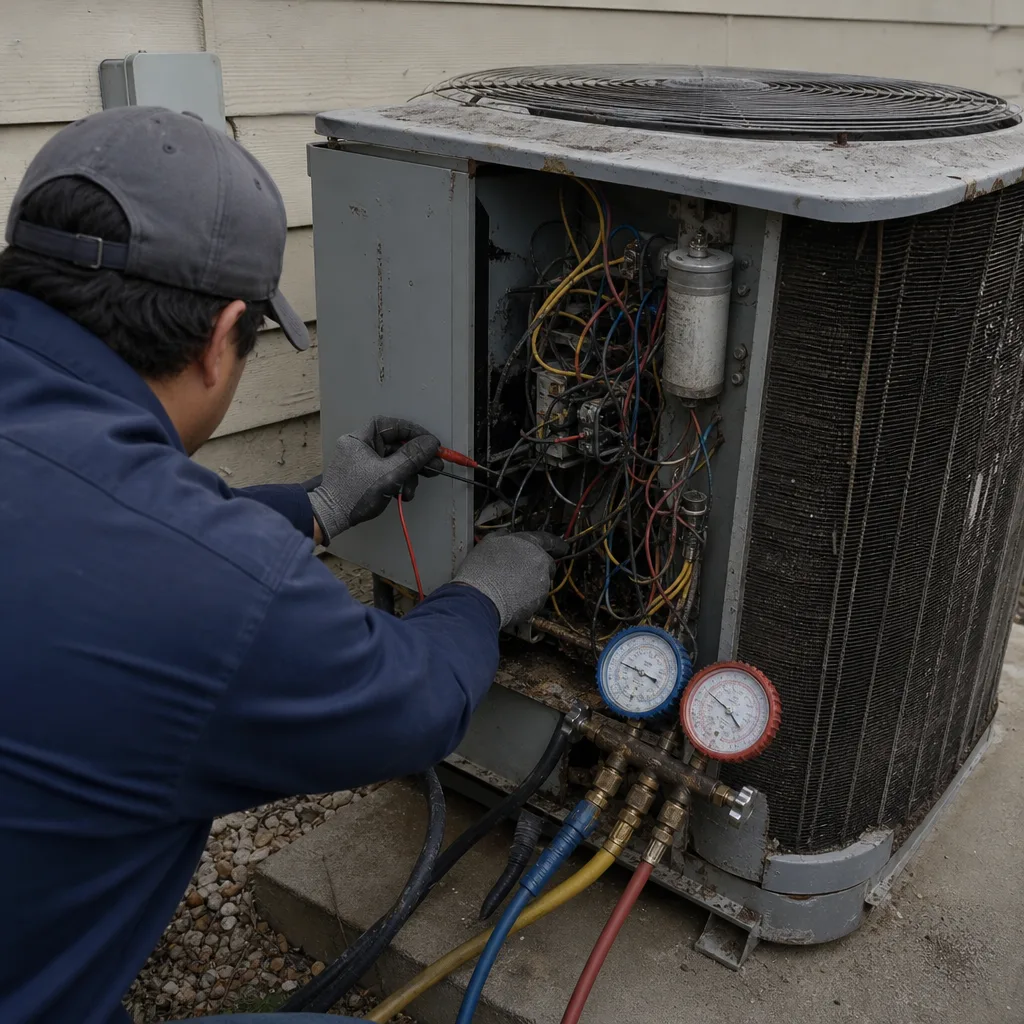 Before
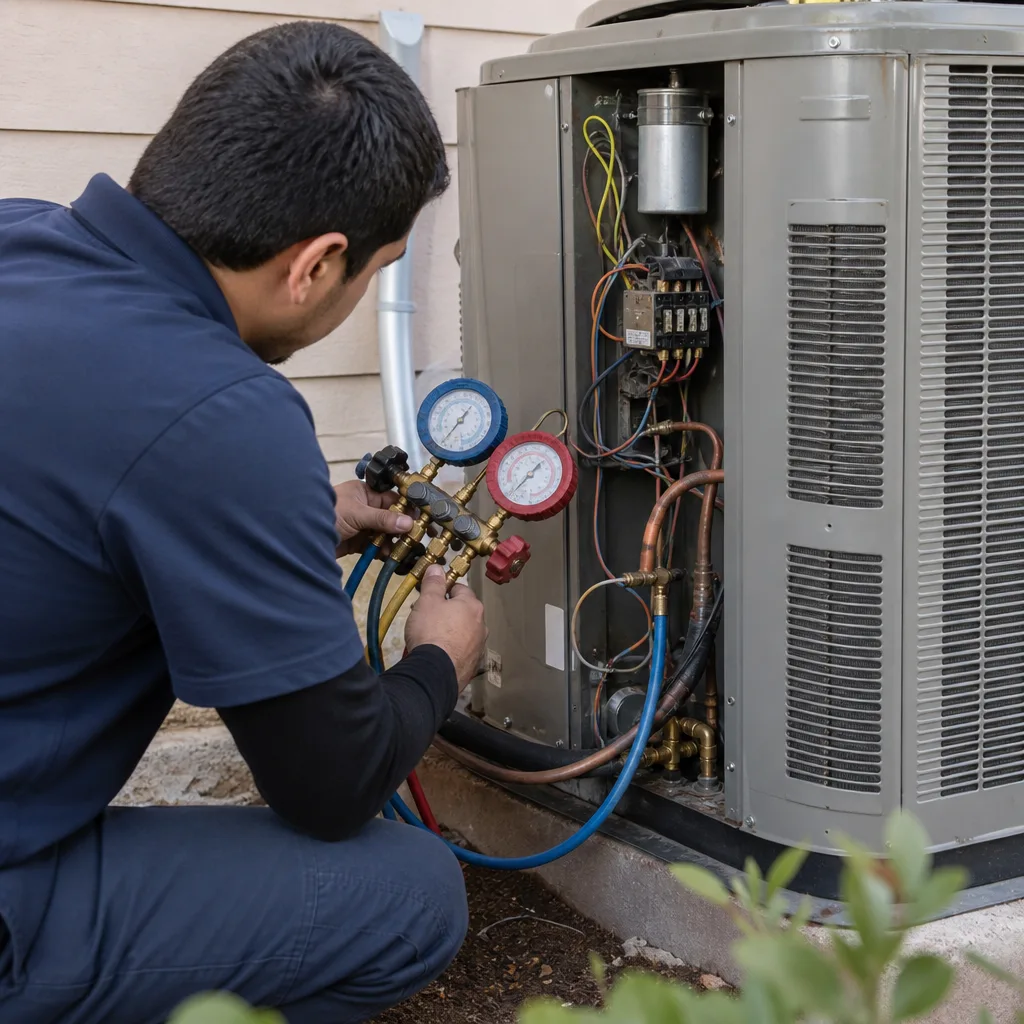 After
AfterReplacement Cost & What’s Included
In San Antonio, a Trane capacitor replacement from Halden Heating and Air runs $180 to $340 installed, including the part, the labor, and a written guarantee on the repair. A basic single-run capacitor on an older Trane XB series might land at the bottom of that range. A dual-run capacitor on a newer XL or XV model, or a job that needs a hard-start kit added to ease compressor load, lands at the top. You’ll see the exact price in writing before we touch a single screw. We don’t do “surprise at the door” pricing, and we don’t run a 4-hour window. Book online, get a live arrival time, and track your technician to the door. That’s The Relay Standard at work.
DIY or Call Us?
Here’s the honest split. You can absolutely look at your Trane’s control panel with the breaker off and read the label on the capacitor. You can even check if it’s bulged or leaking. What you should not do is pull the wires and handle a charged capacitor. Capacitors hold a serious electrical charge even after the power is off, and discharging one wrong can give you a nasty shock or damage the new part. We can’t tell you how to safely discharge it for liability reasons, so here’s our recommendation: do your own label reading, then call us at (903) 623-6784 and tell us what you see. Andre Fuller and the crew will arrive with the right capacitor in hand, a written price, and the job done right the first time. Straight answer, written price, no runaround.
FAQs
In San Antonio, a Trane capacitor typically lasts 8 to 12 years, but brutal Texas heat can cut that to 5 or 6 if the condenser sits on a west-facing wall or a hot roof. Capacitors degrade chemically over time and heat accelerates that breakdown. If your unit is 10+ years old and you’ve never had the capacitor replaced, it’s living on borrowed time.
No. A capacitor is a sealed, disposable component. Once the internal dielectric breaks down or the can bulges, there is no repair. The only fix is replacement, and it’s a $25 to $80 part depending on the Trane model and spec – one of the least expensive fixes in HVAC, but one of the most common causes of no-cool calls.
Most Trane capacitor replacements take 30 to 45 minutes once our technician is on site. That includes shutting the unit down, verifying the rating, replacing the part, testing the fan and compressor startup, and documenting everything with before-and-after photos. We’ll text you the photos and the written guarantee before we leave the driveway.
Yes. We stock single and dual-run capacitors in the most common Trane microfarad ratings (35/5, 40/5, 45/5, 50/5, and several others) as well as hard-start kits, on every service van. We also carry capacitors for Carrier and Lennox systems since plenty of San Antonio homes have mixed brands across the house. Unless you have a rare variable-speed model, we can usually complete the replacement the same day you call. Call (903) 623-6784 for an exact quote – free estimates, no obligation.
Halden Heating and Air San Antonio is an independent service provider and is not affiliated with Trane or any other equipment manufacturer.
Written by Andre Fuller, Owner, Halden Heating and Air San Antonio at Halden Heating and Air San Antonio, serving San Antonio and nearby areas.