
 Furnace & heating
 AC repair
 Heat pumps
 Ductless mini splits
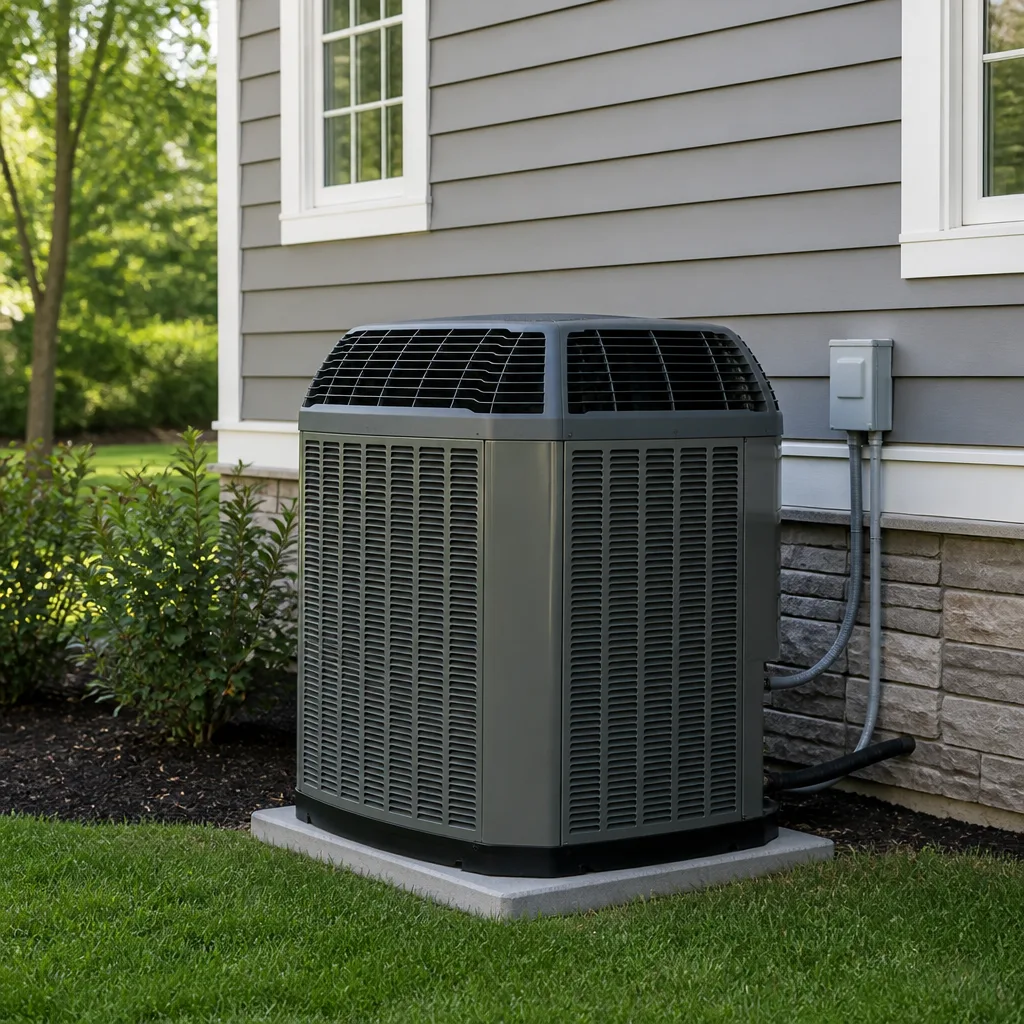 Trane
Trane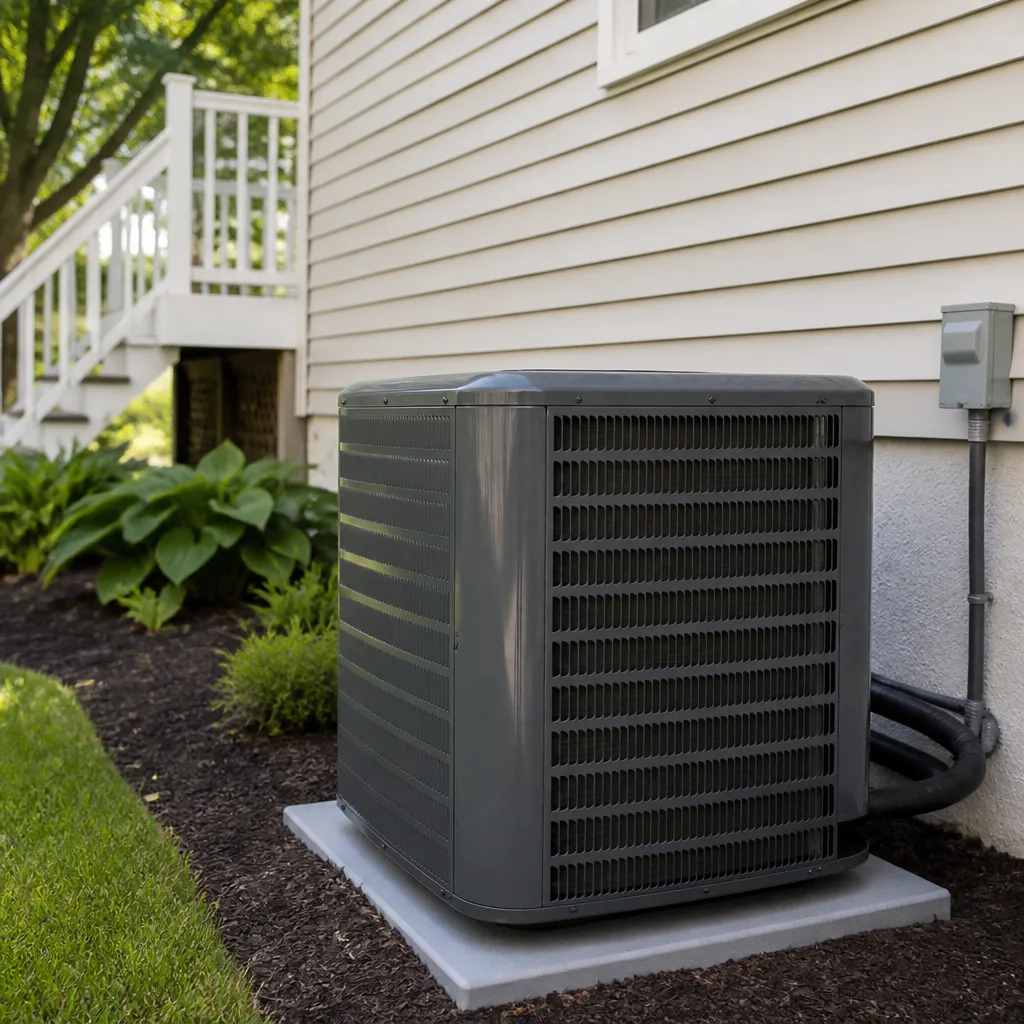 Goodman
Seasonal tune-up and full diagnostic on your Carrier, Trane, or Goodman system - readings shown to you before any repair is proposed
Diagnosis first, numbers second - you approve the repair price before a single part goes in.
Get your free estimateRheem Capacitor Replacement: The San Antonio Owner’s Guide
A Rheem capacitor replacement in San Antonio typically runs between $150 and $380 installed, depending on whether it’s a single or dual-run capacitor and how accessible your condenser unit is. We keep Rheem-compatible capacitors on our trucks, so in most cases we can diagnose and swap the part the same day you call. The way most San Antonio homeowners discover this part has failed is simple: the outside unit hums but the fan won’t spin, or the compressor tries to start and clicks off a few seconds later.
Capacitors are the most common point of failure on Rheem AC units in Texas, and it’s not even close. Our summers push these parts past their design limits year after year. When a capacitor goes, your system either won’t start at all or it strains dangerously every time it tries. The fix is straightforward when you know what you’re looking at, and that’s exactly what we’ll walk you through here.
Which Rheem Models This Applies To
This applies to essentially every Rheem residential condenser and heat pump built in the last 25 years, including the RA13, RA14, RA16, and RA17 AC lines, and the RP14, RP15, and RP17 heat pump series. Rheem uses two capacitor configurations. Older and entry-level units run a single dual-run capacitor that handles both the compressor and the fan motor. Higher-efficiency models often use separate capacitors, one for the compressor and one for the fan, plus a start capacitor on some heat pumps.
The honest gotcha with Rheem parts: the capacitor itself is rarely Rheem-branded. Rheem sources these from manufacturers like Genteq, Titan, and AmRad, then labels them with a Rheem part number. That means an OEM Rheem capacitor and a quality aftermarket equivalent are frequently the same component with a different sticker. We match by voltage rating, microfarad (µF) rating, and physical dimensions from the label on your existing part. The specs that matter are printed right on the side: look for the µF number, usually something like 35/5 or 45/5, and the voltage rating, typically 370 or 440 VAC. If the label is faded, we can pull the exact spec from your Rheem model and serial number. Halden Heating and Air San Antonio is an independent service provider, not affiliated with Rheem, and we install both OEM and quality aftermarket capacitors that meet or exceed the original spec. We stock the same capacitor families for Carrier, Trane, and Lennox systems too.
Styles & brands we work with
Signs Your Rheem Capacitor Replacement Is Failing
- The outside unit hums but the fan doesn’t spin. This is the classic dead-capacitor symptom. The compressor is trying to start, but without the capacitor’s stored charge to push the fan motor, nothing turns. If you see this, shut the system off at the breaker and call us.
- The compressor short-cycles. You’ll hear the outside unit click on, run for ten seconds, then click off. A weak capacitor can’t supply enough starting torque, so the compressor’s internal overload trips and resets repeatedly. This is hard on the compressor and gets worse fast.
- Warm air from the vents even though the inside blower runs. The indoor fan can keep blowing, but if the outdoor compressor won’t stay running, you’re just circulating warm air. In San Antonio summer, you’ll notice this within an hour.
- A visible bulge or dome at the top of the capacitor. Capacitors are sealed metal cylinders. When they overheat, the top expands and domes like a muffin. If you can safely see your capacitor and the top isn’t flat, it’s already failed or on the edge of failing.
- The fan spins slowly, or only after you give it a push with a stick. That’s a fan capacitor losing its charge. It can’t get the motor moving from a dead stop. A slow-spinning fan also starves your condenser of airflow, which drives up refrigerant pressures and shortens compressor life.
See the difference
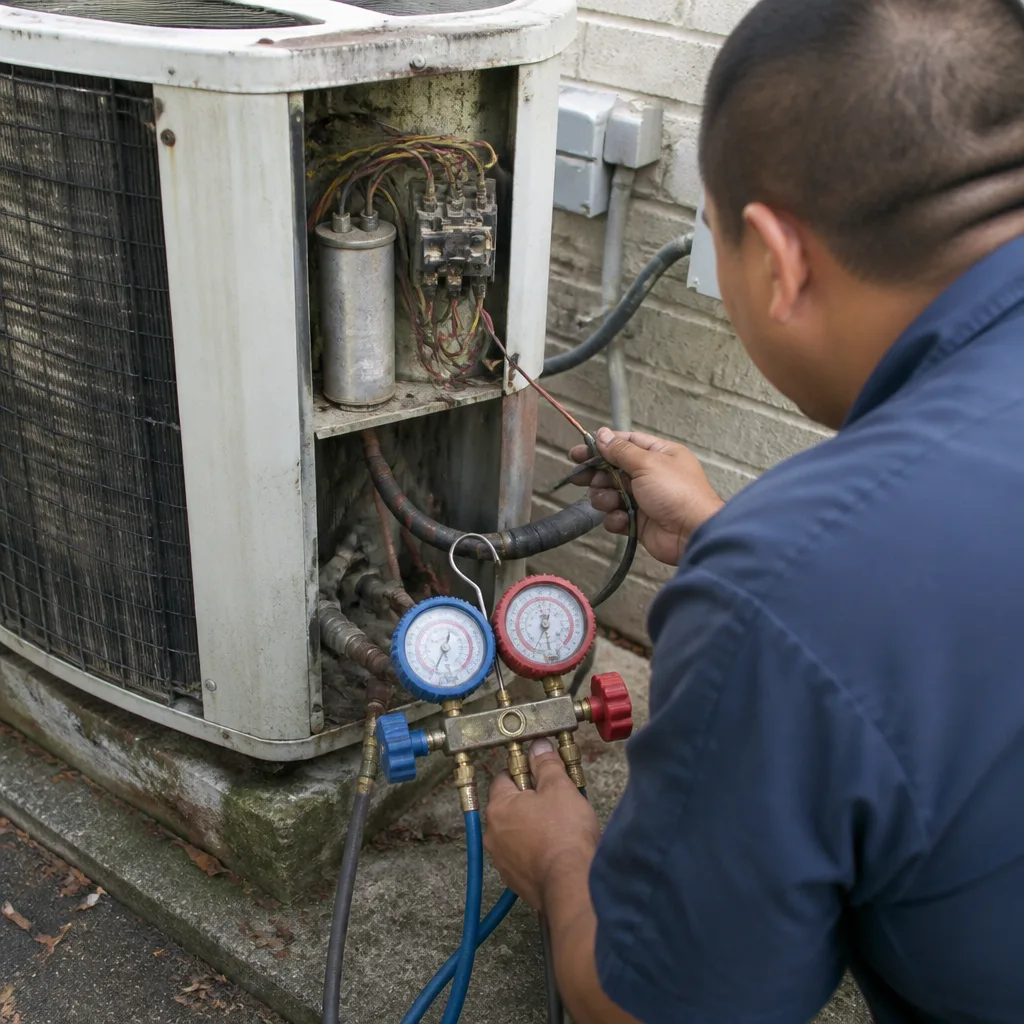 Before
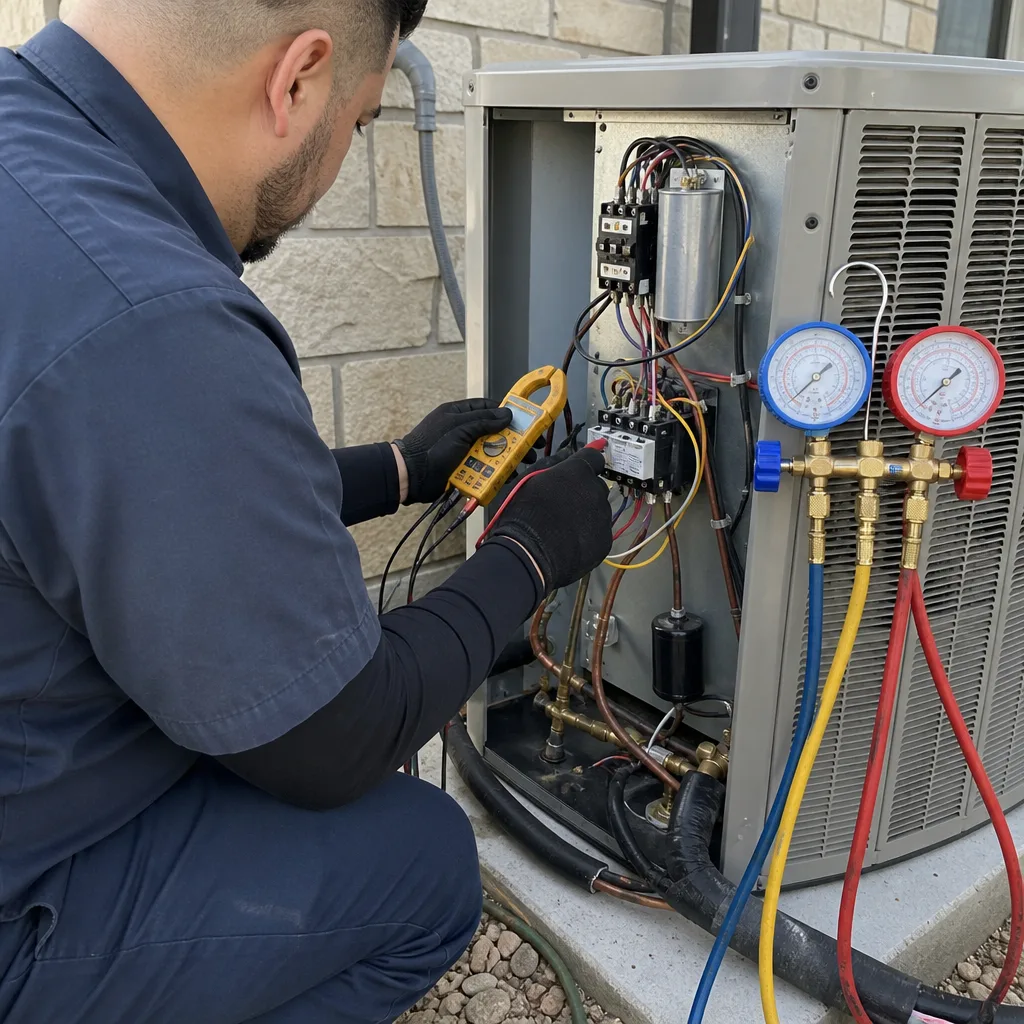 After
After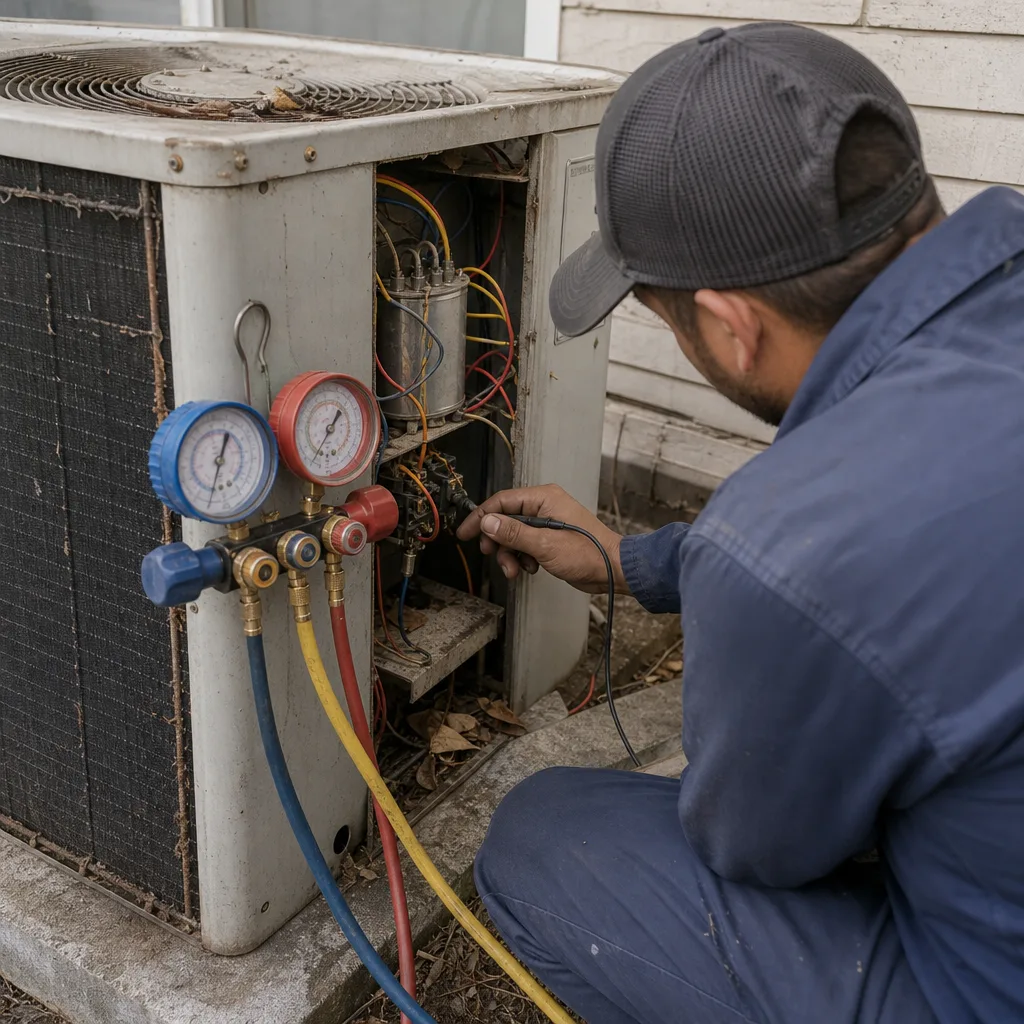 Before
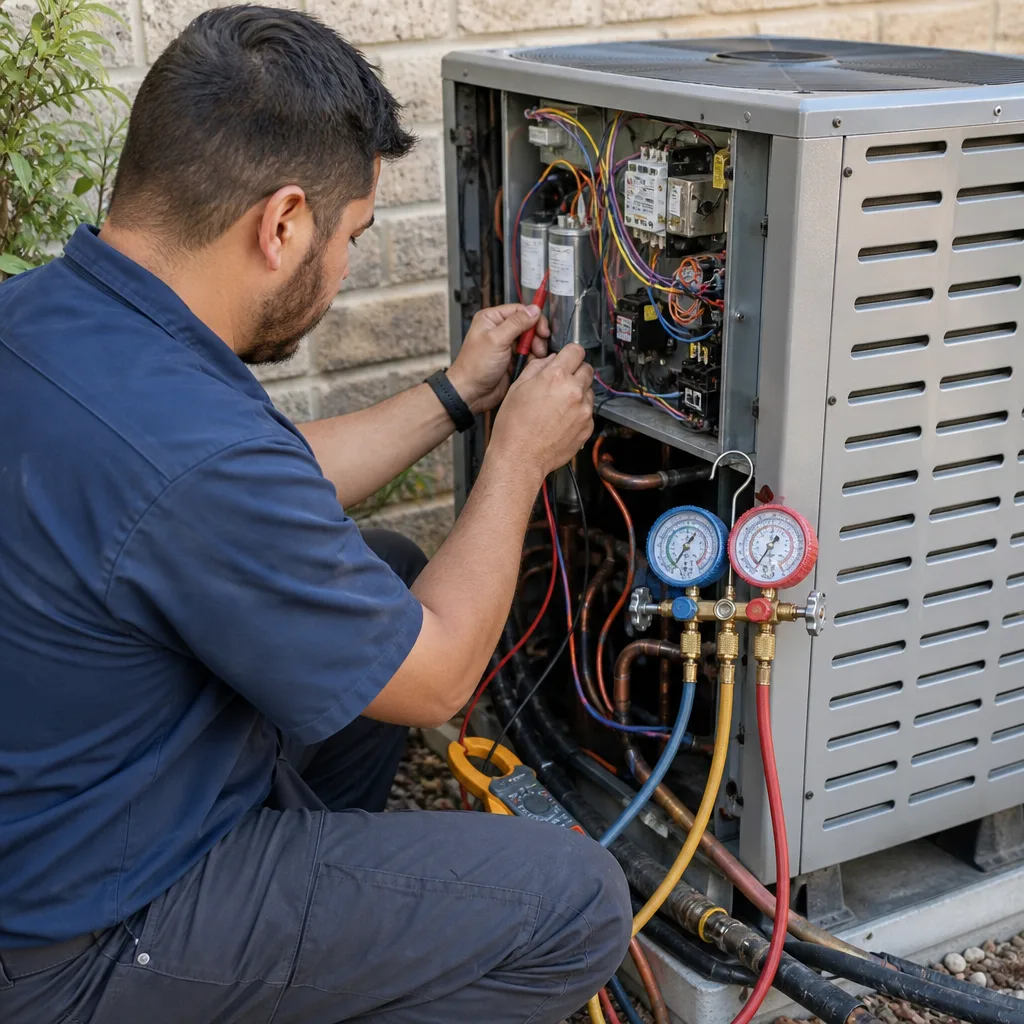 After
After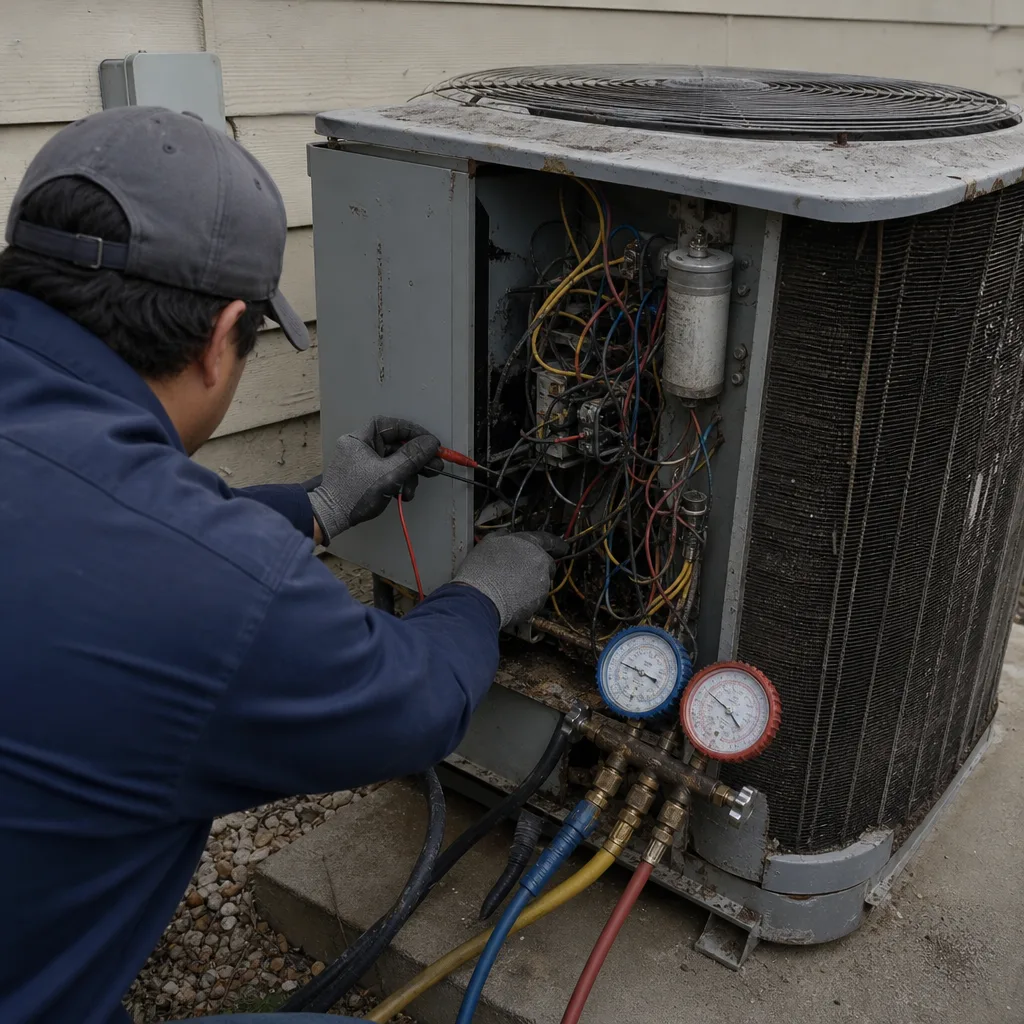 Before
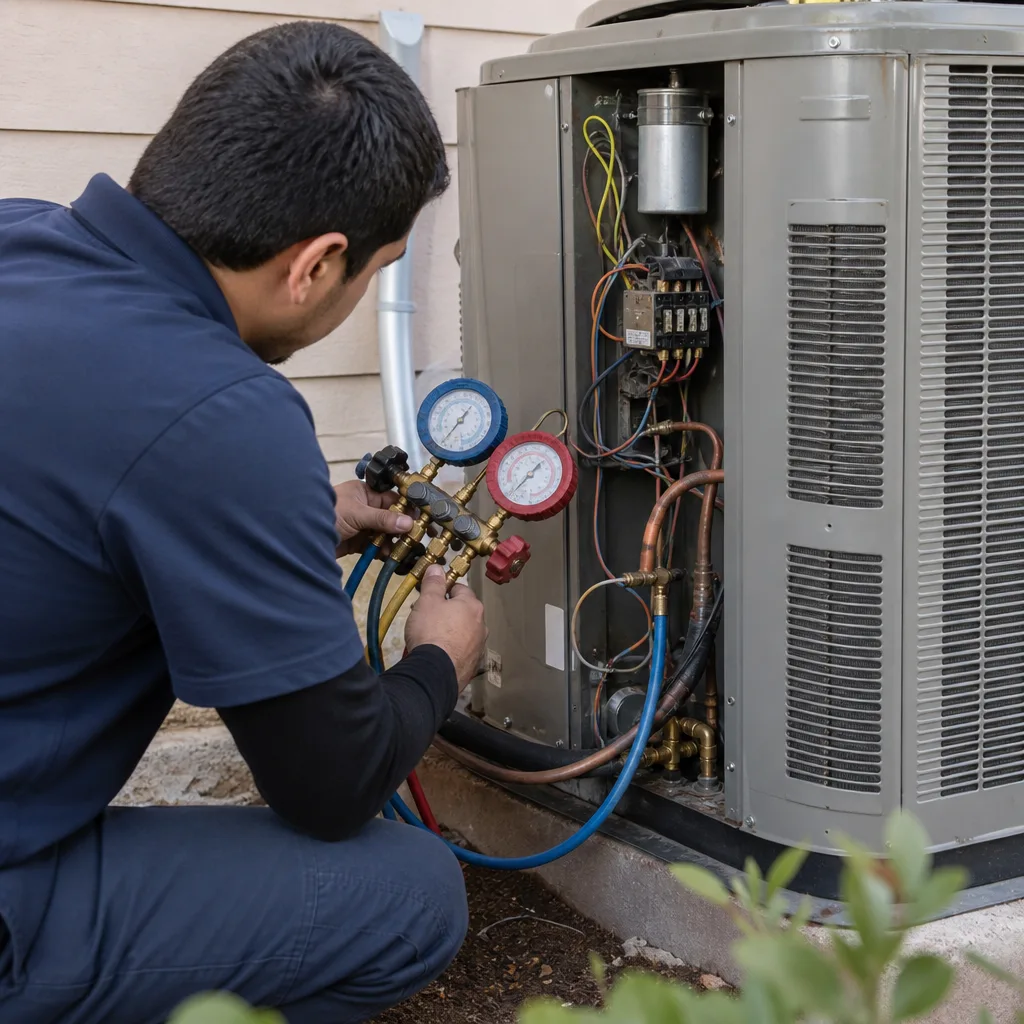 After
AfterReplacement Cost & What’s Included
For San Antonio homeowners, a Rheem capacitor replacement through Halden Heating and Air runs from $150 to $380 installed. A single-run capacitor swap lands on the lower end, a dual-run capacitor on a heat pump with a start capacitor lands on the upper end. The part itself is inexpensive, typically $15 to $60 at supply-house cost. What you’re paying for is the diagnosis, the right part matched to your Rheem’s specs, and the labor to install it correctly.
Every Rheem capacitor replacement we do includes a written price before work starts, so there’s no surprise when the tech opens the panel. The labor is covered by our written guarantee on every repair. If that capacitor fails within the coverage window, we come back and replace it at no charge. No arguing, no fine print. Andre Fuller built Halden Heating and Air on one rule: tell the customer the price before anyone opens a toolbox. Straight answer, written price, no runaround.
DIY or Call Us?
We’ll be straight with you: a capacitor stores enough voltage to stop your heart, even with the power off. It’s a charged electrical component that holds its charge after the breaker is thrown. If you don’t know how to safely discharge a capacitor, do not open the electrical panel on your condenser. This is the one repair where competent DIYers can still end up hurt because the part looks harmless. It isn’t.
What you can safely do before calling: check your breaker, check your thermostat batteries, and look for any visible damage to the unit. Then call (903) 623-6784. We’ll confirm the symptom, get you on the schedule, and a background-checked tech will show up with a live arrival time you can track to your door. The capacitor swap itself takes under an hour in most cases.
FAQs
A Rheem capacitor typically lasts 5 to 10 years, but in San Antonio’s heat, most fail between 5 and 7 years. The constant heat exposure, especially on west-facing condenser units, degrades the internal dielectric faster than milder climates. We regularly replace capacitors on Rheem units that are only 5 years old, simply because three-digit summer temperatures accelerate the failure curve. If your capacitor has made it past year 7, it’s on borrowed time every July. Call (903) 623-6784 if your unit is struggling to start, and we’ll test the capacitor’s actual charge rather than guessing.
No. A capacitor is a sealed, disposable component. There is no repair path. Once the internal dielectric breaks down or the can bulges, it’s done. The fix is a new capacitor matched to your Rheem’s voltage and microfarad rating. That’s the honest reason this is one of the most common repairs we do, and why we stock replacements on the truck so you’re not waiting on a parts house.
Most Rheem capacitor replacements take 30 to 60 minutes from panel open to panel closed. That includes testing the old part, confirming the spec, installing the new capacitor, and running the system through a full start cycle to verify the compressor and fan both pull the right amperage. You’ll get a written price before we start, so the time on site is the time you agreed to.
Yes. We stock the most common Rheem capacitor specs, including 35/5, 40/5, 45/5, and 50/5 dual-run ratings in 370 and 440 VAC, plus single-run fan capacitors. If your Rheem uses an uncommon spec, we can usually source it same-day from a local supply house. Either way, you’re not waiting days for a part that costs less than most thermostat batteries.
If your Rheem is humming, short-cycling, or blowing warm air, don’t let it run itself to death. Call (903) 623-6784 for a free estimate, and we’ll get a capacitor replacement scheduled with a written price before anything gets unbolted.
Written by Andre Fuller, Owner, Halden Heating and Air San Antonio at Halden Heating and Air San Antonio, serving San Antonio and nearby areas.