
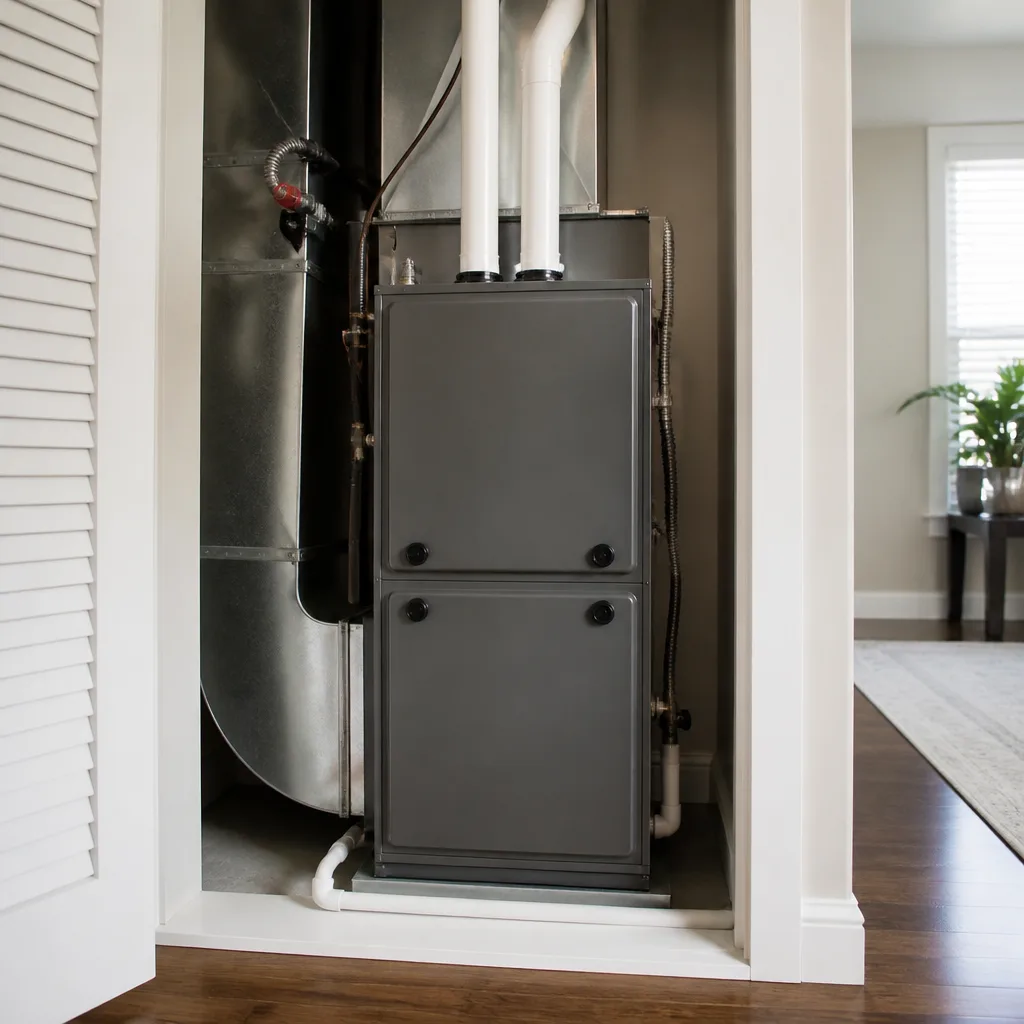
 Furnace & heating
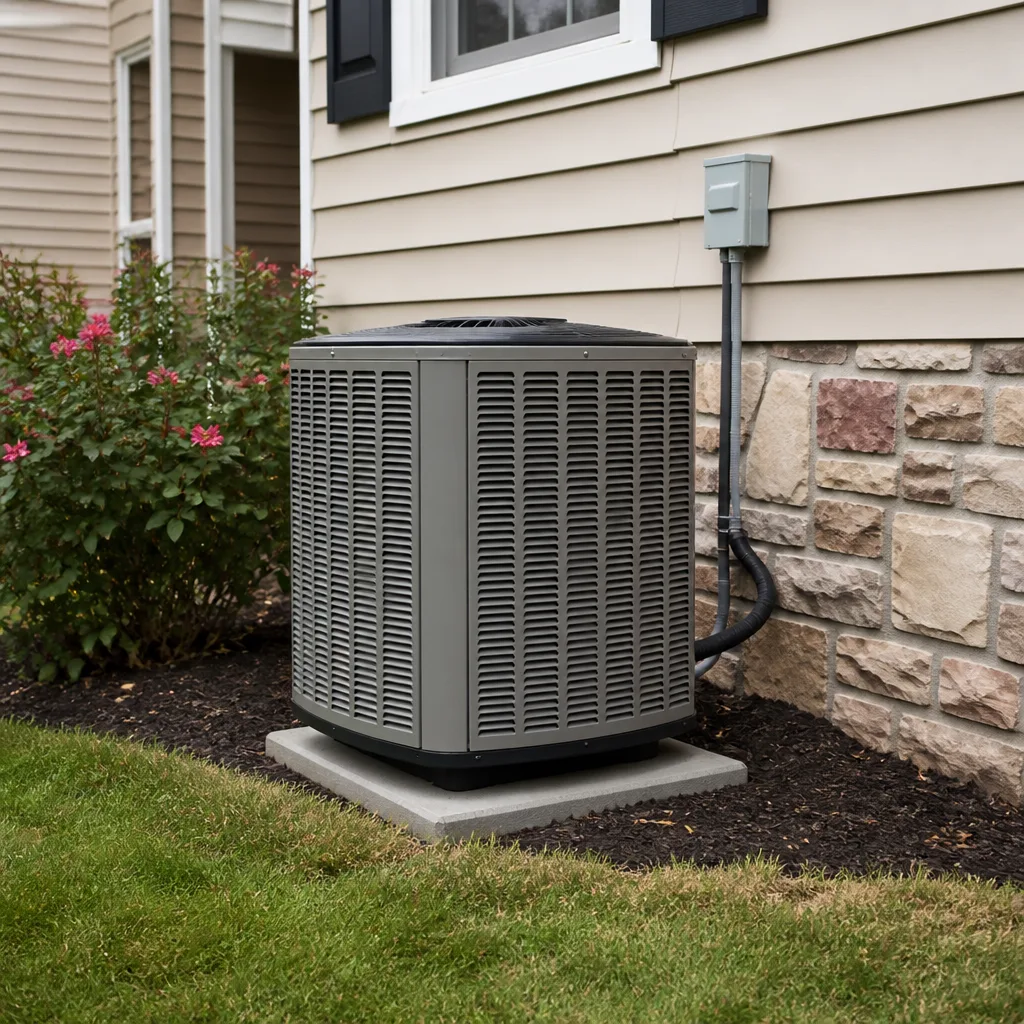 AC repair
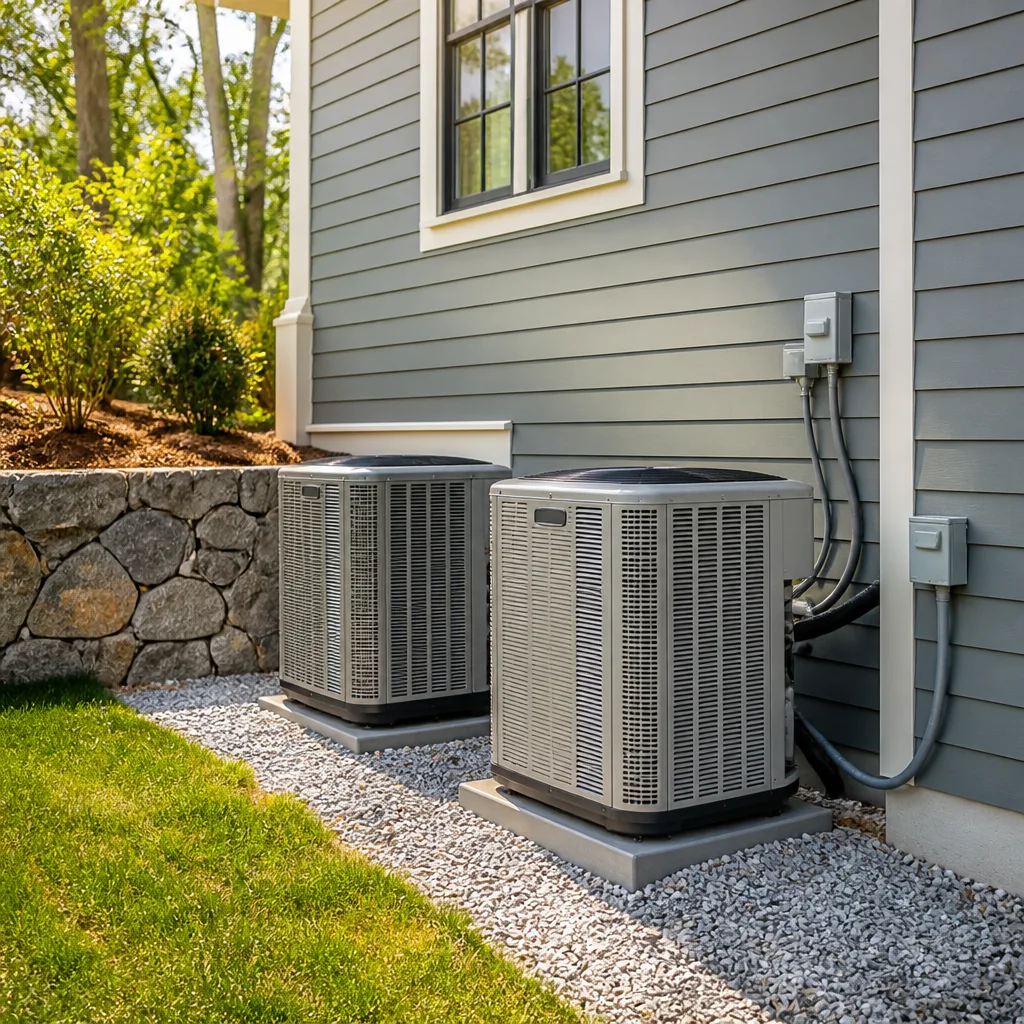 Heat pumps
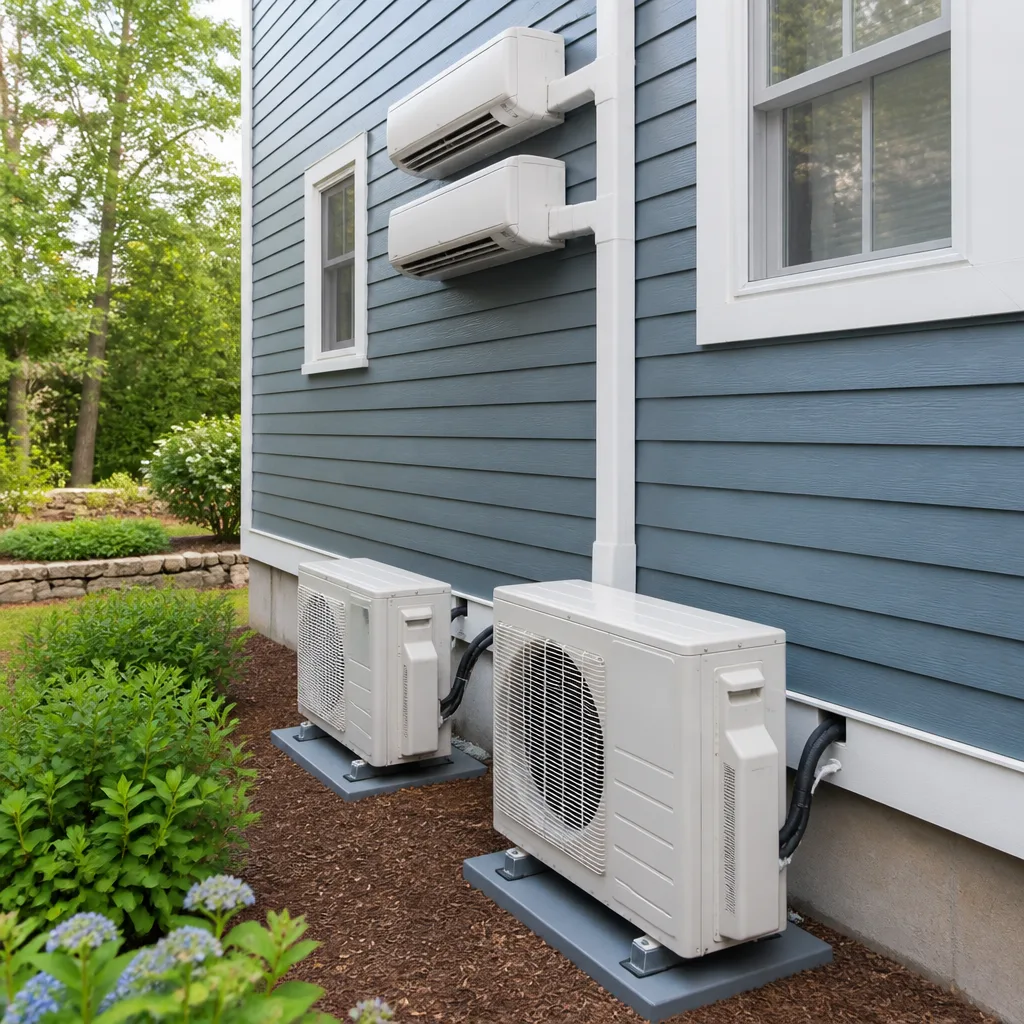 Ductless mini splits
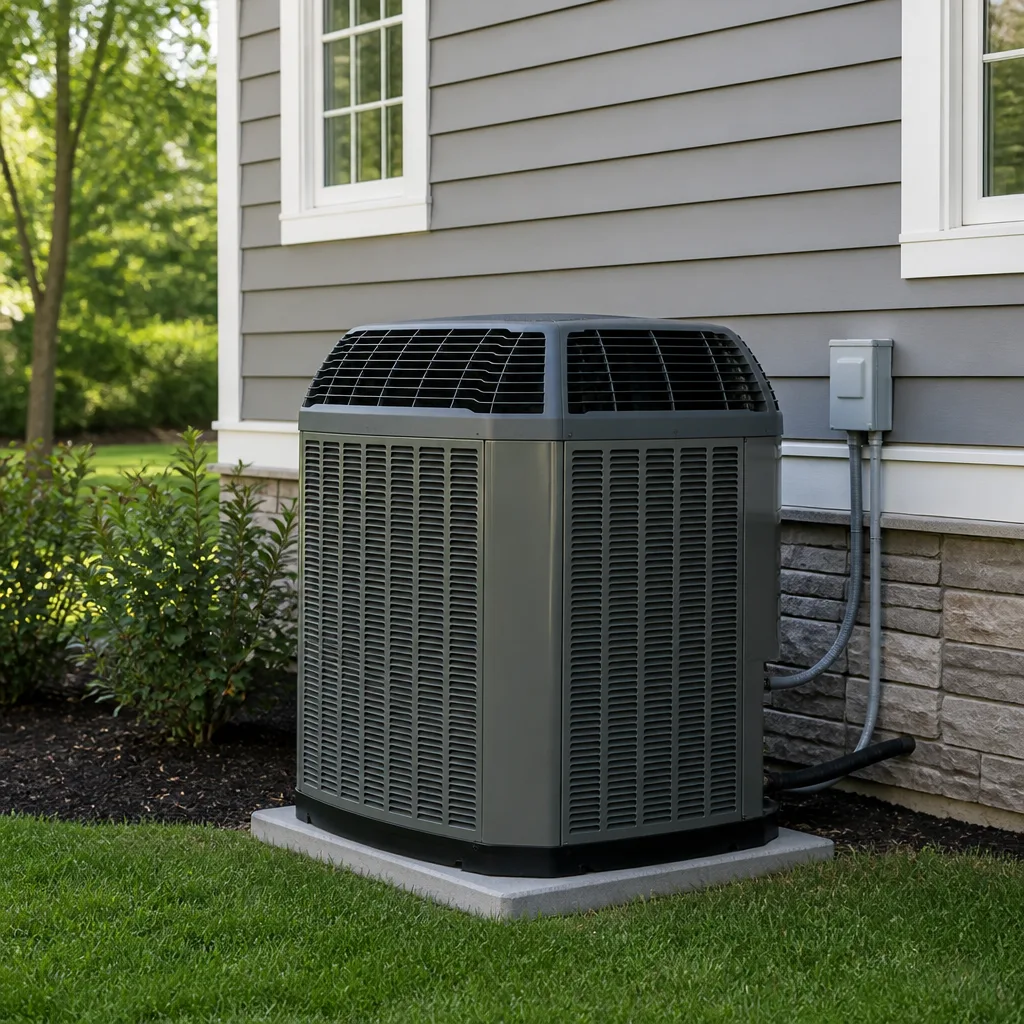 Trane
Trane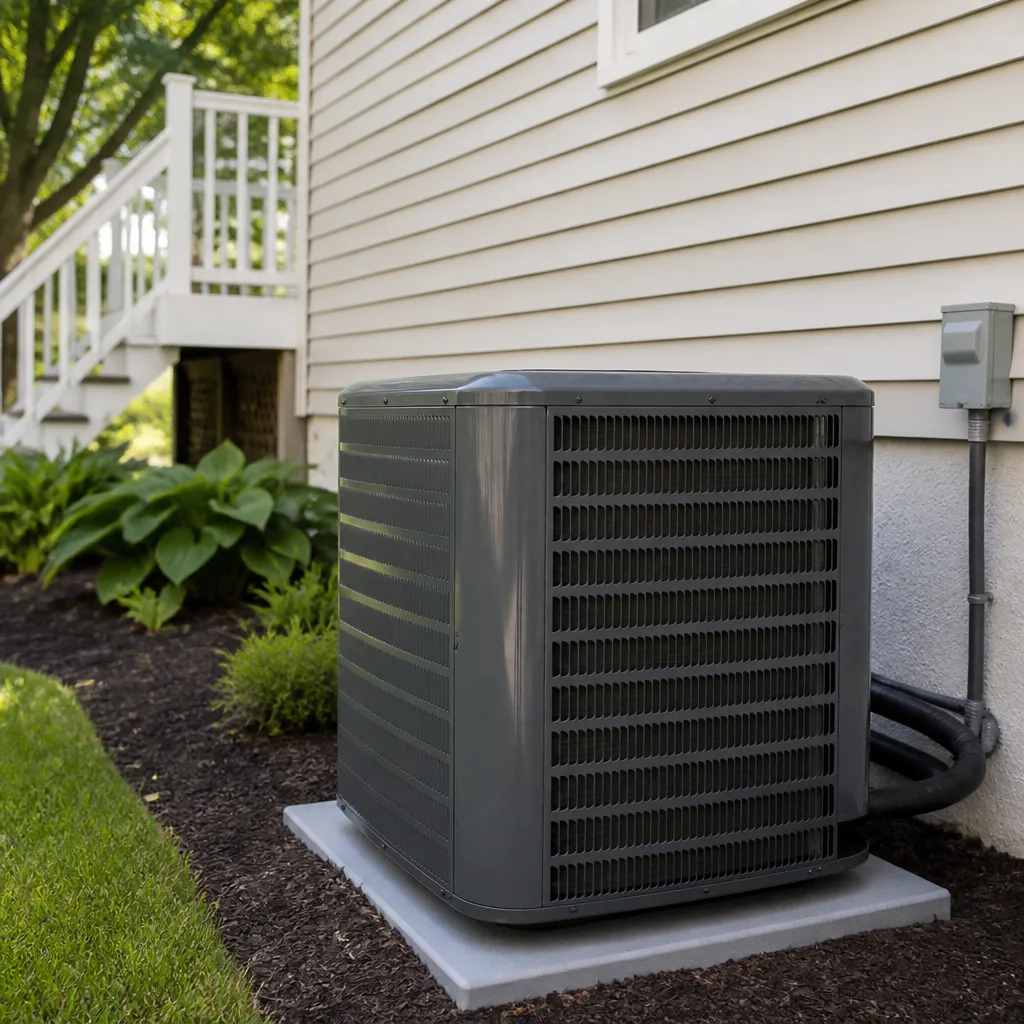 Goodman
Seasonal tune-up and full diagnostic on your Carrier, Trane, or Goodman system - readings shown to you before any repair is proposed
Diagnosis first, numbers second - you approve the repair price before a single part goes in.
Get your free estimateLennox Capacitor Replacement: The San Antonio Owner’s Guide
A Lennox capacitor replacement in San Antonio typically runs between $150 and $350 installed, depending on whether you need a single or dual-run capacitor and which Lennox model we’re matching it to. Most calls come in on days when the thermostat says 72 but the air coming out of the vents feels like a warm sigh. The capacitor is the part that gives your compressor and fan motor the electrical shove they need to start spinning, and when it fails, your Lennox system either hums without starting or trips its breaker entirely.
Here’s the symptom picture we hear most often from San Antonio homeowners: the outside unit is humming but the fan isn’t turning, or the compressor clicks on and off every few minutes without actually cooling. Some folks notice the system runs for twenty minutes, shuts down, then tries again. Others just hear nothing at all. In a city where the summer heat index regularly climbs past 105, a failed capacitor is not a wait-and-see situation. It’s the single most common electrical failure we replace on Lennox residential units, and we keep the common sizes stocked on our trucks so we can usually handle it in one visit.
Which Lennox Models This Applies To
Capacitors are not one-size-fits-all, even within the Lennox line. The right replacement depends on the microfarad (µF) rating printed on the side of the old capacitor and whether your condenser uses a dual-run capacitor (one can, two ratings) or two separate single-run capacitors. Most Lennox residential condensers from the Elite, Merit, and Signature series use dual-run capacitors, commonly in the 35/5 µF, 40/5 µF, 45/5 µF, and 50/5 µF ranges. The XC, XB, and 14ACX model lines each have specific factory ratings, and a mismatch causes the exact kind of short-cycling and overheating that kills compressors early.
If you want to identify your capacitor before calling, look for a silver or gray cylinder inside the condenser’s electrical compartment, usually strapped to the side with a metal band. The label will show a µF rating and a voltage rating, typically 370V or 440V. Here’s the gotcha we see often: a technician swaps in a 370V-rated capacitor on a Lennox unit that originally shipped with a 440V unit because the parts house was out of the right one. It works for a few weeks, then fails again in the August heat. The voltage rating can go higher safely, never lower. As for OEM versus quality aftermarket, Lennox-branded capacitors are simply re-labeled units from manufacturers like AmRad, Titan, and Genteq. We stock both OEM-spec and premium aftermarket options and will tell you the difference in price before anything goes in.
One more San Antonio reality: capacitor lifespan here runs 5 to 10 years, but our heat shortens that. A capacitor that would last a decade in Ohio often gives up in year six or seven here because sustained 100-degree days degrade the dielectric fluid inside the can. That’s not a Lennox quality issue. It’s physics, and it’s why we check capacitor readings on every tune-up, not just when something breaks.
Styles & brands we work with
Signs Your Lennox Capacitor Replacement Is Failing
- The condenser hums but the fan doesn’t spin. This is the classic dead-capacitor symptom. The compressor or fan motor is getting voltage but not enough of a starting jolt, so it just sits there and buzzes. If you hear this, shut the system off at the thermostat to avoid overheating the motor windings.
- The compressor short-cycles. The unit starts, runs for a few minutes, shuts off, then tries again. A weak capacitor can’t maintain the phase shift the compressor needs, so the system trips on thermal overload repeatedly. This is hard on a compressor and gets expensive if ignored.
- The outside unit won’t start at all. A completely open capacitor means no start. The system may trip the breaker or just sit silent while the indoor blower runs. If you reset the breaker and it trips again immediately, stop resetting it and call us, because repeated resets can damage the compressor.
- The capacitor case is swollen, leaking, or smells burnt. Capacitors fail physically before they fail electrically. A bulged top or oily residue on the can is a visual tell. If you’re comfortable opening the electrical panel, this is one thing you can actually see with your own eyes, but cut power to the unit first and remember a capacitor holds a charge even after power is off.
- Cooling is inconsistent, weaker in the afternoon. As a capacitor degrades, the fan may spin slower than rated, reducing heat rejection from the coil. The system cools in the morning but struggles from 2 p.m. onward. A technician can measure capacitance with a multimeter and confirm whether it’s below the 6% tolerance Lennox specifies.
See the difference
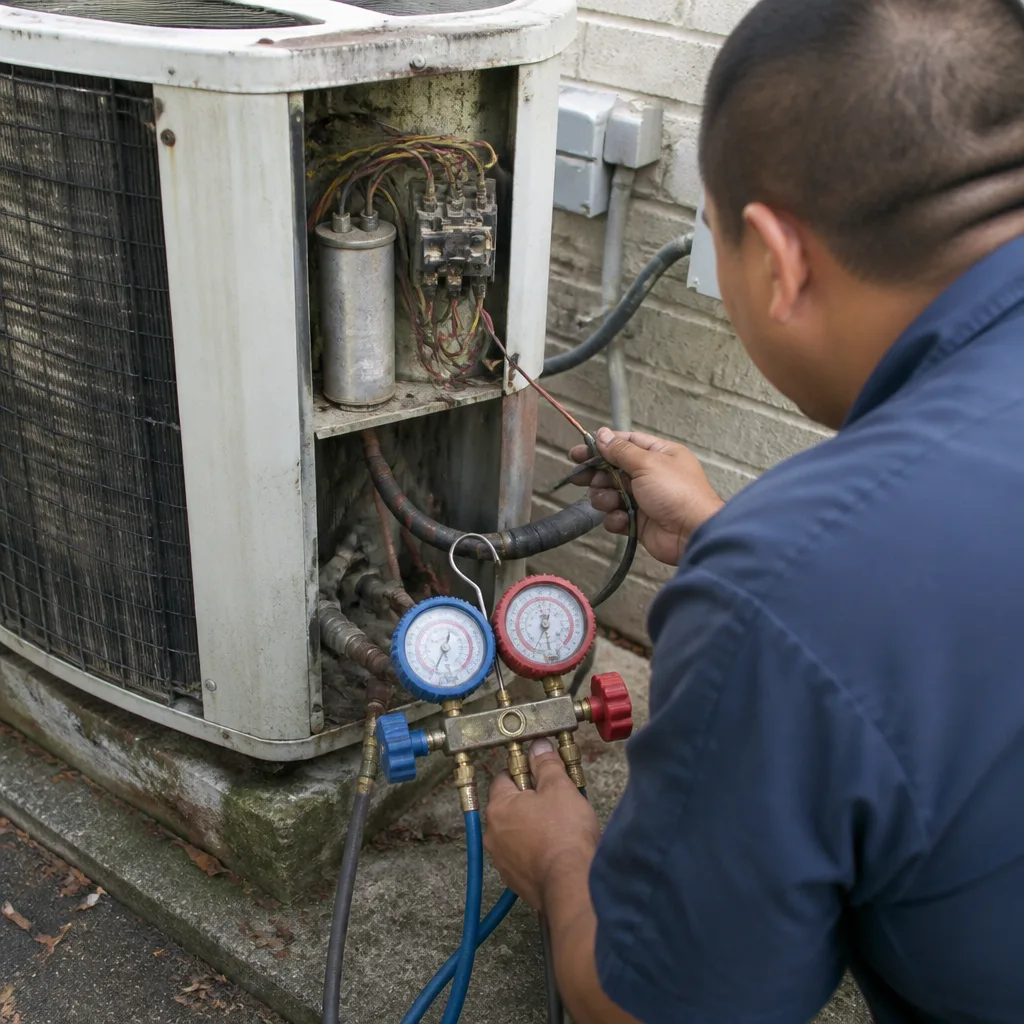 Before
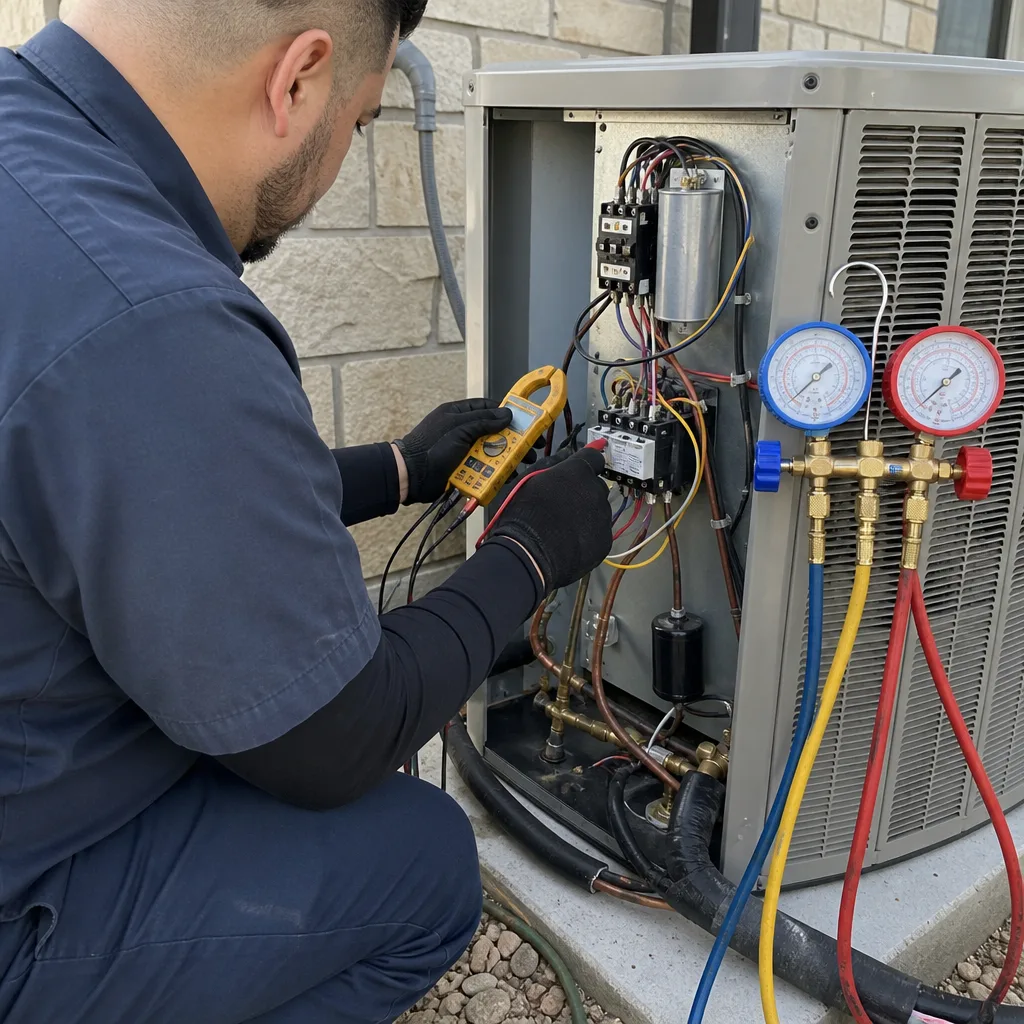 After
After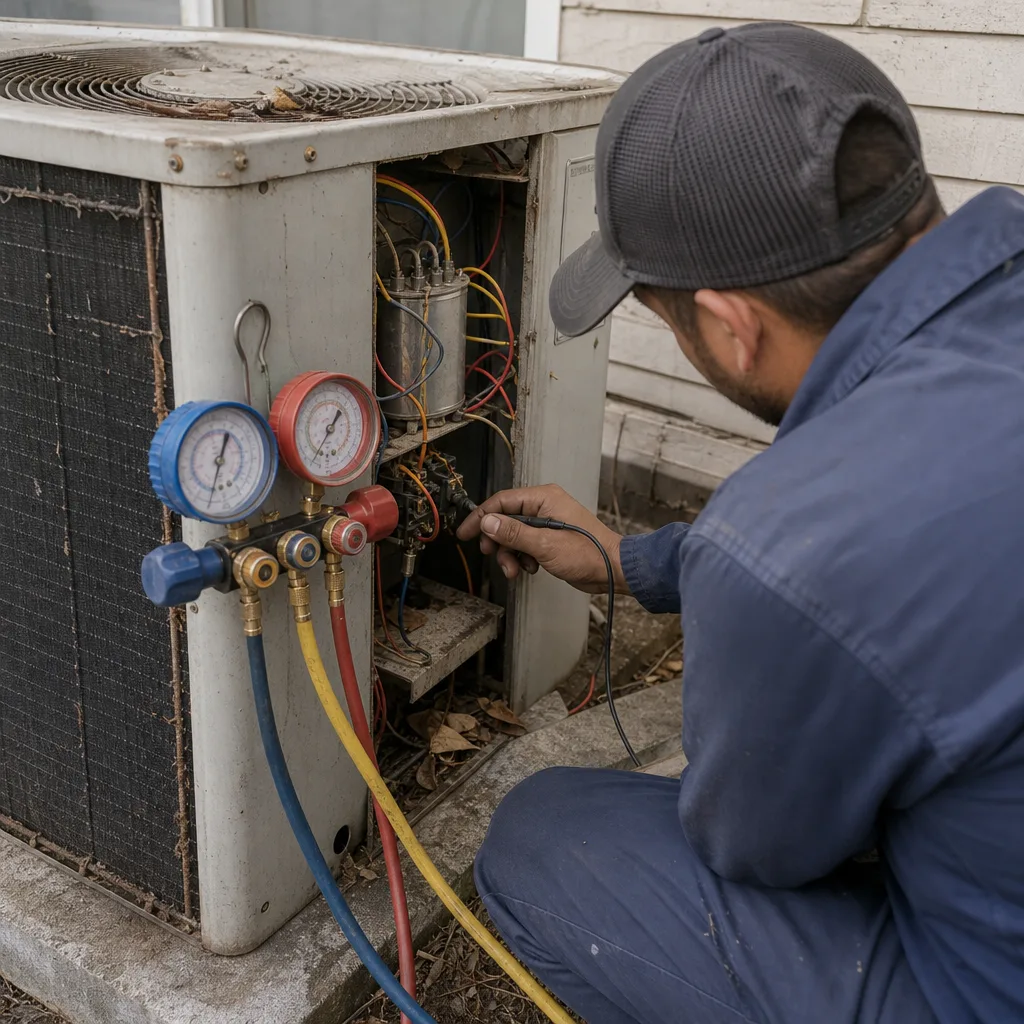 Before
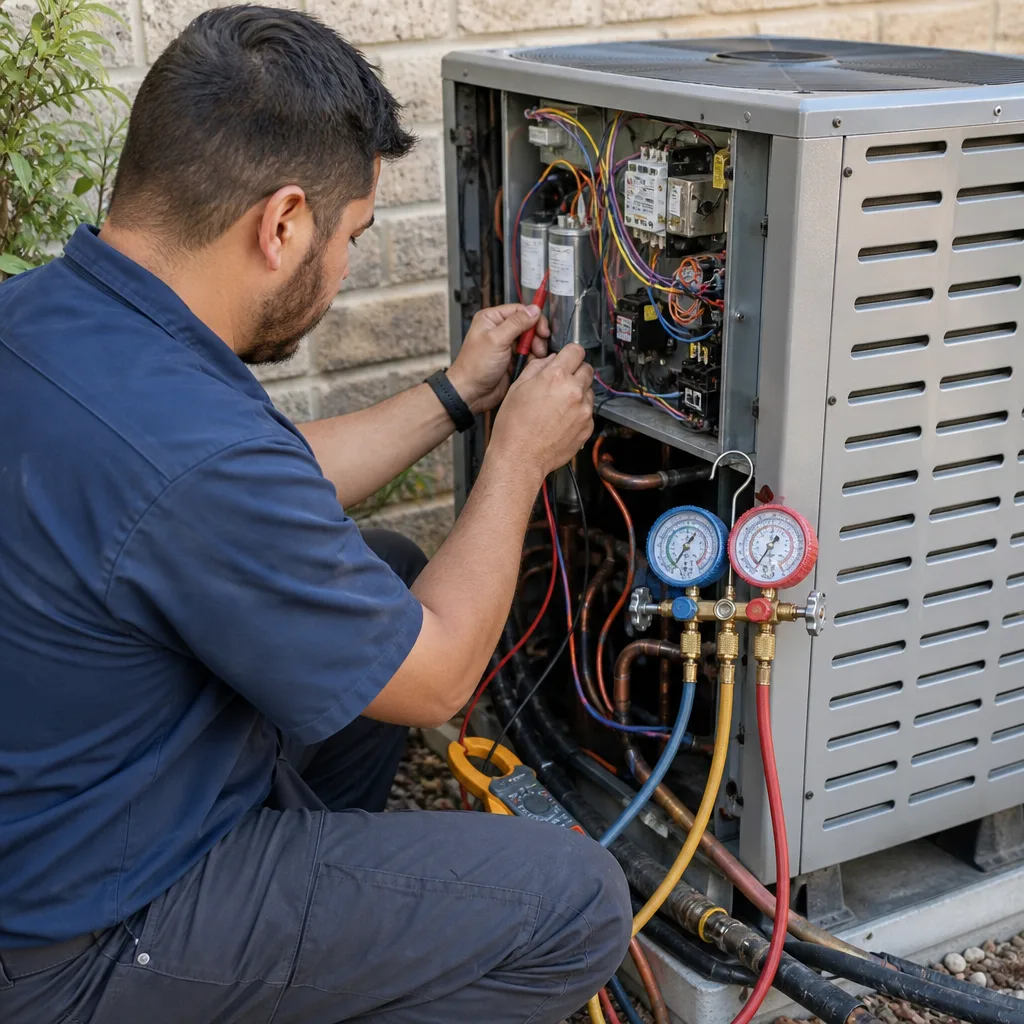 After
After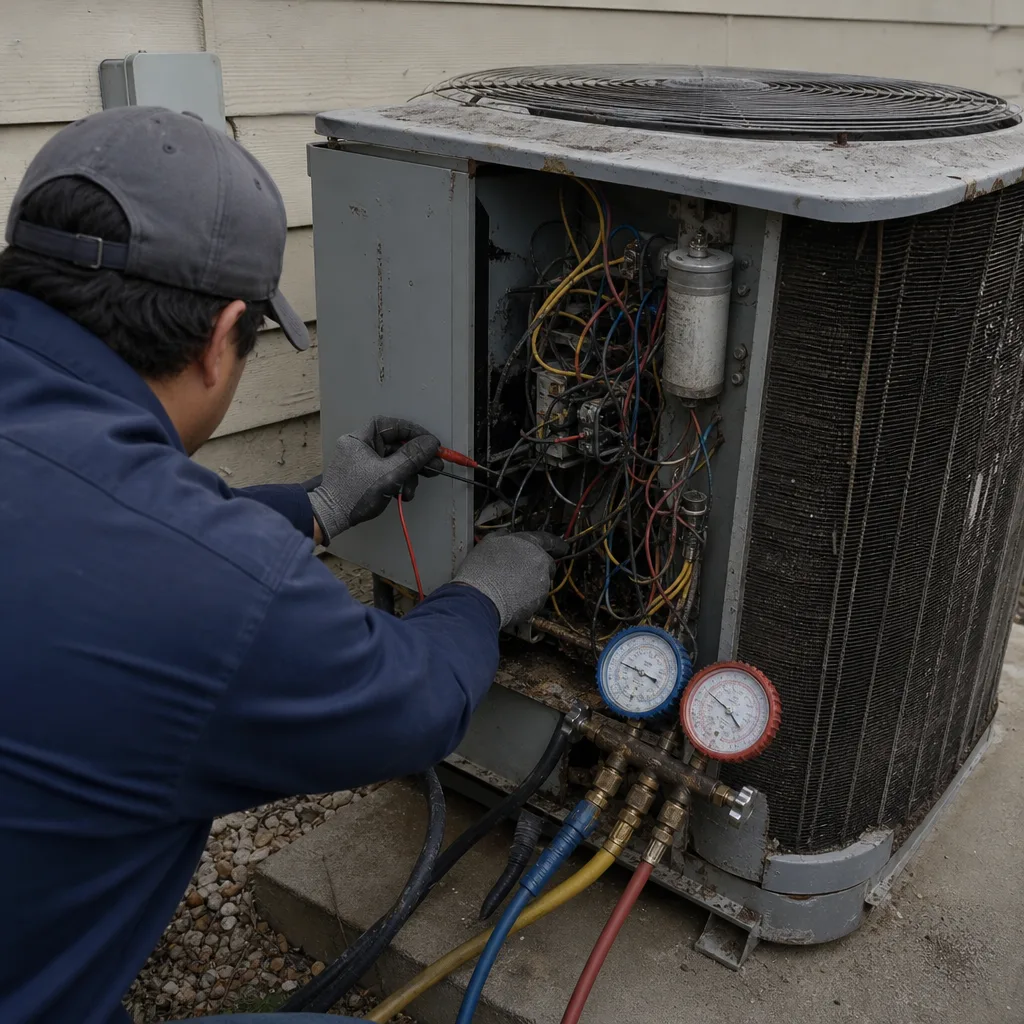 Before
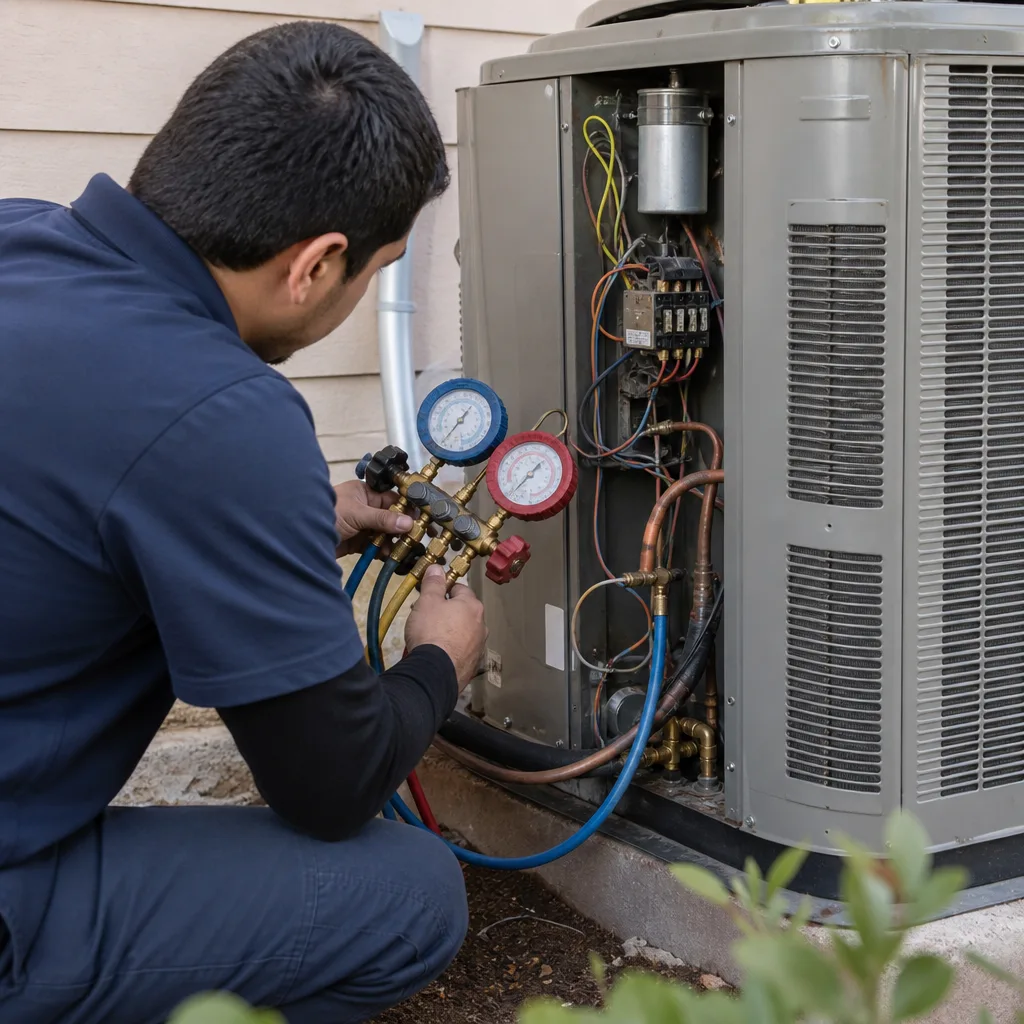 After
AfterReplacement Cost & What’s Included
In San Antonio, a Lennox capacitor replacement at Halden Heating and Air runs between $150 and $350 installed, with most jobs landing around $200 to $275. The spread comes down to whether you need a single-run or dual-run capacitor, the specific µF rating, and whether we’re replacing one or two capacitors in the same visit. Dual-run capacitors cost more than single-run units because they’re doing two jobs in one can.
What’s included in that price: the correct capacitor matched to your Lennox model’s factory rating, the labor to install it and test the system, a written price before any work starts, and our written guarantee on the repair. Every capacitor job we do in San Antonio also includes a quick check of the contactor and the run capacitor terminals, because a failing contactor often contributes to early capacitor death. We don’t charge extra for that check. You’ll see the total before we touch the unit. If the repair fails within the guarantee window, your second visit is free, automatically.
DIY or Call Us?
We’ll be straight with you: a capacitor holds a charge even after the power is off, and the wrong move can get you a serious shock. This is a part where we recommend a trained professional, not because we want to upsell you, but because the electrical risk is real and the diagnostic part matters more than the swap. That said, there are things you can safely check without opening anything: confirm the thermostat is calling for cooling, check that the outside unit’s disconnect box hasn’t been switched off, and look through the condenser grille to see if the fan is turning when the unit is running.
Where DIY goes wrong with Lennox capacitors specifically: homeowners buy a generic part online with the right µF rating but the wrong physical size, or they wire the common, fan, and herm terminals incorrectly and fry the new capacitor on startup. We’ve also seen people install a 370V where a 440V belongs. If you’re not 100% sure about the rating on your old part, call us at (903) 623-6784 and we’ll bring the right one, match it to your Lennox unit, test it under load, and have you cooling again the same day.
FAQs
Expect 5 to 10 years in San Antonio’s climate, with the heat shortening that to the lower end for most units. Sustained summer temperatures degrade the capacitor’s internal dielectric fluid faster than milder climates do. Regular tune-ups that include a capacitor test catch a weakening part before it fails on the hottest day of the year.
No. Capacitors are sealed, single-piece components and cannot be repaired. Once the dielectric inside breaks down or the case swells, replacement is the only fix. The good news is a capacitor replacement is one of the most affordable AC repairs in San Antonio, and we stock the common Lennox sizes on our trucks right now.
Most Lennox capacitor replacements take between 45 minutes and an hour and a half from the time our tech arrives to the time your system is running and tested. That includes confirming the diagnosis, replacing the part, testing the compressor and fan motor amp draws, and walking you through what was done.
Yes. We carry the common residential Lennox capacitor ratings in 370V and 440V, including 35/5, 40/5, 45/5, and 50/5 µF dual-run units, plus single-run capacitors. If your unit needs an uncommon size, we can typically source it the same day in San Antonio. We also stock compatible parts for Carrier and Trane systems.
If your Lennox system is down and you’re not sure whether it’s the capacitor or something else, call us at (903) 623-6784. We answer live, 24/7, and we’ll give you a straight answer and a written price before any work starts. Straight answer, written price, no runaround.
Written by Andre Fuller, Owner, Halden Heating and Air San Antonio at Halden Heating and Air San Antonio, serving San Antonio and nearby areas.